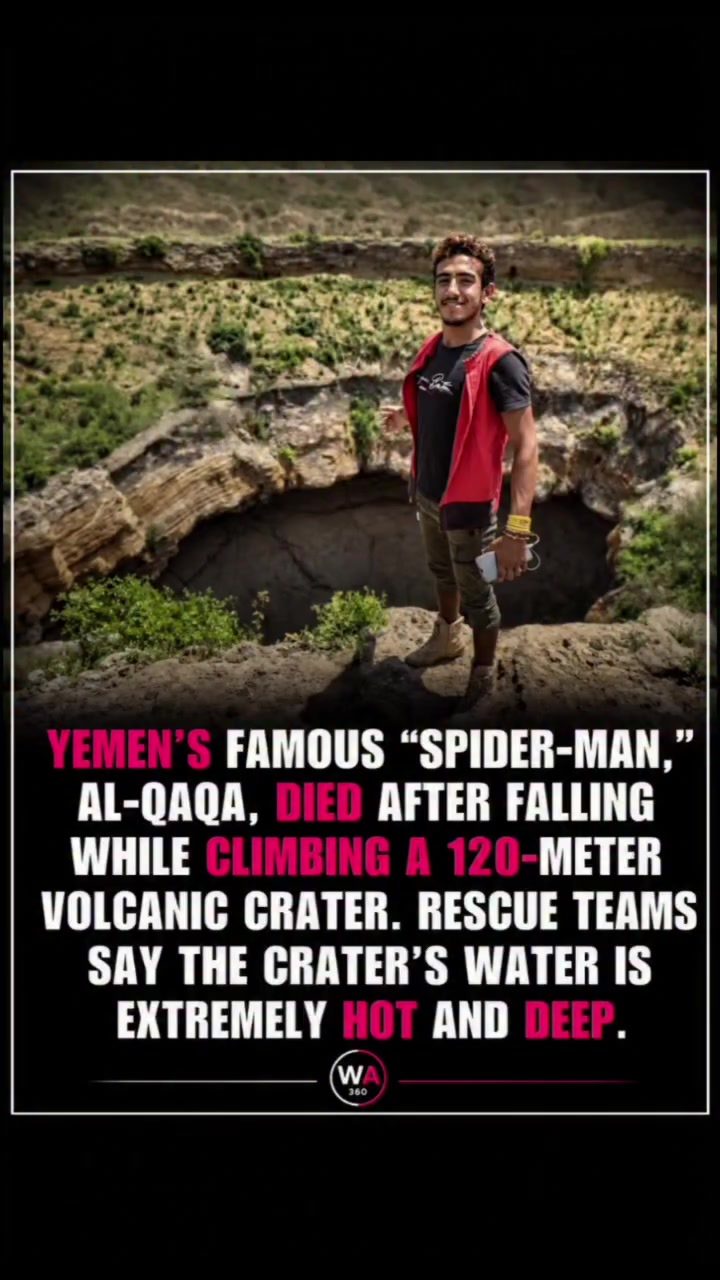
The Tragic Climbing Accident of Yemen's "Spider-Man" Al-Qaqa
Al-Qaqa, known as the "Spider-Man" of Yemen to millions of admirers, fell to his death while descending a 120-meter volcanic crater. The incident serves as a stark reminder of the risks extreme adventurers face.
Why this matters
Extreme sports and adventure activities have gained significant popularity, inspiring countless individuals to push their limits. However, these pursuits come with inherent risks that can result in tragic consequences. Al-Qaqa's story underscores the importance of understanding and respecting the dangers involved in such activities, as well as the need for proper preparation and safety measures.
The Climbing Incident
The Fatal Descent
Al-Qaqa, renowned for his daring climbs and adventurous spirit, met his end while braving a 120-meter volcanic crater. The crater's extreme conditions, including water that is both extremely hot and deep, created a treacherous environment. Rescue teams faced immense challenges in attempting to recover his body, highlighting the severity of the situation.
The crater's unique geology and environment contributed to the tragic outcome. The combination of extreme heat and depth made it nearly impossible for rescue teams to navigate the area safely. The lack of access points, unstable terrain, and hazardous water make such a crater one of the most dangerous natural sites to attempt a rescue.
The Legendary Climber
Al-Qaqa earned his nickname, "Spider-Man," due to his fearless and agile climbing abilities. He captivated audiences with his daring exploits, inspiring many to embrace adventure and exploration. His social media presence played a significant role in spreading his fearless spirit, attracting followers who admired his courage and determination.
People across social media platforms expressed their admiration for Al-Qaqa's passion for adventure. His followers, inspired by his fearless pursuits, continue to remember his remarkable spirit and love for exploration. Though his journey ended tragically, his legacy lives on through the countless individuals he inspired.
The Dangers of Extreme Environments
Extreme environments, such as the volcanic crater Al-Qaqa attempted to climb, pose significant risks. These risks are not limited to physical dangers but also include psychological challenges and the need for specialized skills and equipment.
Natural Hazards
The natural hazards present in extreme environments can be unpredictable and unforgiving. For example, volcanic craters can have unstable surfaces, extreme temperatures, and toxic gases. These hazards require climbers to have advanced knowledge and training in navigating such terrains.
The water in the crater posed additional complications. The combination of extreme heat and depth made it impossible for rescue teams to safely navigate the area. Such conditions can quickly turn a rescue mission into a dangerous and potentially deadly endeavor.
Psychological Challenges
Climbing and navigating extreme environments also present significant psychological challenges. Climbers must maintain a high level of mental fortitude to manage stress, fear, and the constant pressure of navigating challenging conditions. Al-Qaqa’s bravery and determination are a testament to the psychological resilience required for such endeavors.
The mental strain of extreme environments can affect decision-making, leading to risky choices. Therefore, climbers must be well-prepared and trained to manage these psychological challenges effectively.
Practical Tips for Extreme Adventurers
While risk cannot be entirely eliminated, those who embark on extreme adventures can take several practical steps to enhance their safety.
Preparation and Training
Before undertaking any extreme adventure, it’s crucial to undergo rigorous training. This includes not only physical conditioning but also specialized training in navigation, first aid, and emergency protocols. Climbers should also familiarize themselves with the specific hazards of the environment they plan to explore.
Proper Equipment
Having the right equipment is vital for any extreme adventure. This includes specialized gear designed to withstand harsh conditions, such as heat-resistant clothing, sturdy ropes, and advanced safety equipment. Proper equipment can significantly reduce the risk of accidents and improve the chances of a successful rescue if needed.
Comprehensive Planning
A comprehensive plan should include detailed routes, emergency protocols, and communication strategies. A thorough understanding of the environment, including its hazards and potential escape routes, is essential. Regular communication with a support team who can monitor progress and respond to emergencies is also a critical component of a well-rounded plan.
Important Takeaways
The tragic incident serves as a sobering reminder of the immense risks associated with extreme adventures. Al-Qaqa's story highlights the importance of preparation, proper training, and the use of appropriate equipment. It also underscores the necessity of respecting the natural environment and understanding the inherent dangers it presents.
Even the most seasoned adventurers face unanticipated challenges. The absence of a straightforward rescue in this instance emphasizes the need for robust emergency protocols and a support team ready to respond in critical situations.
Conclusion
The legacy of Al-Qaqa, the "Spider-Man" of Yemen, will endure as a testament to his fearless spirit and love for adventure. His tragic demise emphasizes the inherent risks of extreme environments and the importance of preparation and safety. As adventurers continue to explore the limits of human endurance, it is essential to approach such pursuits with caution, respect for the environment, and a thorough understanding of the dangers involved.
Watch the Reel
Questions readers ask
What exactly happened to Yemen's 'Spider-Man' Al-Qaqa?
Al-Qaqa, known as Yemen's 'Spider-Man,' died after falling 120 meters into a volcanic crater while descending. He was renowned for his daring climbs, but this incident highlights the significant risks involved in extreme sports. Rescue teams were unable to save him.
What makes climbing a volcanic crater so dangerous?
Climbing a volcanic crater, such as the one in Yemen, is extremely dangerous due to unstable surfaces, unpredictable weather, and the absence of safety precautions. The 120-meter descent that Al-Qaqa attempted poses significant physical and environmental challenges that can lead to fatal accidents.
What measures can climbers take to prevent accidents like Al-Qaqa's?
To prevent accidents, climbers should thoroughly plan their routes, use appropriate safety equipment, and have emergency protocols in place. It is crucial to assess the terrain and weather conditions before attempting such extreme climbs. Proper training and experience are also essential for managing the inherent risks.
How did Al-Qaqa's death impact the climbing community in Yemen?
Al-Qaqa's death sent shockwaves through the climbing community in Yemen and beyond, serving as a sobering reminder of the risks involved in extreme sports. It has prompted discussions about safety measures and the importance of preparation, and has inspired many to reflect on the need for better safety protocols in such activities.
What challenges do Yemen rescue teams face in extreme climbing incidents?
Yemen rescue teams face numerous challenges, including rugged terrain, limited resources, and the volatility of volcanic craters. The remote and hazardous locations often make swift and effective rescue operations difficult, exacerbating the dangers faced by climbers in extreme sports.
What are some popular extreme sports activities like the ones Al-Qaqa engaged in?
Extreme sports activities similar to Al-Qaqa's include rock climbing, mountaineering, and base jumping. These activities often involve scaling steep cliffs, navigating treacherous terrain, and pushing the limits of human endurance. They also require meticulous preparation, specialized gear, and a deep understanding of the associated risks.
How has Al-Qaqa's legacy influenced the perception of extreme sports in Yemen?
Al-Qaqa's legacy has elevated the profile of extreme sports in Yemen, highlighting both the allure and the perils of such activities. His tragic death has sparked conversations about safety and preparation, encouraging aspiring adventurers to respect the inherent dangers and to prioritize safety in their pursuits.
Related deep dives
Similar reads based on topic and creator.




Recent articles
Fresh deep dives from the latest Reels we unpacked.




Comments
Be the first to comment.