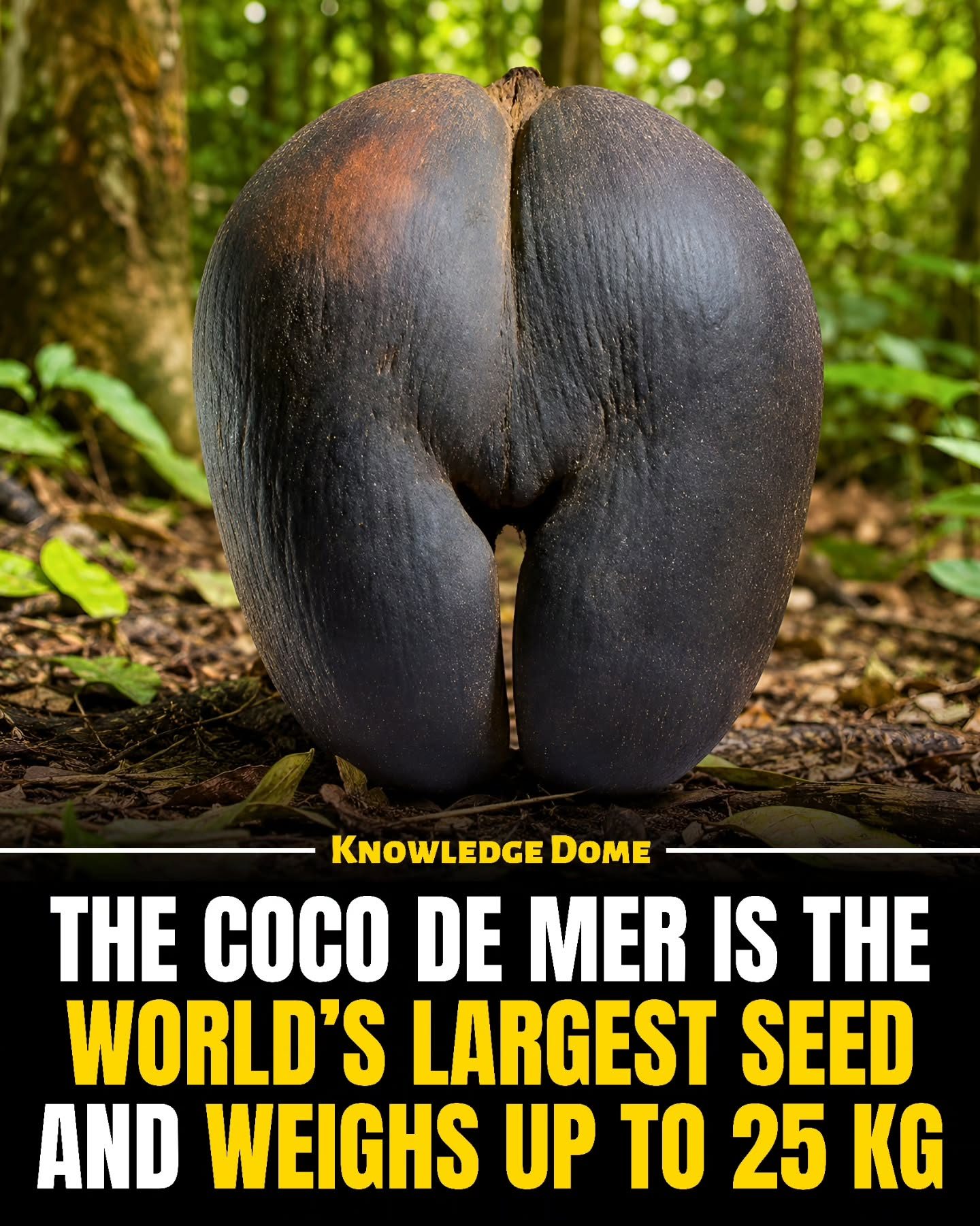
The Coco de Mer Seed: Nature's Giant Marvel
The coco de mer, scientifically known as Lodoicea maldivica, holds the title of the world's largest seed. Weighing up to 50 kilograms, this seed is not only impressive in size but also in its rarity and the unique characteristics of its growth cycle.
Why the Coco de Mer Matters
The coco de mer is more than just a curiosity; it's a natural wonder that captures the imagination of people around the world. Its significance lies in several fascinating aspects:
-
Size and Weight: At up to 50 kilograms, the coco de mer is heavier than many children and larger than most other seeds. This immense size makes it a standout in the natural world.
-
Rarity: The coco de mer is found only on two remote islands in the Seychelles, Praslin and Curieuse. This limited distribution adds to its allure and makes it one of the rarest natural seeds on Earth.
-
Growth Cycle: The coco de mer takes a remarkably long time to grow. It requires about 6 to 7 years to fully mature, a testament to nature's patience and the extraordinary journey from seed to plant.
Coco de Mer: Unique Characteristics
Size and Shape
The coco de mer is not your average seed. Its unique size and shape set it apart from other seeds. The seed's large size makes it a wonder to behold, and its shape—often described as a large, smooth, grayish-brown nut—is equally captivating.
Growth Habitat
The coco de mer is endemic to the islands of Praslin and Curieuse in the Seychelles. These islands provide the perfect conditions for the palm trees to thrive, making the seed an exclusive natural treasure.
The Journey of the Coco de Mer
From Seed to Sprout
The coco de mer's journey from seed to full-grown palm tree is an intricate and lengthy process. The seed first needs to be planted in the ground and will germinate only after 6 to 7 years. This long gestation period makes the coco de mer a fascinating subject of study for botanists and nature enthusiasts alike.
Rarity and Conservation
Due to its limited distribution, the coco de mer is under strict conservation efforts. The Vallee de Mai Nature Reserve on Praslin Island, which is a UNESCO World Heritage Site, is home to many of these palm trees. The site is a protected area to ensure the survival and growth of these unique seeds and trees.
Practical Tips for Seeing the Coco de Mer
For those eager to witness this natural wonder, here are a few practical tips:
Best Time to Visit
The best time to visit the Seychelles, and specifically Praslin and Curieuse Islands, is between April and May or October and November. During these periods, the weather is relatively mild, making it an ideal time for exploration.
How to Find It
Visitors to the Seychelles can find the coco de mer at the Vallee de Mai Nature Reserve on Praslin Island. Guided tours are available, providing visitors with the opportunity to learn more about the seed, its history, and its significance to the local ecosystem.
Important Takeaways
The coco de mer is a natural marvel that showcases the diversity and wonder of our planet. Its immense size, unique growth cycle, and rarity make it a subject of fascination for many. The seed's conservation efforts highlight the importance of protecting such natural treasures for future generations.
Conclusion
The coco de mer seed is a true marvel of nature, showcasing the incredible variety and wonder that our planet holds. Its immense size, unique shape, and rarity make it a subject of curiosity and awe. For those who appreciate the beauty and diversity of nature, a visit to the Seychelles to see the coco de mer is an experience not to be missed.
Watch the Reel
Questions readers ask
How does the coco de mer's growth cycle differ from other palm trees?
The coco de mer has a unique growth cycle compared to many other palms. It takes a long time for the coco de mer to mature, requiring about 20 years to produce its first coconut. Unlike other palms, it requires a specific soil composition and climate conditions to thrive.
What makes the coco de mer so rare?
The coco de mer is exceedingly rare due to its limited habitat. It is native to just two remote islands, Praslin and Curieuse, in the Seychelles. Additionally, the slow growth rate and long time to mature contribute to its scarcity.
How does the coco de mer's size compare to other coconut species?
The coco de mer is significantly larger than other coconut species. While most coconuts weigh between 1.5 to 2.5 kilograms, the coco de mer can weigh up to 50 kilograms, making it the largest known seed in the world.
What is the significance of the coco de mer's natural history?
The coco de mer's natural history is significant due to its unusual growth cycle and limited geographic distribution. Its unique characteristics make it a subject of interest for botanists and naturalists, offering insights into plant evolution and adaptations.
Why are the coco de mer's seeds so large?
The coco de mer's seeds are large due to the species' unique growth strategy. The large size of the seed allows it to contain a substantial amount of endosperm, which provides nourishment for the developing seedling. This nourishment is crucial for the seedling's survival in the nutrient-poor soil of the Seychelles.
Are coco de mer seeds used for any practical purposes?
While coco de mer seeds are not typically used for practical purposes, they are highly valued for their rarity and aesthetic appeal. Some are collected for display in botanical gardens or private collections, while others are studied by researchers to understand the species' unique biology and ecology.
How does the coco de mer's seed weight compare to other large seeds?
The coco de mer's seed weight is unprecedented among other large seeds. While seeds like the double coconut (Lodoicea sechellarum) and the African baobab (Adansonia digitata) are also large, the coco de mer typically exceeds them in weight, often reaching up to 50 kilograms, making it the heaviest seed in nature.
Related deep dives
Similar reads based on topic and creator.




Recent articles
Fresh deep dives from the latest Reels we unpacked.




Comments
Be the first to comment.