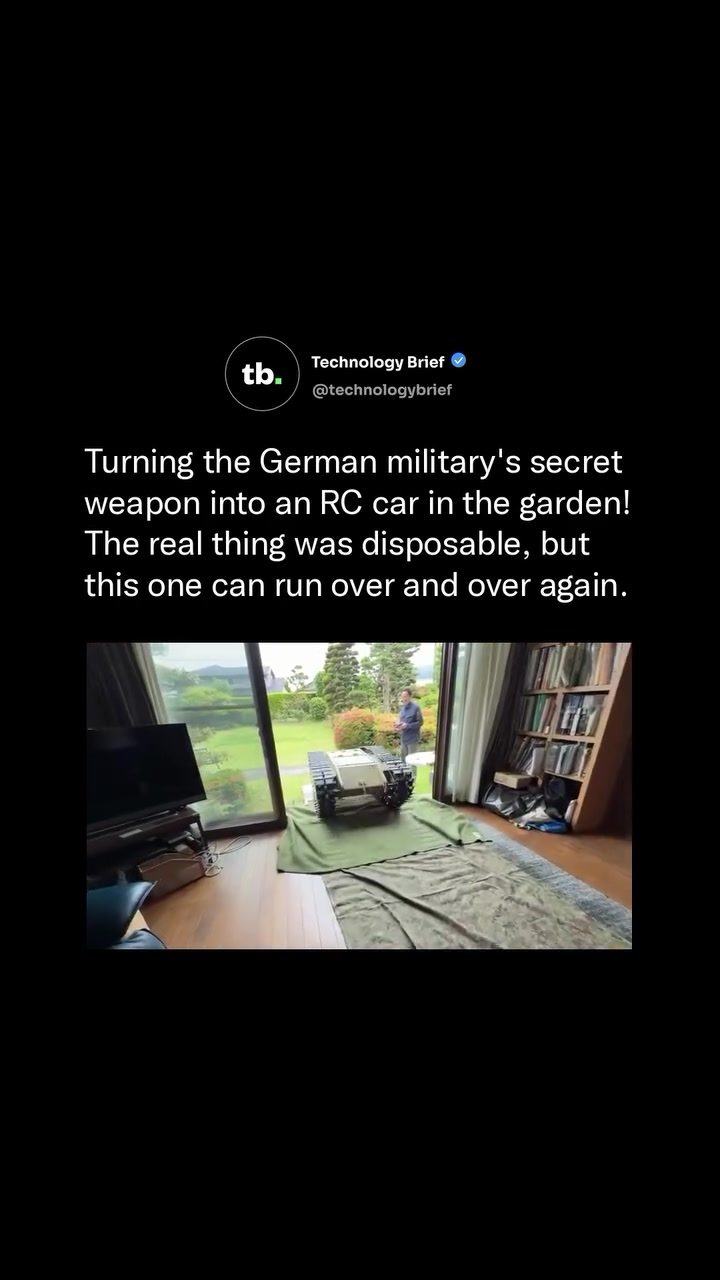
The Fascinating Transformation of a World War II Weapon into an RC Car
The Goliath, a remote-controlled demolition vehicle, was a remarkable piece of technology developed by Germany during World War II. This vehicle was designed to be a powerful weapon capable of carrying between 60 and 100 kg of explosives, which could be steered towards enemy targets and detonated. Operated via a 650-meter control cable, the Goliath was expensive, with each unit costing 3,000 Reichsmarks.
Context: The History and Legacy of the Goliath
The Goliath was an innovative but ultimately impractical weapon. Allied forces dismissed it as too costly and difficult to operate effectively in combat. Each unit was designed to be used once and then discarded, making the few surviving units a rarity today. This disposable nature left very few intact Goliaths, adding to their historical intrigue.
The Conversion: Turning Military Technology into a Hobbyist Project
Fast forward to the present, a hobbyist has managed to build a working RC replica of the Goliath and, in a fascinating display of ingenuity, ran it through a backyard course. This conversion showcases the transition of military technology into a recreational and functional machine. The replica successfully navigated various terrains, including rolling off pavement, crossing a grass lawn, and even climbing a steep, overgrown dirt slope through thick bushes.
The Technical Transformation: Rebuilding and Reusing the Goliath
The process of converting the Goliath into a functional RC car involves several steps. The original vehicle, being entirely disposable, had to be reconstructed from the ground up. Modern RC technology, including motors, batteries, and control systems, was integrated to make the device reusable and capable of handling various terrains.
Motor Integration
The replica RC car requires a robust motor system to handle the weight and terrain. High-torque motors are essential to ensure the vehicle can move over rough surfaces, including grass and dirt, without getting stuck.
Control Systems
The control systems, unlike the original 650-meter control cable, use modern radio frequency (RF) technology. This allows for precise control and maneuverability, essential for navigating complex backyard courses efficiently.
Battery and Power Management
Battery technology has advanced significantly since World War II. Lithium-ion batteries provide the necessary power without adding significant weight, making the RC car more agile and responsive. Power management systems ensure that the vehicle operates efficiently and has the endurance to complete various challenges.
Practical Tips for Building Your Own RC Demolition Vehicle
Choosing the Right Components
High-quality motors, batteries, and controllers are crucial for successfully building a replica. Opt for components known for durability and performance to ensure the vehicle can handle rough terrains and repeated use.
Design Considerations
The design of the RC car should mimic the original Goliath as closely as possible, which includes the structural frame and layout. This not only adds authenticity but also ensures that the vehicle’s weight distribution and balance are optimized for performance.
Testing and Refinement
Building the RC car is just the beginning. Extensive testing on various terrains is essential to refine the design and performance. This process helps identify any weaknesses or areas for improvement, ensuring the vehicle is robust and reliable.
Important Takeaways from the Conversion Project
The conversion of the Goliath into an RC car is a testament to the evolution of technology and the innovative spirit of hobbyists. This project highlights several key points:
Historical Preservation
Recreating historical artifacts in a modern context helps preserve their legacy and provides a hands-on understanding of past technologies.
Technological Advancements
Modern RC technology, including motors, batteries, and control systems, has significantly improved, making it possible to build functional replicas of historical devices.
Reuse and Repurposing
The ability to repurpose military technology for recreational use demonstrates the versatility and adaptability of engineering and design principles.
The Future of RC Technology
The successful conversion of the Goliath into an RC car opens up new possibilities for retro-futurism in RC technology. Hobbyists and enthusiasts can now explore the potential of other historical military vehicles, transforming them into functional and exciting RC models. This trend not only celebrates the past but also pushes the boundaries of what is possible with modern technology.
Conclusion
The RC conversion of Germany's World War II demolition vehicle, the Goliath, is a remarkable blend of historical significance and modern engineering. This hobbyist project showcases the adaptability of military technology and the endless possibilities within the world of RC vehicles. Whether you're a history enthusiast or an RC enthusiast, the transformation of the Goliath into a backyard-ready RC car is a fascinating journey worth exploring.
Watch the Reel
Questions readers ask
What was the original purpose of the Goliath vehicle during World War II?
The Goliath was a remote-controlled demolition vehicle developed by Germany during World War II. Its primary purpose was to carry and detonate explosives at enemy targets, with a capacity of 60 to 100 kg of explosives. The vehicle was controlled via a 650-meter control cable, allowing operators to steer it towards its target.
Why was the Goliath considered impractical for military use?
The Goliath was deemed impractical due to its high cost and operational difficulties. Each unit was expensive, costing 3,000 Reichsmarks, and was designed to be used only once, making it financially impractical. Additionally, the control cable limited its range and maneuverability, posing risks to the operator.
What are the key features of the Goliath RC car conversion?
The Goliath RC car conversion transforms the historic demolition vehicle into a functional, recreational machine. This remote-controlled replica showcases the original vehicle's design, navigating various terrains, and demonstrates a fascinating transition of military technology into a hobbyist project.
How does the Goliath RC car compare to other RC military vehicle projects?
The Goliath RC car is unique due to its historical significance and the ingenuity involved in its conversion. Unlike other RC military vehicle projects, the Goliath RC car replicates a specific, rare WWII demolition vehicle, offering enthusiasts a chance to experience a piece of history in a recreational context.
What challenges might hobbyists face when converting a Goliath vehicle into an RC car?
Hobbyists may face challenges such as sourcing original or accurate replica parts, and maintaining the historical authenticity of the vehicle. Additionally, the conversion process requires a good understanding of both RC car electronics and the original vehicle's mechanics, making it a complex project.
Can the Goliath RC car be used in different environments, such as gardens or parks?
Yes, the Goliath RC car is designed to navigate various terrains, making it suitable for use in gardens, parks, and other outdoor spaces. Its robust build and recreation of the original vehicle's design allow it to handle different surfaces and environments, enhancing the user experience.
What are some other historical RC car projects that enthusiasts might be interested in?
Enthusiasts might explore other historical RC car projects, such as recreating WWII jeeps, tanks, or other military vehicles. These projects offer a blend of history and hobby, allowing enthusiasts to build and enjoy a piece of military history in a recreational, remote-controlled format.
Related deep dives
Similar reads based on topic and creator.




Recent articles
Fresh deep dives from the latest Reels we unpacked.




Comments
Be the first to comment.