Immersing in a Crimson Jungle
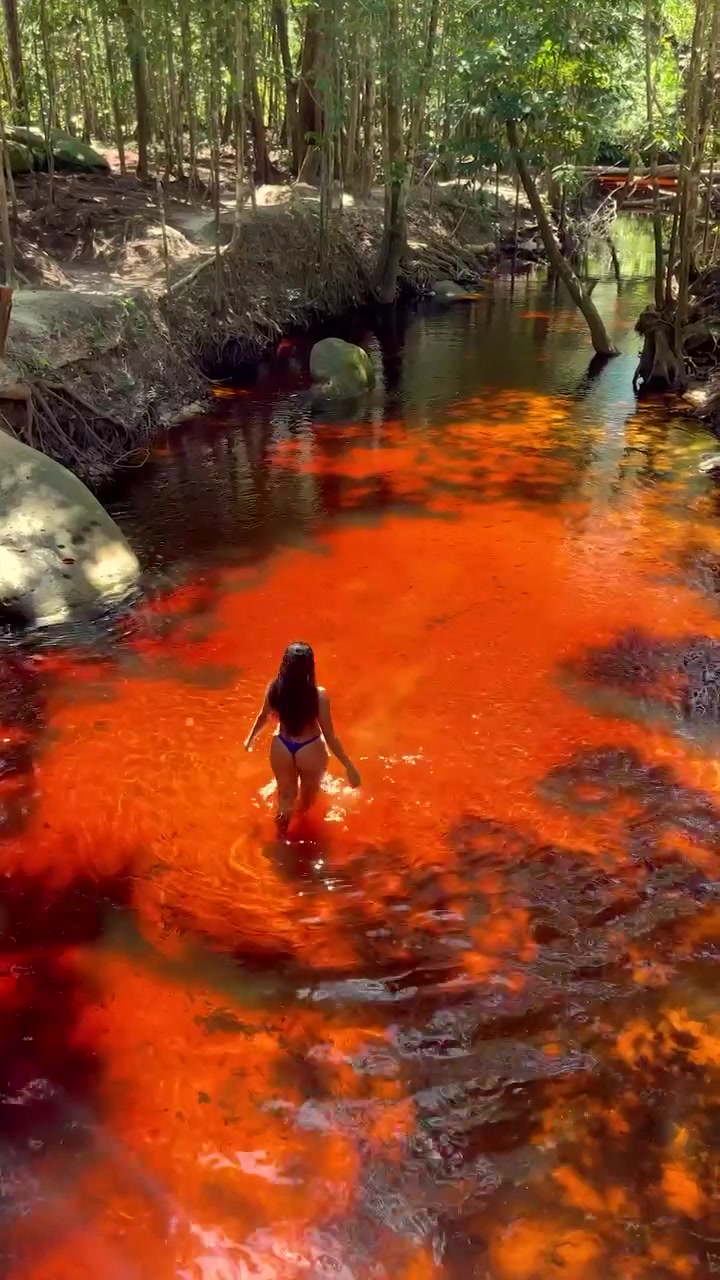
A woman wades through a shallow stream, orange-red water gently splashing against the bank, as she walks slowly. The surroundings are thick with the lushness of a tropical forest, trees towering above the vividly dyed water. This vivid scene sets the stage for a unique experience. This isn’t just any natural setting: The vibrant orange-red water on her legs is artificial — dye used to recreate a unique sensory experience. It's a fleeting moment designed to provoke thought, and viewers want in.
The Sensory Art of Colored Water
The use of colored water isn't new, but Adrianna Zanotto (the artist behind this reel) makes it distinctive by integrating it with the natural beauty of a tropical forest. It transforms a simple water feature into an immersive art piece. This particular scene is as much to do with the visual spectacle of orange-red hues as it is about treating the viewer to the idea of brightness in a dense jungle. The stream and the dye may be temporary, but the focal point is the woman walking through it. The scene is a visual metaphor for the way we journey through life — stepping into something unexpected. The dye could represent anxiety, joy, or uncertainty. It's up to the viewer to decide. The forest is the universal symbol of the journey through life.
The Tenacity of Nature
Colorful projects like this have become increasingly popular as a way to express the ephemerality of art. Once the dye wears off, the stream is expected to return to its natural state. Audiences are likely drawn to these scenes because they're a temporary splash of personality into nature, making viewers think about how nature can coexist with art. Water is a powerful medium for temporary art. Using vibrant dye transforms the scene into an immersive installation. It’s a method that’s intriguing both visually and conceptually.
The Process of Creating a Colorful Stream
Influencers like Adrianna Zanotto have popularized the use of colored water in various settings. The process begins with selecting a vibration that will complement the surrounding environment and selecting a water body. The next step involves dying the water in a manner that doesn’t harm the environment. However, the dye is short-lived as it gets washed away with the water. The artist must also consider the effect the vibrant colors might have on the viewer. The crisp, contrasting orange-red hues against the lush greenery certainly make a statement, and surprise the viewer.
Echoes of Art in Nature
Watercolor artists are known to create strokes of vibrant colors on canvas, but this art installation invites viewers into the painting itself. Watercolor art is defined by its unique characteristics — it includes unusual pigmentation, transparencies, and fluidity. This scene carefully composes all of these elements, but out in nature instead of a canvas.
A Sensory Feast in a Tropical Forest
These installations work best in a tropical forest because they stand out against the lush greenery. The vibrant hues of the dyed water create a sharp contrast to the dense, emerald surroundings. Tropical forests are known for their rich greenery, so the orange-red adds a pop of color that can't be ignored. The woman's slow walk through the vibrant water also creates a sense of a ritual.
Careful Steps In
When stepping into this kind of visual art, viewers need to pay attention to their surroundings. The tropical forest is a complex environment with its own challenges — insects, trees, and more. Viewers need to be prepared to navigate the space. In planning the experience, the person must choose a route that keeps them safe and maximizes the visual impact. This usually means following an already-existing path, like the one in the footage. Walking slowly will enhance the sensation. The scene implies a quest towards something good, and the viewer would be wise to walk slowly to savour this visual.
Being Present in the Jungle
This unsteady, yet carefully controlled environment should be respected, respected, and step into it carefully. With that, it's natural to explore the scene and take in the details. You may want to take a few moments to notice the image of the orange-red water and the vivid green background. Because, eventually the scene will return to its natural state, so the viewer should take in every moment. This makes the experience different from photographs or traditional art that can be revisited.
The Ever-changing World
There is something inherently ephemeral to be celebrated in scenes like this. The colored water is a fleeting moment, but the memory of it lasts. With each step, the woman moves through the water and leaves it in her wake. The water may change, the stream may change, but the memory of this experience, something so simple yet beautiful, remains.
Watch the Reel
Questions readers ask
What kind of dye was used to create the vibrant red stream in the video and is it safe for the environment?
The article doesn't specify the exact type of dye used, but it mentions that the process involves selecting a dye that won't harm the environment, suggesting it's likely a temporary and eco-friendly option. The dye is chosen to complement the surroundings and is designed to wash away with the water, minimizing environmental impact.
How does the use of colored water in art differ from traditional art forms?
Using colored water in art, as seen in Adrianna Zanotto's work, transforms the natural environment into a temporary, immersive installation. Unlike traditional art forms that are static and often confined to a gallery, this type of art invites viewers to step into the piece, making it a dynamic and interactive experience. The ephemeral nature of the dye also adds a layer of impermanence, encouraging viewers to appreciate the moment.
What is the significance of the woman walking through the stream in the video?
The woman walking through the stream serves as a visual metaphor for life's journey and its unexpected turns. The vibrant, orange-red water represents different emotions or experiences, such as anxiety, joy, or uncertainty. The scene encourages viewers to reflect on their own journeys and the emotions they encounter along the way.
How does the choice of a tropical forest enhance the impact of the colored water installation?
The tropical forest provides a lush, green backdrop that makes the vibrant, orange-red water stand out in stark contrast. This setting emphasizes the uniqueness and ephemerality of the installation, making the experience more immersive and thought-provoking. The dense greenery of the forest also adds to the overall sensory experience, creating a rich and immersive environment.
What are some of the challenges artists might face when creating a colored water installation in a natural setting?
Creating a colored water installation in nature involves several challenges. Artists must select a dye that is both vibrant and environmentally safe, ensuring it won't harm the ecosystem. Additionally, they need to consider the effect the colors will have on viewers, aiming to create a visually striking and emotionally resonant experience. The fleeting nature of the dye also means that the installation is temporary, requiring careful planning and execution.
Can this type of installation be replicated in other environments, or is a tropical forest essential?
While a tropical forest provides a striking contrast and rich backdrop, it isn't the only environment where this type of installation can be replicated. The key is to choose a setting that complements the vibrant colors and enhances the overall sensory experience. Other lush, green environments or even urban settings with water features could work well, depending on the desired aesthetic and emotional impact.
Related deep dives
Similar reads based on topic and creator.
Recent articles
Fresh deep dives from the latest Reels we unpacked.
Comments
Be the first to comment.