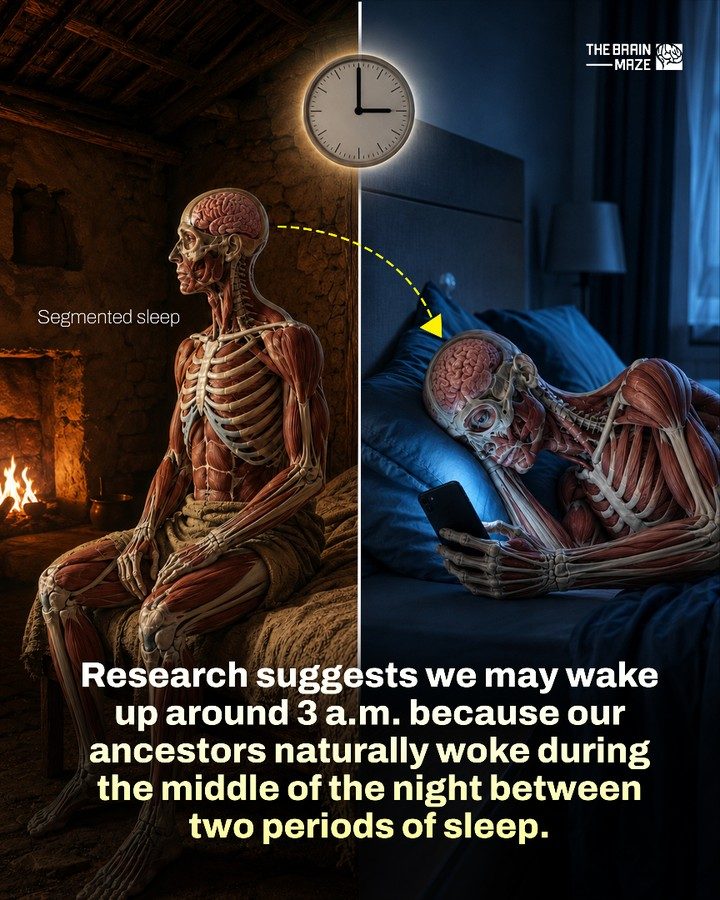
Segmented Sleep
Waking up around 3 a.m. may seem like an inconvenient or mysterious event, but it could be rooted in an ancient pattern called segmented, or biphasic, sleep. Historically, people commonly followed a sleep pattern that involved two distinct periods of rest. This ancient rhythm, known as segmented or biphasic sleep, was a natural part of our circadian cycles and has been largely influenced by modern life.
Why this matters
Understanding segmented sleep helps explain why many people naturally wake up in the middle of the night. This knowledge can provide insights into why some individuals struggle with continuous sleep and how to adapt to a more natural sleep pattern.
Main discussion
Historical context of segmented sleep
Historically, humans have followed a biphasic sleep pattern. This pattern involves sleeping for several hours, waking up in the middle of the night, and then returning to sleep for a second period until dawn. During the waking period, people engaged in various activities such as tending to fires, visiting neighbors, or simply resting quietly. This natural segmentation of sleep was a common practice before the advent of artificial light and modern schedules.
The transition to continuous sleep
The shift from segmented to continuous sleep began with the introduction of artificial lighting. Before electricity, natural light dictated daily routines, and people's sleep patterns aligned with the setting and rising of the sun. With the availability of artificial light, people started staying awake later and sleeping in later, which gradually changed the sleep cycle into a single, continuous period. This transition has been attributed to the convenience and flexibility of artificial light, which allows people to extend their daytime activities into the night.
Benefits of segmented sleep
There are several benefits to segmented sleep patterns, particularly for those who naturally experience them. For instance, many people report feeling more rested and energized after two periods of sleep compared to one long continuous period. Segmented sleep can also help with productivity, as the middle-of-the-night wakefulness can be used for reflection, relaxation, or even light activity. This approach allows for a better balance between rest and productivity, fitting well with natural circadian rhythms.
Challenges of modern sleep patterns
Modern lifestyles often require continuous sleep, which can be challenging for those whose natural body rhythms are inclined toward segmented sleep. The pressures of work, study, and social life often necessitate a single, uninterrupted sleep period. This can lead to feelings of disruption or dissatisfaction for those who experience segmented sleep patterns, as they may struggle to align with the more linear sleep schedules expected in contemporary society.
Practical tips
Trying a segmented sleep schedule
If you find that you naturally wake up in the middle of the night and have trouble returning to sleep, you might consider embracing a segmented sleep pattern. This involves creating a bedtime routine that allows for an initial period of sleep, a period of wakefulness, and then a return to sleep. You can use the middle-of-the-night awakening for quiet activities such as reading, meditating, or journaling, before returning to bed for your second period of sleep.
Creating a conducive environment
For people who practice segmented sleep, it's essential to create an environment that supports both periods of rest. This means ensuring that your bedroom is comfortable and conducive to sleep, with minimal distractions during your sleep periods. It also means setting aside time and space for the activities you wish to engage in during your wakeful period. This can help your body adapt to the new sleep pattern more easily.
Gradual adjustment
Switching from a continuous to a segmented sleep pattern requires time and patience. You might experience some initial discomfort as your body adjusts to the new routine. Start by gradually shifting your sleep and wake times, allowing your body to naturally adapt to the changes. Remember that everyone's sleep needs and patterns are unique, so you may need to experiment to find what works best for you.
Important takeaways
Segmented sleep, or biphasic sleep, was once a common practice and could explain why some people naturally wake up in the middle of the night. Understanding this historical sleep pattern can provide insights into why modern continuous sleep may not align with everyone's natural rhythms. Adapting to a segmented sleep schedule can bring benefits such as improved rest and productivity, while also posing challenges in fitting with contemporary lifestyles.
Conclusion
Appreciating segmented sleep as a historical and natural pattern can help explain why some people naturally experience wakefulness in the middle of the night. By understanding and potentially embracing this pattern, individuals may find greater alignment with their natural circadian rhythms, leading to better rest and overall well-being. Whether choosing to adopt a segmented sleep schedule or simply acknowledging its existence, recognizing the diversity in sleep patterns is a step toward a more balanced and fulfilling nightly routine.
Watch the Reel
Questions readers ask
What exactly is segmented sleep and how does it differ from monophasic sleep?
Segmented sleep, also known as biphasic sleep, is a pattern where sleep is divided into two main periods, typically with a period of wakefulness in between. In contrast, monophasic sleep is the single, continuous period of sleep that most people follow today, usually lasting 7-9 hours. Segmented sleep was a historical norm and can help explain why some people naturally wake up at the night.
Is it true that waking up at 3 AM is a common occurrence?
Yes, waking up at 3 AM is a common occurrence for many people and is a remnant of segmented sleep. This natural awakening can be part of a biphasic sleep pattern, where a person experiences two distinct sleep periods with a period of wakefulness in between.
What are the benefits of segmented sleep and how can I try it?
Segmented sleep can offer benefits such as potentially improved mood and creativity. If you want to try it, start by going to bed earlier and allowing yourself to wake up naturally. Use the middle-of-the-night awakening as an opportunity for relaxation, meditation, or quiet activities. If you find the practice helpful, you can gradually incorporate it into your routine.
How can understanding segmented sleep help me with my current sleep issues?
Understanding segmented sleep can help you identify and adapt to your natural sleep patterns. If you often wake up in the middle of the night, it might be your body's way of reverting to a more ancient rhythm. By acknowledging and embracing this, you can reduce stress and improve overall sleep satisfaction. This knowledge can help you make adjustments to your schedule and environment to better support your natural sleep rhythms.
What historical evidence supports the existence of segmented sleep?
Historical evidence from various cultures and periods, including diary entries, medical records, and anthropological studies, shows that segmented sleep was a common practice. For example, many historical figures, such as Benjamin Franklin and Leonardo Da Vinci, were known to follow a biphasic sleep pattern. Additionally, scientific studies have documented this pattern in modern societies, where people have the flexibility to follow their natural sleep rhythms.
Related deep dives
Similar reads based on topic and creator.




Recent articles
Fresh deep dives from the latest Reels we unpacked.




Comments
Be the first to comment.