Self-Driving Car Traffic Lights
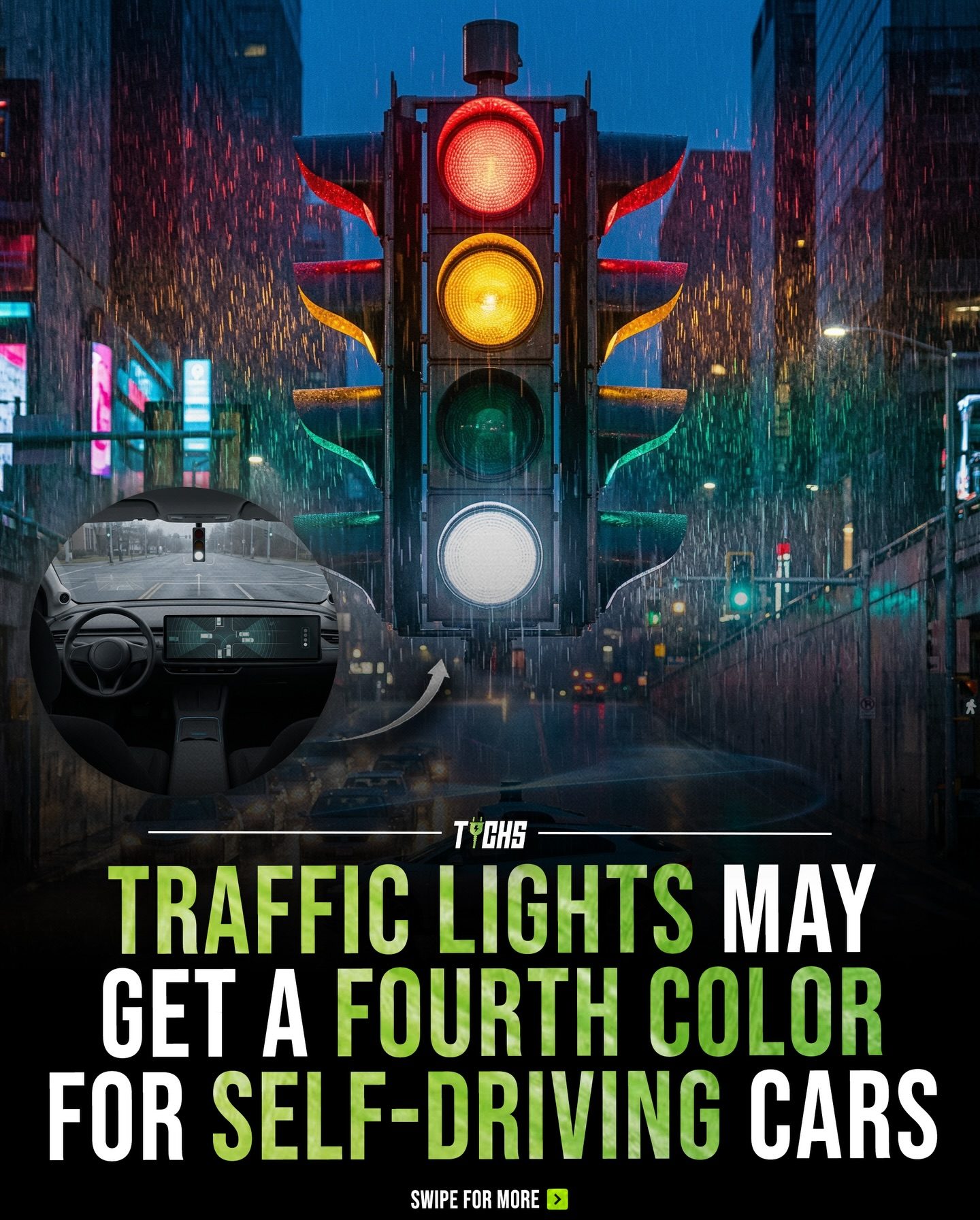
Traffic lights are ubiquitous in our daily lives, managing the flow of vehicles at intersections. However, with the advent of autonomous vehicles, the traditional three-color (red, yellow, green) system may soon be augmented to support self-driving cars.
Context / Why this matters
The integration of a fourth color into traffic lights could significantly impact traffic management, especially in urban areas with high volumes of autonomous vehicles. This system aims to enhance the efficiency of traffic flow, reduce delays, and improve fuel efficiency. By examining this potential update, we can understand how future urban infrastructure may adapt to accommodate the growing number of self-driving cars.
Main discussion
The Proposed White Light
A white light is the proposed fourth signal. This signal would activate in the presence of a sufficient number of autonomous vehicles. When the white light is active, self-driving cars can communicate with each other and decide the sequence of movement, eliminating the need for a centralized traffic control system. This decentralized approach could make traffic management more fluid and responsive to real-time conditions.
How it Works for Autonomous and Human-Driven Vehicles
Autonomous vehicles equipped with this technology would operate differently than human-driven cars. The main purpose of the white light is to help autonomous vehicles navigate intersections by providing a dedicated signal for them. Human drivers, on the other hand, would follow the lead of the vehicle ahead, maintaining the traditional flow of traffic. When too many human-driven vehicles are present, the system will revert to the standard red, yellow, and green signals. This flexibility ensures that the new system can coexist with existing traffic management practices.
Current Status and Future Testing
The concept of a fourth color for traffic lights is currently in the research stage. Simulations indicate that this system could reduce traffic delays by up to 98 percent and significantly improve fuel efficiency. However, before widespread implementation, the system requires further testing and wider adoption. Controlled environments, such as ports or freight corridors, are potential candidates for initial testing. This approach allows for a gradual rollout and evaluation of the system's effectiveness in real-world conditions.
Practical tips
Understanding the Transition
To prepare for this transition, it's essential to understand how the new system will affect different types of vehicles. Autonomous vehicles will communicate and coordinate their movements, while human drivers will need to adapt by following the car ahead. This dual approach ensures a smooth transition and minimal disruption to existing traffic patterns.
Staying Informed
Keeping up with the latest developments in traffic management and autonomous vehicle technology is crucial. As new systems are introduced, staying informed about how they work and how they will impact traffic flow can help you navigate future changes more effectively. Following reliable sources and industry updates can provide valuable insights and prepare you for the future of urban mobility.
Important takeaways
Enhanced Efficiency
The proposed fourth color in traffic lights aims to enhance the efficiency of traffic flow by allowing autonomous vehicles to coordinate their movements more effectively.
Adaptability
The system is designed to be adaptable, reverting to traditional signals when necessary. This ensures that the new system can coexist with existing traffic management practices, minimizing disruption.
Gradual Implementation
Real-world use of this system will require further testing and wider adoption. Controlled environments, such as ports or freight corridors, are potential candidates for initial testing, allowing for a gradual rollout and evaluation.
Conclusion
The potential introduction of a fourth color to traffic lights represents a significant step forward in traffic management, particularly for accommodating autonomous vehicles. By allowing self-driving cars to communicate and coordinate their movements, this system could reduce delays and improve fuel efficiency. However, it's essential to remember that this technology is still in the research stage and requires further testing and wider adoption before it can be implemented on a larger scale. Understanding this transition and staying informed about the latest developments can help prepare for the future of urban mobility.
Watch the Reel
Questions readers ask
What is the purpose of introducing white traffic lights for self-driving cars?
The purpose of introducing white traffic lights is to facilitate communication between autonomous vehicles and enhance traffic management. This new system aims to optimize traffic flow, reduce delays, and improve fuel efficiency in urban areas with a high volume of self-driving cars.
How do white traffic lights improve the efficiency of traffic flow?
White traffic lights can improve traffic flow efficiency by providing an additional signal that helps self driving cars coordinate their movements more effectively. This can reduce the need for sudden stops and starts, leading to smoother traffic flow and decreased congestion.
What are the potential benefits of using white traffic lights at intersections for self-driving cars?
The potential benefits include optimized traffic flow, reduced delays, and improved fuel efficiency. By enabling better communication between autonomous vehicles, white traffic lights can help manage traffic more effectively, leading to a more efficient and environmentally friendly transportation system.
Can white traffic lights be integrated with existing traffic light systems?
Yes, white traffic lights are designed to be integrated with existing three-color traffic light systems. This integration allows for a seamless transition to a system that supports both traditional and autonomous vehicles, ensuring that the infrastructure can adapt to the growing number of self-driving cars.
How do white traffic lights enhance communication between autonomous vehicles?
White traffic lights serve as an additional signal that autonomous vehicles can interpret. This new signal can indicate specific instructions or provide information about the traffic situation, enabling better communication and coordination among self-driving cars.
Will white traffic lights affect human-driven vehicles?
White traffic lights are primarily designed for self-driving cars, but they can coexist with traditional traffic lights. Human-driven vehicles will continue to follow the standard red, yellow, and green signals, while autonomous vehicles will use the additional white light for more efficient navigation.
What role do white traffic lights play in the future of traffic management?
White traffic lights are part of the evolving infrastructure that aims to accommodate the increasing number of self-driving cars. By optimizing traffic flow and reducing delays, they contribute to a more efficient and sustainable transportation system, paving the way for future advancements in autonomous vehicle traffic systems.
Related deep dives
Similar reads based on topic and creator.




Recent articles
Fresh deep dives from the latest Reels we unpacked.




Comments
Be the first to comment.