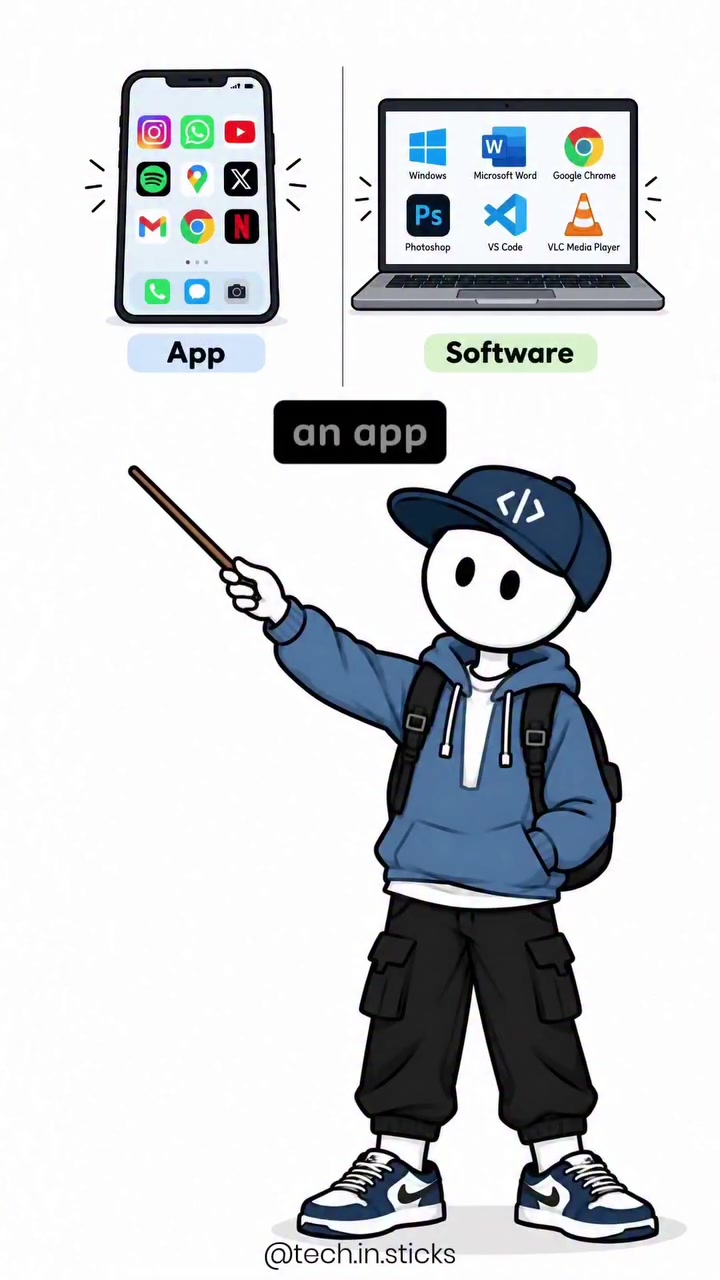
Software is a broad term for programs and instructions that make devices perform tasks. Examples of software include system software like Android, application software like WhatsApp, and programming code in a developer's codesandbox. Versatile, but what distinguishes an app from software in the first place, and to what extent does it matter? Modern smartphones are packed with apps, but all apps are software.
The Basics of Apps and Software
An app, short for application, is a type of software designed to perform specific tasks for users. For example, apps can help users edit photos, send messages, or watch videos. Apps come in different flavors as well. Some are available through app stores and run on smartphones (e.g. WhatsApp, Google Chrome), while others run on computers (e.g. Photoshop, Microsoft Word) and more. Yet, the details of apps involve the workings of software. Like WhatsApp responding to incoming messages, software does more than meet the eye. Android is a system software that facilitates the operations of apps. It manages hardware such as memory, CPU, and storage, and the different components of the phone like the camera or microphone. Some types of software handle various systems. For example, there is operating system software (like Android), database software, software developer tools, antivirus software, utility software, and more. On a smartphone, visual representations may emphasize the importance of apps and software. Opening a music app draws on an intricate interplay of code that manipulates the display and audio output. Meanwhile, Android and other system software are working behind the scenes to ensure the app runs smoothly. Apps and software are thus not two different things. Instead, an app can be considered one category of software that makes a device perform specific tasks.
The Ecosystem of Apps
Apps connect to form an ecosystem. This ecosystem involves system software, apps, and hardware working together. Each app is designed to do something, but they also interact within the context of a larger system. A phone's operating system is critical to the app ecosystem. It facilitates the interconnection between apps. For example, when texting on WhatsApp, backups are saved on the cloud. This data is integrated with emails on the same phone app ecosystem on the phone itself, thus utilizing system software to store additional data across a variety of apps. Another example of the app ecosystem is the smartphone app icons. These icons are part of the operating system, but the apps can't work without them. They also interact with different apps, such as showing different notifications based on the content accessed by the app. There can also be interactions between apps, such as when a user edits a photo in one app and shares it directly through WhatsApp.
The Distinct Role of Software
Not all software acts like the apps in app ecosystems on a smartphone. In the tech world, software can also refer to the code and instructions that programmers write. Software doesn't run in the same way as apps. Instead, software can be found in the code that makes up websites, online services, and more. For example, software is the backbone of a platform like Google Chrome. Technically, software can refer to any set of instructions that tell a computer what to do. Typically, people associate software with apps, but some examples of software go beyond what happens on your phone screen. For example, the code that runs websites, apps, and computers also falls under this broader definition. In addition, software can also be found in different forms. In the case of scripts on websites, there is code that runs in the background and can’t be seen by users. These scripts are also part of the software ecosystem, just like the apps that run on smartphones.
How to Make Apps
App development is a complex process that combines software and hardware knowledge. Creating an app is like building a house. First, the developer will design the structure, which involves writing the code that has directions for the app. This phase includes setting up the data models, wireframes, and other critical components. Another example is that a developer might write code to store user data, conduct pattern matching to improve the recommendations of a website's AI, and make apps faster. After that, the developer will add the app to the app ecosystem, which includes tasks such as testing, debugging, and making sure the app works with other apps.
What Happens When Apps Fail
When an app fails, several things can happen. First, the entire app ecosystem can be disrupted. The data stored in an app might be lost, and the app might fail to load or work properly. This can happen for a variety of reasons, such as bugs in the code, hardware issues, or problems with the app store. For example, if an app's server goes down, users may not be able to access the app or its services. If the app's code contains bugs, it might crash or behave erratically. The same can happen with the device's hardware. For example, if there is an issue with the phone's hardware, the app might fail to work properly. The interconnection between apps and the importance of system software are crucial to the user's experience and the performance of the device. For example, if an app fails, the operating system might try to recover the data or restart the app. When an app fails, the system might try to recover the data or restart the app. If the app fails to load, the system might try to re-download it from the app store. In extreme cases, losing an app and its data can be devastating. For example, losing photos or important messages can be heart-breaking. A malfunctioning app can also lead to data loss or corruption. This can happen due to a variety of reasons, such as bugs in the code, hardware issues, or problems with the app store. In some cases, the app might be corrupted, and the data might be lost permanently. Before you lose your data, it may be best to use an app backup system like Google Drive or iCloud.
The Future of Apps and Software
Apps and software have become an integral part of modern technology. They are used in various fields, such as education, entertainment, and business. The future of apps and software is bright, with new advancements and innovations on the horizon. The future of apps and software is bright, with new advancements and innovations on the horizon. For example, artificial intelligence and machine learning are expected to play a significant role in the development of new apps and software. As technology advances, the possibilities for apps and software are endless. Developers will continue to create new and innovative apps that will change the way we live and work. New advancements in artificial intelligence, machine learning, and other technologies hold the potential to revolutionize the future of apps and software.
Watch the Reel
Questions readers ask
What exactly is the difference between an app and software?
An app is a specific type of software designed to perform particular tasks for users, like editing photos or sending messages. Software, on the other hand, is a broader term that includes programs and instructions that make devices perform any task. So, all apps are software, but not all software are apps.
How does system software like Android differ from apps like WhatsApp?
System software like Android manages the hardware and basic operations of a device, such as memory and CPU usage. Apps like WhatsApp, on the other hand, rely on this system software to function and are designed to provide specific services to users, such as messaging.
Can an app function without underlying software?
No, an app cannot function without underlying software. Apps rely on system software to manage hardware and provide the necessary environment for them to run. For example, the Instagram app needs Android to send push notifications.
What is the app ecosystem and why is it important?
The app ecosystem is the interconnected web of apps, system software, and hardware that work together on a device. It's important because it allows apps to interact with each other and the system, enabling features like cloud backups, notifications, and data sharing between apps.
Is software always visible and interactive like apps?
No, software is not always visible or interactive like apps. Software can also refer to the code and instructions that programmers write, which may not have a user interface. For example, software can be found in websites, online services, and more.
Can software exist without apps?
Yes, software can exist without apps. System software, for example, runs in the background, managing hardware and providing the necessary environment for apps to run, but it does not provide a user interface or perform specific tasks for users in the same way apps do.
Related deep dives
Similar reads based on topic and creator.

Recent articles
Fresh deep dives from the latest Reels we unpacked.




Comments
Be the first to comment.