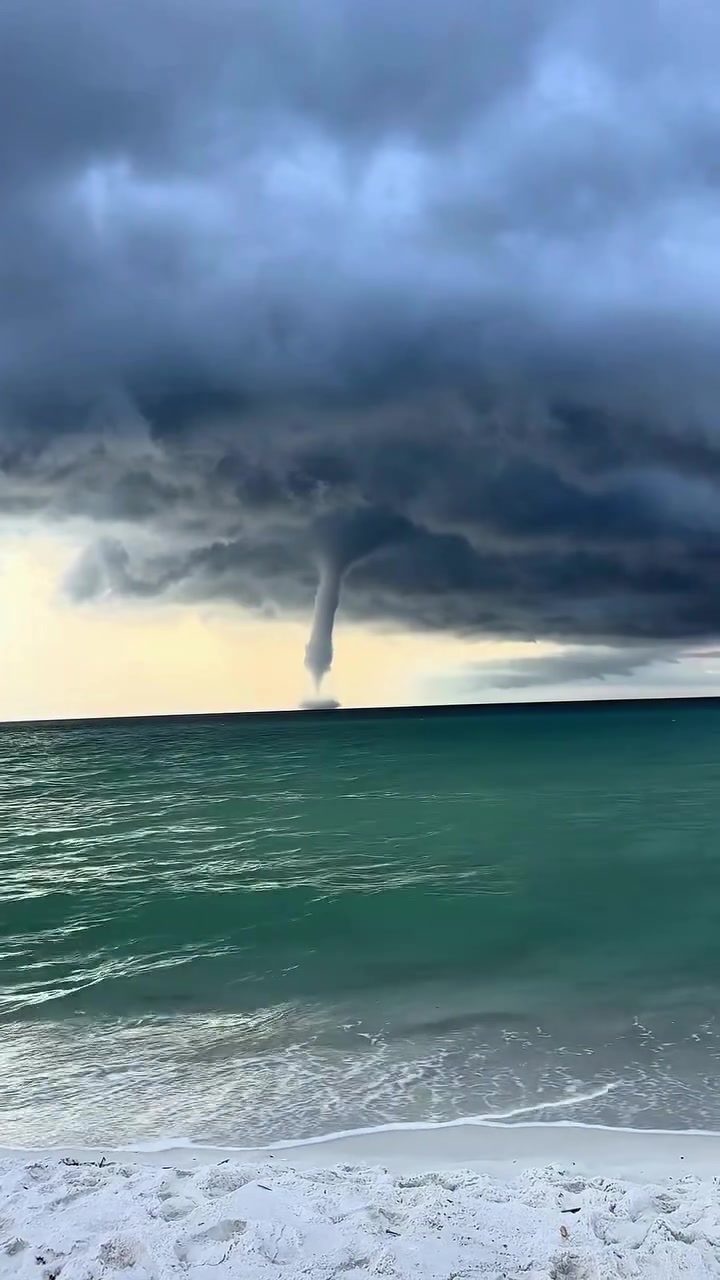
Nature's Spectacle
Waterspouts, nature’s dramatic whirlwinds, rise from the ocean to pierce a stormy sky. A phenomenon that has captivated observers for centuries. These aerial spirals are not mere optical illusions. Waterspouts are genuinely rotating columns of air and water mist. The contrast of dark skies and lighter spout creates a mesmerizing sight. Waves lap gently at the shore and the beach, completing the sublime visual foraging. The calmness of the beach happens because of the waterspout’s structure. While most waterspouts are associated with thunderstorms and strong winds, they are rarely harmful to the shore. In fact, most waterspouts are more of a spectacle than a threat, with the water’s speed rarely exceeding 50-100 mph. Although they can be dangerous for boats, many small waterspouts are just as likely to cause a light sea breeze on the beach.
The science behind the spin
Waterspouts are formed by a unique combination of weather conditions. They begin as a funnels of wind that draw water vapor from the ocean into a towering spiral. The ocean waters go up to the surface. They form from the base of a thunderstorm and essentially drag water vapor vertically. However, the water itself typically does not touch the bottom of the tornado. As the water evaporates quickly, it helps create a visible column of water and mist. Unlike tornadoes, most waterspouts are not connected to the ground. Just a spiraling column spinning toward the surface. The spinning motion is caused by the rotation of the wind and water vapor as it moves through the air. The water mist travels upward, developing into a visible column. These columns appear to be spiraling up to the sky, creating the mesmerizing sight that captivates onlookers. The high winds of the waterspout cause a visible disturbance, but it is so high that resembles a mythical creation arising from the ocean to grace the beach.
Watch the Reel
Related deep dives
Similar reads based on topic and creator.



Recent articles
Fresh deep dives from the latest Reels we unpacked.
Comments
Be the first to comment.