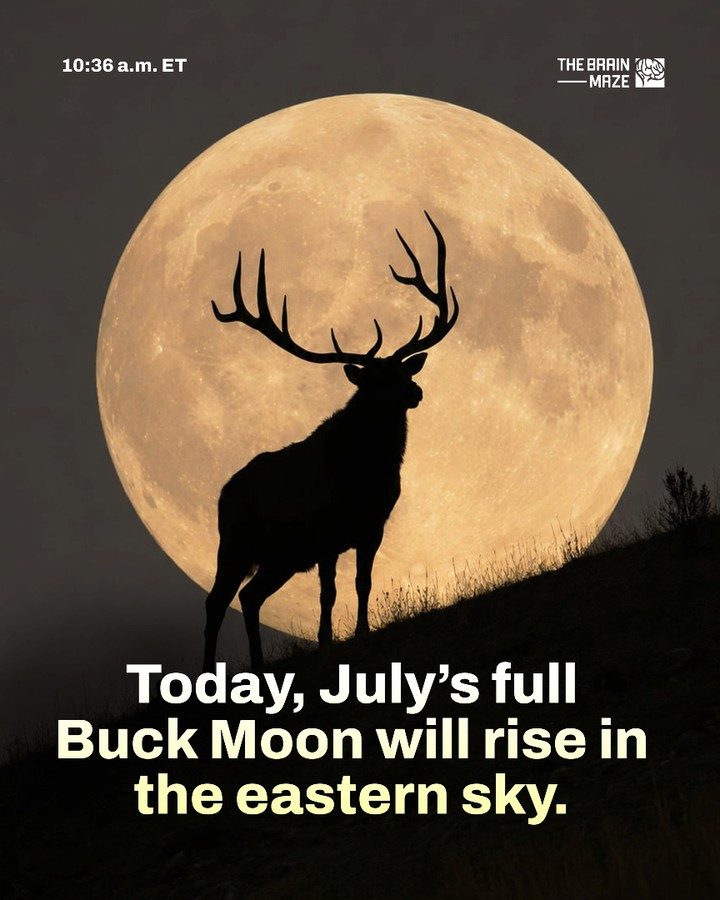
Full Buck Moon
The Buck Moon is a name given to the full moon in July. It is called the Buck Moon because the antlers of male deer, or bucks, are in full growth mode during this time. This year, the full Buck Moon reaches peak illumination at 10:36 a.m. ET on July.
Why this matters
Observing the full moon can be a captivating experience. However, seeing the Buck Moon in all its glory requires some planning. The Buck Moon will rise in the eastern sky and will appear full throughout the night both before and after its peak.
Context and tradition
Naming conventions
Full moons are often given traditional names that vary across different cultures. Many of these names are rooted in agricultural and hunting practices. The name "Buck Moon" is widely recognized in North America, but other regions have their own unique names. For instance, some European cultures refer to the July full moon as the "Hay Moon," while in China, it is known as the "Hungry Ghost Moon."
Cultural significance
The Buck Moon holds cultural significance for various indigenous tribes in North America. For instance, the Algonquin tribes gave this name to the July full moon, reflecting the time when male deer begin to grow their new antlers. This period is crucial for hunting and gathering activities, making it a significant time of the year.
Viewing the Buck Moon
Best viewing conditions
For the best view of the Buck Moon, head to a dark location with a clear eastern horizon and minimal light pollution. This will allow you to see the Moon in all its brightness and detail. If you're in an area affected by wildfires, you might even get to see the Moon with a striking reddish-orange glow due to the smoke in the atmosphere.
Viewing tips
When viewing the Buck Moon, consider the following tips:
- Find a Dark Spot: Light pollution from cities and towns can significantly reduce the visibility of the Moon. Try to find a location away from urban areas, such as a park, countryside, or beach.
- Check the Weather: Clear skies are essential for optimal viewing. Cloudy or overcast conditions can obstruct your view. Use weather apps or websites to plan your viewing session.
- Use Binoculars or a Telescope: While the Moon is visible to the naked eye, using binoculars or a telescope can enhance your viewing experience. You'll be able to see craters, mountains, and other lunar features more clearly.
- Document the Experience: Bring a camera or smartphone to capture the moment. Long-exposure photography can produce stunning images of the full moon.
The science behind the Buck Moon
Lunar phases
The lunar phases are the different shapes of the Moon as seen from Earth. The cycle begins with a new moon, progresses through a waxing crescent, first quarter, waxing gibbous, full moon, waning gibbous, last quarter, and waning crescent, before returning to a new moon. The Buck Moon is the full moon phase that occurs in July.
Lunar eclipses
A lunar eclipse occurs when the Earth comes between the Sun and the Moon, casting a shadow on the lunar surface. This can happen during a full moon, including the Buck Moon. During a lunar eclipse, the Moon can appear reddish or orange, a phenomenon known as a "blood moon." However, lunar eclipses are relatively rare and do not occur every July.
Wildfire impact
In parts of North America, wildfire smoke may give the Moon a striking reddish-orange glow. This natural phenomenon can enhance the viewing experience, making the Buck Moon appear even more vibrant and captivating. The scattering of light by smoke particles can create a unique and beautiful effect.
Important takeaways
- The Buck Moon is a full moon event in July, known for the antler growth of male deer.
- For the best view, find a dark location with minimal light pollution and a clear eastern horizon.
- The Buck Moon can appear reddish-orange due to wildfire smoke, enhancing its visual appeal.
- Use binoculars or a telescope to get a closer look at the Moon's surface features.
Conclusion
The full Buck Moon is a celestial event that combines natural beauty with cultural significance. Whether you're an avid stargazer or simply curious about the night sky, taking the time to observe the Buck Moon can be a memorable experience. By planning ahead and finding the right conditions, you can enjoy the full glory of this majestic lunar event.
Watch the Reel
Questions readers ask
What is the Full Buck Moon and why is it called that?
The Full Buck Moon is the full moon that occurs in July. It's named after the male deer, or bucks, whose antlers are in peak growth during this month. This natural phenomenon makes the Full Buck Moon a unique lunar event.
When will the Full Buck Moon reach its peak this year?
This year, the Full Buck Moon will reach peak illumination at 10:36 a.m. ET on the specific date in July. The exact time may vary each year, so it's a good idea to check the specific date for the year.
What is the best way to see the Buck Moon rise?
The best way to see the Buck Moon rise is to find a dark location with a clear view of the eastern horizon. The moon will rise in the eastern sky and will appear full throughout the night both before and after its peak.
Why is it important to view the Buck Moon from a dark location?
Viewing the Buck Moon from a dark location enhances the viewing experience by allowing for a clearer and more vivid sight of the moon. It reduces light pollution, which can obscure the moon's details and brightness.
Can I see the Buck Moon from anywhere in the world?
While the Buck Moon is a global phenomenon, the best viewing times and locations may vary depending on your position on the Earth. For the best experience, plan to view it from a location with a clear eastern horizon and minimal light interference.
What if I miss the peak illumination of the Buck Moon?
Even if you miss the peak illumination, you can still enjoy the full Buck Moon throughout the night. The moon will appear full both before and after its peak, offering a captivating sight throughout the night.
Are there other names for the July full moon?
Yes, full moons often have traditional names that vary across different cultures. While the Buck Moon is widely recognized in North America, other cultures may have their own unique names for the July full moon.
Related deep dives
Similar reads based on topic and creator.




Recent articles
Fresh deep dives from the latest Reels we unpacked.




Comments
Be the first to comment.