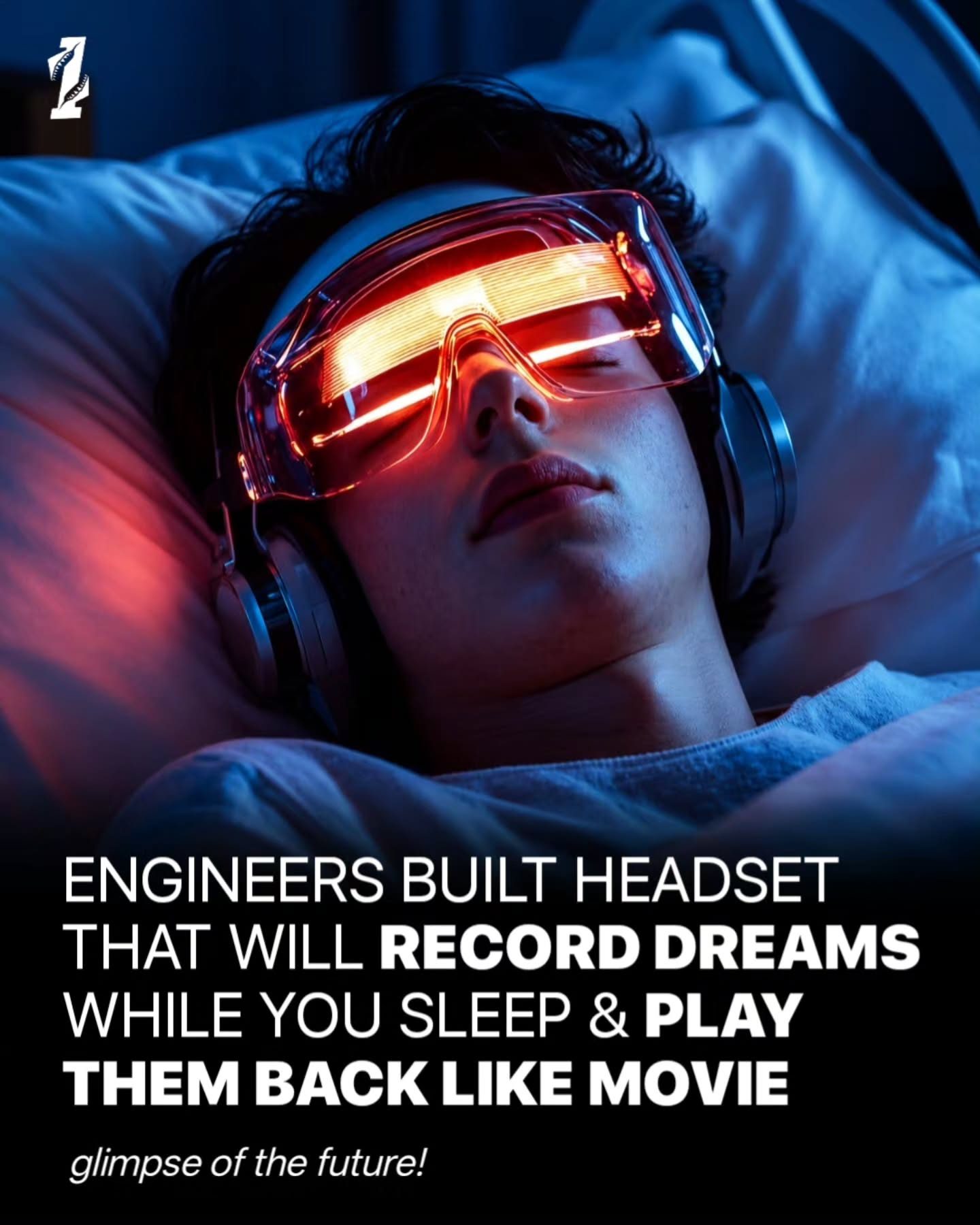
Dream Recording Headset
Imagine waking up and being able to watch your dreams like a movie. This isn't a distant science fiction fantasy anymore. Japanese researchers have made significant strides in technology that could turn this idea into reality. This technology, showcased as a futuristic headset, might soon allow you to record and play back your dreams, offering an unprecedented glimpse into the workings of your subconscious mind.
Context / Why this matters
The realm of dream recording has long been a topic of fascination and speculation. However, recent advancements by Japanese researchers at the ATR Computational Neuroscience Laboratories have brought this concept much closer to reality. Led by Professor Yukiyasu Kamitani, the team has developed a method to track and interpret neural activity during REM sleep. This groundbreaking work combines advanced fMRI brain scans with AI to decode and visualize what people are seeing in their dreams. The implications of this technology extend far beyond personal curiosity, offering potential breakthroughs in neuroscience, psychology, and our fundamental understanding of human consciousness.
Main discussion
The Science Behind Dream Recording
The dream recording headset is based on advanced neuroimaging techniques. Researchers use functional Magnetic Resonance Imaging (fMRI) to monitor brain activity during Rapid Eye Movement (REM) sleep, the phase when dreaming is most intense. By analyzing neural patterns, scientists can predict dream content with impressive accuracy, often identifying specific objects and people with a 60% to 70% success rate. This high level of precision opens the door to a variety of applications, from therapeutic uses to entertainment.
How Does It Work?
The headset works by analyzing the magnetic fields generated by the brain's activity. These signals are then processed through sophisticated AI algorithms to identify patterns associated with different types of dream content. The technology essentially translates neural activity into visual representations, allowing users to "watch" their dreams. This process involves several stages:
- Data Collection: The headset collects fMRI data during sleep, focusing on the neural activity in the visual cortex, which is integral to dream imagery.
- Pattern Recognition: The AI then identifies and categorizes these patterns, correlating them with known visual stimuli.
- Visualization: The decoded information is converted into a visual format, essentially creating a live feed of the dream as it unfolds.
The Future of Entertainment
This technology could revolutionize the entertainment industry. Imagine being able to watch your dreams as easily as streaming a movie. It could also offer unique opportunities for personal growth and self-awareness. By understanding our dreams better, we could gain insights into our subconscious thoughts, fears, and desires, potentially leading to improved mental health and well-being. The headset could become a tool for mental health professionals to better understand and treat conditions like PTSD, depression, and more.
Practical Tips
Currently, the dream recording headset is still in the experimental phase. However, here are some practical tips for those interested in exploring this technology:
- Stay Informed: Keep an eye on the latest research and developments in this field. Follow the work of Professor Yukiyasu Kamitani and the ATR Computational Neuroscience Laboratories for updates.
- Seek Professional Guidance: If you're interested in using this technology, consult with a mental health professional or a neuroscientist to understand the potential benefits and risks.
- Prepare for Ethical Considerations: Be aware of the ethical implications. As the technology becomes more accessible, it will raise questions about privacy, data security, and the potential for misuse.
Important takeaways
While the dream recording headset is still in development, the progress so far is remarkable. Key takeaways include:
- Technological Feasibility: The combination of fMRI and AI has made it possible to decode and visualize dream content with significant accuracy.
- Potential Applications: This technology has a wide range of applications, from entertainment to mental health treatment.
- Ethical Considerations: As with any groundbreaking technology, ethical considerations must be carefully addressed to ensure responsible use.
Conclusion
The dream recording headset is a glimpse into a future where we can explore the depths of our subconscious minds in unprecedented ways. This technology holds the promise of revolutionizing our understanding of dreams and the human mind. By combining advanced neuroimaging techniques with AI, researchers are paving the way for a new era of personal and scientific discovery. As the technology continues to evolve, it will be exciting to see how it transforms our relationship with our dreams and potentially redefines the future of entertainment.
Watch the Reel
Questions readers ask
How does the dream recording headset from Japanese researchers work?
The headset functions by tracking and interpreting neural activity during sleep. It then translates this activity into visual content, effectively turning dreams into watchable movies. This process involves complex algorithms that decode the signals from the brain to create a coherent visual representation.
What makes this technology significant in the field of neuroscience?
This technology is significant because it provides an unprecedented window into the subconscious mind. By accurately recording and decoding dreams, it offers neuroscientists a new tool for exploring the complexities of the brain and how it processes information during sleep.
Can anyone use this technology to watch their dreams?
Currently, the technology is still in the research phase and may not be readily available for public use. It is being developed and tested by researchers to refine its accuracy and reliability. In the future, it could potentially be accessible to a wider audience, but for now, it remains a specialized research tool.
How accurate is the dream-to-movie conversion?
The headset has shown a surprising level of accuracy in converting dream visions into movies. However, the exact accuracy can vary, and the technology is still being refined. The researchers are working to improve the fidelity of the dream interpretations to make them as accurate as possible.
What are the potential applications of this dream interpreting device beyond personal use?
Beyond personal use, this technology has the potential to be a valuable tool for psychologists and therapists, aiding in the treatment of sleep disorders, PTSD, and other conditions related to the subconscious mind. It could also advance our understanding of how the brain processes and stores information during sleep.
What are the future prospects for this dream movie technology?
The future of this technology is promising. As research and development continue, we can expect to see improvements in the accuracy and reliability of the dream-to-movie conversion. Additionally, the potential applications in various fields, such as psychology and neuroscience, are vast and could lead to significant advancements.
What role does neural activity recording play in this technology?
Neural activity recording is the foundation of this technology. The headset captures and interprets signals from the brain during sleep, which are then used to reconstruct the visual content of dreams. This process relies on sophisticated algorithms and machine learning techniques to accurately decode and translate neural activity into a watchable format.
Related deep dives
Similar reads based on topic and creator.




Recent articles
Fresh deep dives from the latest Reels we unpacked.




Comments
Be the first to comment.