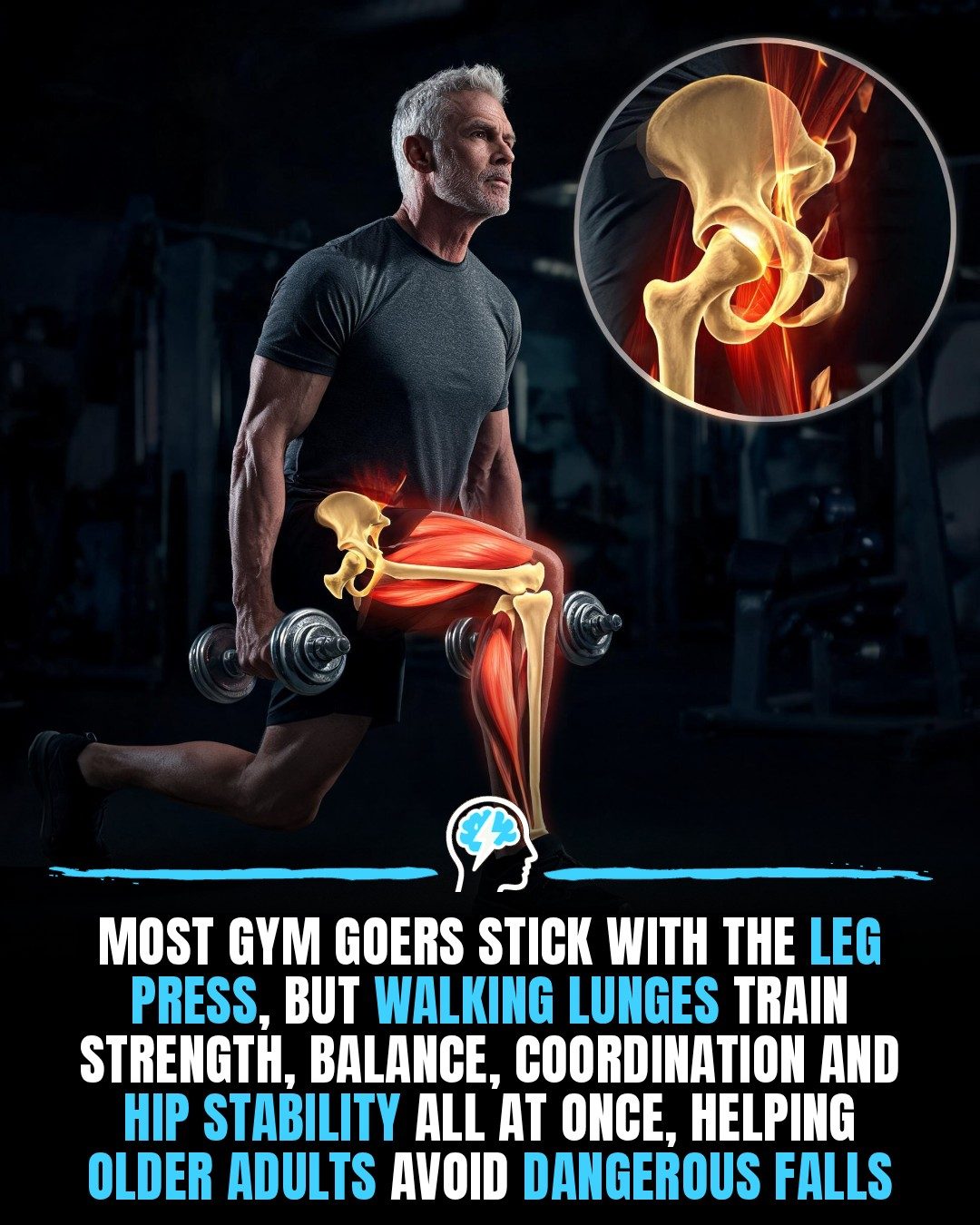
Walking Lunges: A Powerful Exercise for Real-Life Strength and Mobility
Walking lunges are a versatile and effective exercise that can significantly enhance your strength, balance, and overall mobility. Unlike the leg press, which is a staple in many gyms, walking lunges offer a more functional approach to leg training. This exercise mimics the natural movements of daily life, such as walking, climbing stairs, or stepping off a curb. For anyone over 50, incorporating walking lunges into your routine can be a game-changer, helping you stay mobile and confident for years.
Why This Matters
The benefits of walking lunges extend far beyond just building muscle. This exercise trains multiple aspects of physical fitness simultaneously, making it an excellent choice for those looking to improve their overall functional strength. By engaging various muscle groups and enhancing balance and coordination, walking lunges can help prevent falls and improve your ability to navigate everyday challenges.
Main Discussion
Enhanced Balance and Coordination
One of the standout benefits of walking lunges is their ability to improve balance and coordination. Unlike the leg press, which locks you into a fixed position, lunges require your brain and muscles to work together to keep you upright on a narrow base. This dynamic movement trains several key areas:
- Core Muscles: The core muscles that stabilize your torso are actively engaged during walking lunges. A strong core is essential for maintaining balance and posture.
- Proprioception: This refers to your body's sense of where it is in space. Walking lunges enhance proprioception, helping you stay aware of your body's position and movements.
- Stabilizing Muscles: The small muscles around your ankles and knees are crucial for stability. Walking lunges target these muscles, making them stronger and more resilient.
Hip Strength for Fall Prevention
Falls are a leading cause of injury among seniors, and weak hip muscles are often a contributing factor. Walking lunges make the glutes and other hip stabilizers work hard with every step, keeping the pelvis level and steady. This lateral strength is invaluable for navigating uneven ground or catching yourself after a trip, reducing the risk of falls and related injuries.
Long-Term Independence
Maintaining mobility in your later decades is crucial for independence and quality of life. Walking lunges prepare your body for the demands of daily life, such as climbing stairs, standing up from the floor, or going for long walks. Incorporating this exercise into your routine can help keep your hips and knees moving through their full range of motion, fighting off stiffness and ensuring you stay mobile and confident.
Real-Life Applications
Walking lunges are not just about building strength; they are about preparing your body for real-life situations. For anyone over 50, swapping seated machines for ground-based exercises can make a significant difference in your long-term mobility and confidence. This exercise mimics the movements you'll encounter in everyday life, making it a practical choice for maintaining and improving your physical abilities.
Practical Tips
Proper Form and Technique
To get the most out of walking lunges and avoid injury, it's essential to maintain proper form. Here are some tips:
- Starting Position: Stand tall with your feet hip-width apart and your core engaged.
- Step Forward: Take a large step forward with one foot, keeping your torso upright.
- Lower Down: Bend both knees to lower your body, ensuring that your front knee does not extend past your toes.
- Push Through: Push through the heel of your front foot to return to the starting position, bringing your back foot forward to meet the front.
- Repeat: Continue the movement, alternating legs with each step.
Incorporating Walking Lunges into Your Routine
Walking lunges can be incorporated into various workout routines, from strength training to functional fitness programs. Here are a few ideas:
- Strength Training: Add walking lunges to your leg day routine. Perform 3-4 sets of 10-12 reps per leg.
- Functional Fitness: Use walking lunges as part of a circuit that includes other functional movements, such as squats, push-ups, and planks.
- Warm-Up/Cool-Down: Walking lunges can also be used as a warm-up or cool-down exercise to prepare your muscles for more intense workouts or to gently stretch and strengthen them afterwards.
Progression and Variations
As you progress in your fitness journey, you can add variations and increase the intensity of your walking lunges. Here are a few ideas:
- Weighted Lunges: Hold dumbbells in each hand to add resistance and increase the challenge.
- Reverse Lunges: Step backward instead of forward to work different muscle groups and add variety to your routine.
- Side Lunges: Step to the side instead of forward to target the inner and outer thighs, as well as the glutes.
Important Takeaways
Walking lunges are a powerful exercise that can significantly enhance your strength, balance, and mobility. By mimicking the natural movements of daily life, this exercise prepares your body for real-life challenges, making it an excellent choice for anyone over 50. Incorporating walking lunges into your routine can help you stay mobile and confident, reducing the risk of falls and improving your overall quality of life. Remember to focus on proper form and technique, and don't be afraid to add variations and increase the intensity as you progress.
Conclusion
Walking lunges offer a practical and effective way to build strength and mobility, preparing your body for the demands of daily life. By focusing on balance, coordination, and fall prevention, this exercise can help you stay mobile and confident for years to come. Incorporate walking lunges into your routine, and you'll be well on your way to a stronger, more resilient body.
Watch the Reel
Questions readers ask
What makes walking lunges different from other leg strength exercises?
Walking lunges differ from traditional leg strength exercises like the leg press because they involve multiple joints and muscle groups, mimicking real-life movements. This makes them a more functional exercise, helping to improve overall mobility and coordination by training your body in a more dynamic way.
How do walking lunges help prevent falls, especially for those over 50?
Walking lunges enhance balance and stability by targeting your lower body and core muscles. This increased stability can help you maintain control during unexpected movements, reducing the likelihood of falls. Regular practice can also boost your confidence in daily movements, further decreasing fall risk.
Can walking lunges be done without any equipment?
Yes, walking lunges are a bodyweight exercise, making them accessible and convenient. You don’t need any special equipment to perform them, so you can do them at home, in a park, or anywhere else you have enough space to move safely.
What are the key muscles worked during walking lunges?
Walking lunges primarily target the quadriceps, hamstrings, glutes, and calves. They also engage your core muscles, including your abdominals and lower back, to maintain balance and stability. Moreover, they help strengthen the hips, which is crucial for overall lower body functionality.
How can walking lunges improve functional fitness?
By mimicking daily movements, walking lunges enhance your ability to perform everyday tasks with greater ease and efficiency. They improve your leg strength, balance, and coordination, making activities like climbing stairs, walking on uneven surfaces, or getting up from a chair more manageable and safer.
Are there any modifications for beginners or those with mobility issues?
Yes, for beginners or those with mobility issues, you can start with stationary lunges to build up strength and stability before progressing to walking lunges. You can also hold onto a chair or wall for support if needed. Additionally, focusing on a smaller range of motion can help build confidence and strength over time.
Related deep dives
Similar reads based on topic and creator.




Recent articles
Fresh deep dives from the latest Reels we unpacked.




Comments
Be the first to comment.