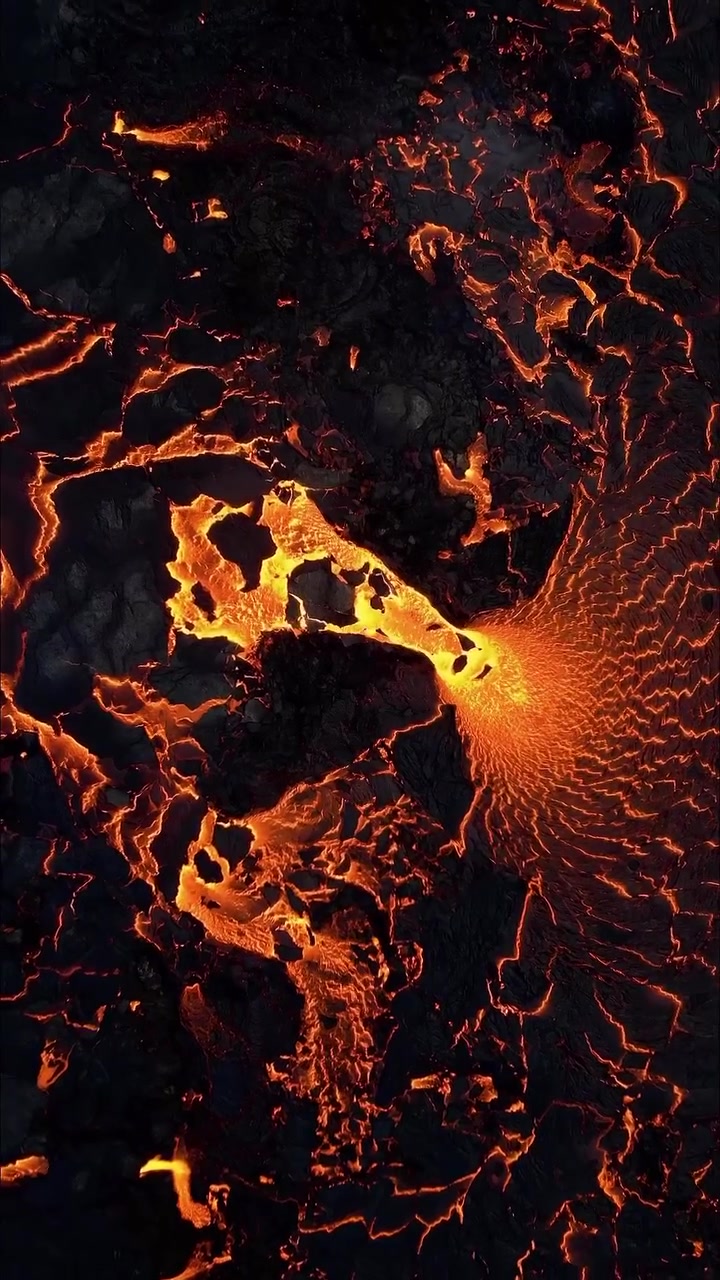
Volcanic eruptions are as terrifying as they are awe-inspiring, especially when seen up close. A video of a volcanic eruption reveals the intense, fiery flow of lava across the landscape, highlighting nature's raw and unstoppable power. This video — a close-up view of molten lava coursing across the screen — emphasizes one fact: nature can overcome everything in its path.
Eruptions Defined
A volcanic eruption is the release of magma and gas from a volcano into the atmosphere, creating a fiery display of molten rocks and heat. The lava, a highly viscous liquid, can flow up to 100 kilometers per hour and incinerate anything in its path. The force of nature is both destructive and mesmerizing, as showcased by the video. Distinctive to these eruptions is the unpredictable nature of their paths and the destruction they cause. The intense heat and molten lava can destroy everything in their path, including trees and houses. The video highlights the intense impact of the lava as it flows through the landscape. The lava moves rapidly, engulfing everything in its path. This raw power of the volcanic eruption showcases the beauty of natural disasters by demonstrating the destructive capability of the volcano. An eruption showcases the immense energy stored in the underground volcanic reservoirs, released rapidly in explosive events. The fierce heat of the lava can melt even solid rocks in its path. They happen mostly at the convergent boundaries where tectonic plates collide and subduct.
Why the lava flow is important
The video of the volcanic eruption draws attention to the risks of living near active volcanoes. The importance of understanding volcanic eruptions is crucial to preventing and mitigating disasters. The science of volcanology helps to predict eruptions and issue warnings to the public. The sudden release of energy in volcanic eruptions is like the power of an explosion, creating a spectacle of flames and lava. Yet, this power highlights the immense risk posed by volcanic eruptions to human settlements. The visual display of a volcanic eruption also emphasizes the need for safety measures in volcanic regions. Governments and scientists must collaborate to study volcanoes and devise ways to protect lives and property. The volcanic eruption video showcases the importance of preparing for natural disasters by serving as a reminder of the imminent danger. Volcanic ash can hinder aircrafts and other vehicles from moving, halting transport activities. Additionally, volcanic eruptions can lead to climate change, thus affecting the environment.
Why it is hard to predict how lava flows
The highly unpredictable nature of lava flows makes them difficult to predict. The lava can flow in any direction and might change its course without any specific reason. Studies suggest that the slopes of the volcano, the magma's viscosity, and the terrain play a crucial role in determining the lava flow. In some cases, the lava flow might change dramatically due to the geography of the terrain, making it challenging to predict. The movement of lava also depends on the terrain's slope and its viscosity. Volcanic eruptions often occur in the central part of the earth's crust beneath the ground. The unpredictable nature of volcanic eruptions can lead to danger. The rapid flow and change in path of the lava can catch people off-guard, putting them and their surroundings in danger. The lack of warning and immediate destruction makes the unpredictability of lava flows a major concern. The direction of the lava might vary due to the state of the terrain, making it uncertain. Volcanologists try to predict the path and possible damage by using advanced tech like seismic activity and gas measurements. There is still a lot to be learned about the science of volcanic eruptions.
The Inner Workings of Lava Flow
Viscosity and Density
The viscosity and density of the magma determine the lava flow during a volcanic eruption. Lava with high viscosity flows slowly, while lava with low viscosity flows quickly. The temperature of the magma also affects its viscosity and density. Volcanic ash is another important component of the lava flow. The ash is caused by the eruption of gas and lava into the sky, which is later deposited to the ground. The ash caused by the eruption can be harmful, causing respiratory problems in people and animals. Fumaroles are the opening from which gas escapes. The escape of gas during a volcanic eruption creates holes in the earth, known as fumaroles. They are a characteristic of volcanic activity. The lava flows out of the earth, and the gas escapes through the fumaroles, causing geysers and hot springs. The fumaroles are harmful due to the toxic gases emitted from them.
Temperature and Pressure
The temperature and pressure of the lava flow is another critical aspect of volcanic eruptions. The lava can reach temperatures of up to 1,200 degrees Celsius, making it extremely dangerous. The pressure of the lava flow is also crucial, as it determines the speed and distance the lava can travel. High pressure can cause the lava to travel further and faster, while low pressure can slow it down. The temperature and pressure of lava flows are critical in understanding the volatile nature of volcanic eruptions. The extreme heat and pressure can cause explosions and the release of toxic gases. The pressure within the magma chamber increases due to the buildup of gases, leading to an eruption. Scientists monitor the temperature, pressure, and gas emissions to predict an eruption or even stop it.
The Science of Lahars
The movement of lava and volcanic ash can cause lahar, a volcanic mudflow. Lahars can be dangerous and deadly, as they can travel at high speeds and cover long distances. They are a mix of water, volcanic ash, and rocks that move down the slopes of the volcano during an eruption. Lahar can also be caused by heavy rainfall on volcanic ash. They can destroy everything in their path and cause significant destruction. Street blockage, home damage, and soil erosion are all caused by lahars. Lahars comprise volcanic particles like volcanic ash, lava, and water, and they can be either hot or cold. Mountainous regions are usually prone to Lahars due to the existence of volcanic ash, which looses when it rains. Lahars are dangerous because of their unpredictability, speed, and the ability to destroy everything in their path. Scientists monitor them to predict and prevent disaster by monitoring volcanic activity.
Where the lava flows
Types of Lava Flows
There are several types of lava flows, and each type has its unique characteristics and behavior. The most common types of lava flows are the aa lava and the pahoehoe lava. Some lava flows are also called blocky lava. The aa lava is characterized by its rough, jagged surface and slow-moving flow. It is also known as clinker lava. Pahoehoe lava has a smooth, ropy surface and flows quickly. On the other hand, blocky lava is characterized by its large, angular blocks of solidified lava. The aa lava is the most dangerous. it is also called clinker lava because of its rough, sharp, jagged surface. The aa lava is the most dangerous. The aa lava flows slowly, but its rough surface makes it easy to trap and overwhelm people and animals. The pahoehoe lava is smoother and easier to walk on, but its fast-moving flow makes it dangerous. Blocky lava is the least dangerous of the three. Its large, angular blocks are hard to get trapped in.
Geographical Factors
Geographical factors play a crucial role in determining the path and behavior of lava flows. The slope, elevation, and topography of the land can all affect how lava flows. For example, lava may flow faster on steep slopes and slower on gentle slopes. The path of lava flow may also be influenced by the obstacles in its path, such as trees, rocks, and buildings. The lava may change its course to avoid these obstacles. It may also flow around them, but it might create a new path. The geological factors of the terrain also influence the path of the lava. Rocks like felsic and mafic can determine the movement of the lava. Felsic rocks are lighter and have a low melting point, while mafic rocks are heavier and have a higher melting point. The lava moves freely over felsic rocks but slows down over mafic rocks, forcing it to change its path. The geothermal gradient helps in determining the inner state of the earth, which could lead to volcanic eruptions. It is a measure of temperature increase with depth and helps in predicting volcanic eruptions.
Furthering the science
The further study of volcanic eruptions provides valuable insights into the science of volcanology. It helps to understand the nature of volcanoes, their formation, and the factors that affect their eruptions. The science of volcanology can aid in the development of methods to predict and mitigate the impact of volcanic eruptions. Lahars caused by volcanic eruptions can be harmful to the environment. This is true when it rains, and volcanic ash mixes with rainwater. The lahars also destroy roads, homes, and other infrastructure. The further study of volcanic eruptions also helps to understand the hazards of volcanic eruptions. The science helps to know the effects of the lava, ash, and gas from the eruption. Volcanologists can use the information gained from the study to develop and implement safety measures for nearby communities. The information helps to know the effects of volcanic eruptions. Monitoring volcanic activity helps scientists to predict and prevent volcanic eruptions.
Volcanic Management
To prevent volcanic disasters, communities must take practical steps. First, know your volcano: The people living near volcanoes should understand the behavior of the volcano. They should know the eruption history of the volcano and its potential hazards. Also, develop an emergency response plan. The residents should develop an emergency response plan outlining the actions to be taken during an eruption. It should include evacuation routes, shelter locations, and communication strategies. Third, remain informed and prepared: Residents should remain informed and prepared during an eruption. Keep a survival kit in a safe place. It should contain essential items such as food, water, first aid, and a flashlight. People should have access to emergency services and healthcare professionals.
Watch the Reel
Questions readers ask
What exactly is magma, and how does it differ from lava?
Magma is molten rock found beneath the Earth's surface, while lava is magma that has erupted onto the surface. In the case of a volcanic eruption, magma becomes lava once it flows out of the volcano, incinerating everything in its path.
How fast can lava actually flow, and is it always as rapid as 100 kilometers per hour?
Lava can flow at varying speeds, but it's not always as rapid as 100 kilometers per hour. The speed can depend on the type of lava and the terrain. For example, basaltic lava can flow up to 32 kilometers per hour, while more viscous lava, like andesitic lava, might flow at a slower pace.
What are some of the most common risks associated with living near an active volcano?
Living near an active volcano poses several risks, including the destruction of property and loss of life due to lava flows, pyroclastic flows, and ashfall. Additionally, volcanic eruptions can cause lahars (mudflows), which can be particularly dangerous. Volcanic ash can also disrupt transportation and cause respiratory issues.
How do scientists predict volcanic eruptions, and how accurate are these predictions?
Scientists use a combination of monitoring techniques, including seismic activity, gas emissions, and ground deformation, to predict volcanic eruptions. While these methods have improved significantly, predictions are not always accurate due to the unpredictable nature of volcanic activity. However, they do provide valuable warnings to help mitigate risks.
What measures can be taken to prepare for a volcanic eruption?
Preparation for a volcanic eruption involves creating emergency plans, stocking up on supplies, and staying informed about the volcano's activity. Additionally, understanding evacuation routes and having a communication plan in place are crucial. Governments and local authorities often provide guidelines and resources to help communities prepare.
Can volcanic eruptions impact the climate, and if so, how?
Yes, volcanic eruptions can impact the climate. Large eruptions can release significant amounts of sulfur dioxide into the atmosphere, which can reflect sunlight and cool the Earth's surface. Additionally, volcanic ash and gases can affect weather patterns and contribute to acid rain. The long-term effects on climate can vary depending on the magnitude and frequency of the eruptions.
What are some of the most active volcanoes in the world, and where are they located?
Some of the most active volcanoes in the world include Kilauea and Mauna Loa in Hawaii, Mount Etna in Italy, Mount Merapi in Indonesia, and Mount Vesuvius in Italy. These volcanoes are located in areas known for their tectonic activity, such as the Pacific Ring of Fire, along the convergent boundaries of tectonic plates.
Related deep dives
Similar reads based on topic and creator.

Recent articles
Fresh deep dives from the latest Reels we unpacked.

Comments
Be the first to comment.