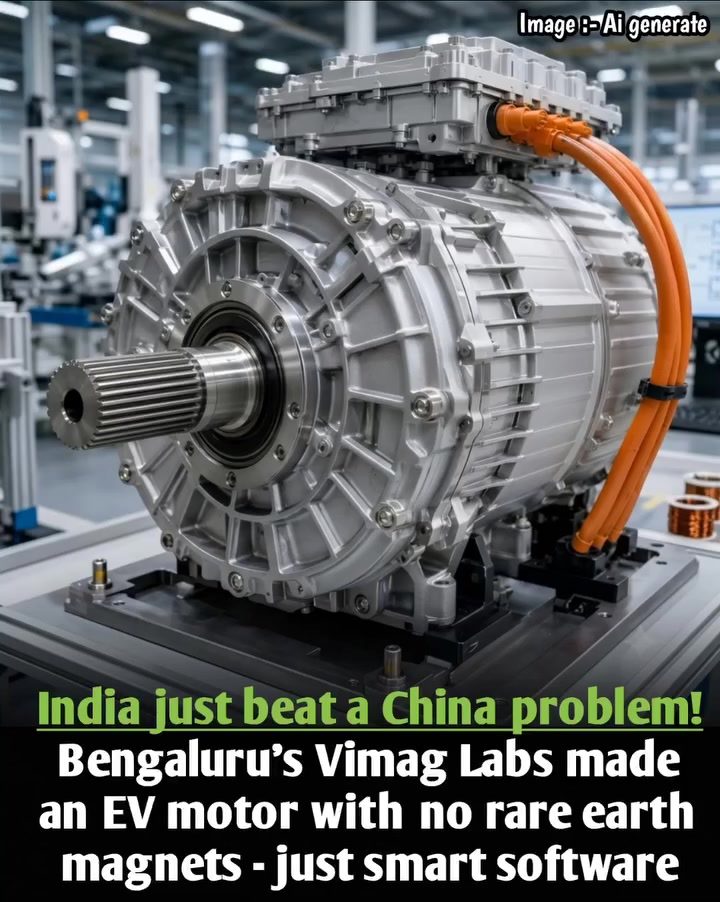
Electric Vehicle Motors: The Innovation of Rare-Earth-Free Designs
Bangaluru-based deep-tech startup Vimag Labs has made significant strides in electric vehicle (EV) technology. The company has secured its fifth patent for a software-defined, rare-earth-free electric motor. This breakthrough is a testament to the innovative spirit driving the EV industry forward.
Why This Matters
The development of rare-earth-free electric motors is crucial for several reasons. Rare earth elements, such as neodymium and dysprosium, are essential components in traditional electric motors due to their unique magnetic properties. However, these elements are scarce and primarily sourced from a few countries, notably China. This dependency poses significant challenges, including supply chain disruptions and geopolitical risks.
By eliminating the need for rare earth magnets, Vimag Labs' innovation addresses these issues, paving the way for more sustainable and secure EV motor design.
Main Discussion
The Role of Software in Electric Motors
Vimag Labs' breakthrough relies heavily on smart software. This approach leverages advanced algorithms and control systems to enhance motor performance without relying on rare earth magnets. The software-defined motor optimizes efficiency, power, and durability, making it a viable alternative to traditional designs.
Benefits of Rare-Earth-Free Motors
Rare-earth-free electric motors offer several advantages:
-
Reduced Dependency on Scarce Resources: By eliminating the need for rare earth elements, these motors reduce reliance on limited resources and mitigate supply chain risks.
-
Environmental Sustainability: The production and extraction of rare earth elements can be environmentally damaging. Developing motors that do not require these elements helps in creating a more sustainable EV ecosystem.
-
Cost Efficiency: The cost of rare earth elements can be volatile due to their scarcity and geopolitical factors. Rare-earth-free motors can help stabilize costs and make EVs more affordable.
-
Improved Performance: Advanced software algorithms can optimize motor performance, leading to better efficiency, higher power output, and longer lifespan.
The Innovation Process
Vimag Labs' journey to developing a rare-earth-free electric motor involved several key steps:
-
Research and Development: Extensive research was conducted to understand the magnetic properties of materials and the potential of software-defined control systems.
-
Prototyping and Testing: Multiple prototypes were created and tested to ensure that the motor met performance standards and could operate efficiently without rare earth magnets.
-
Patenting and Commercialization: After successful testing, Vimag Labs secured patents for their innovation and is now working towards commercializing the technology.
Practical Tips for Implementing Rare-Earth-Free Motors
For EV manufacturers and consumers looking to benefit from this technology, here are some practical tips:
-
Partner with Innovators: Collaborate with startups and research institutions like Vimag Labs to stay ahead of the curve in motor technology.
-
Invest in Software Development: Prioritize investment in software-defined control systems to enhance motor performance and efficiency.
-
Promote Sustainable Practices: Adopt sustainable practices in manufacturing and resource management to support the development of rare-earth-free motors.
-
Stay Informed: Keep abreast of the latest advancements in motor technology and emerging trends in the EV industry.
Important Takeaways
The innovation by Vimag Labs represents a significant leap forward in electric motor technology. By eliminating the need for rare earth magnets, they have addressed critical challenges in the EV industry. This breakthrough highlights the potential of software-defined motors and underscores the importance of sustainable practices in the development of future technologies.
Conclusion
The development of rare-earth-free electric motors is a groundbreaking achievement that addresses critical issues in the EV industry. Vimag Labs' innovation demonstrates the power of smart software in enhancing motor performance and sustainability. As the demand for EVs continues to grow, embracing such technologies will be essential for creating a more sustainable and resilient future.
Watch the Reel
Questions readers ask
What are rare-earth metals and why are they typically used in EV motors?
Rare-earth metals are a group of 17 elements that have unique magnetic properties, making them highly desirable for use in traditional EV motors. They help enhance the motors' performance, efficiency, and power density. However, they are scarce and primarily sourced from a few countries, leading to supply chain concerns.
How does Vimag Labs' new EV motor address the issues with rare-earth metals?
Vimag Labs' new EV motor avoids the use of rare-earth metals by leveraging advanced software to optimize performance. This innovation mitigates supply chain risks and environmental concerns associated with rare-earth mining, while still delivering high performance.
What makes Vimag Labs' approach to EV motors innovative?
Vimag Labs' approach is innovative in its use of software to define and optimize motor performance. This software-defined design enables the motor to achieve high efficiency and power without relying on rare-earth metals, setting a new standard in sustainable EV technology.
What are the benefits of a rare-earth-free EV motor for the environment?
Rare-earth-free EV motors reduce the environmental impact by eliminating the need for mining and processing these scarce metals. This lowers the carbon footprint and pollution associated with rare-earth extraction and refines the overall sustainability of electric vehicle technology.
How does Vimag Labs' breakthrough impact the EV industry?
By developing a rare-earth-free EV motor, Vimag Labs is helping to reduce the industry's dependence on scarce metals and mitigating supply chain risks. This breakthrough encourages other manufacturers to explore alternative technologies, fostering a more robust and sustainable EV market.
What are the implications of Vimag Labs' software-defined motor design?
The software-defined motor design from Vimag Labs allows for greater flexibility and optimization in motor performance. It can adapt to different EV models and applications, ensuring that the motor delivers optimal efficiency and power, while promoting a long-term sustainable solution.
How does Vimag Labs' innovation support the broader goal of sustainable transportation?
Vimag Labs' innovation supports sustainable transportation by reducing the reliance on limited resources and minimizing the environmental impact of EV production. By optimizing motor performance through software, the startup paves the way for more efficient, eco-friendly electric vehicles that align with global sustainability goals.
Related deep dives
Similar reads based on topic and creator.




Recent articles
Fresh deep dives from the latest Reels we unpacked.




Comments
Be the first to comment.