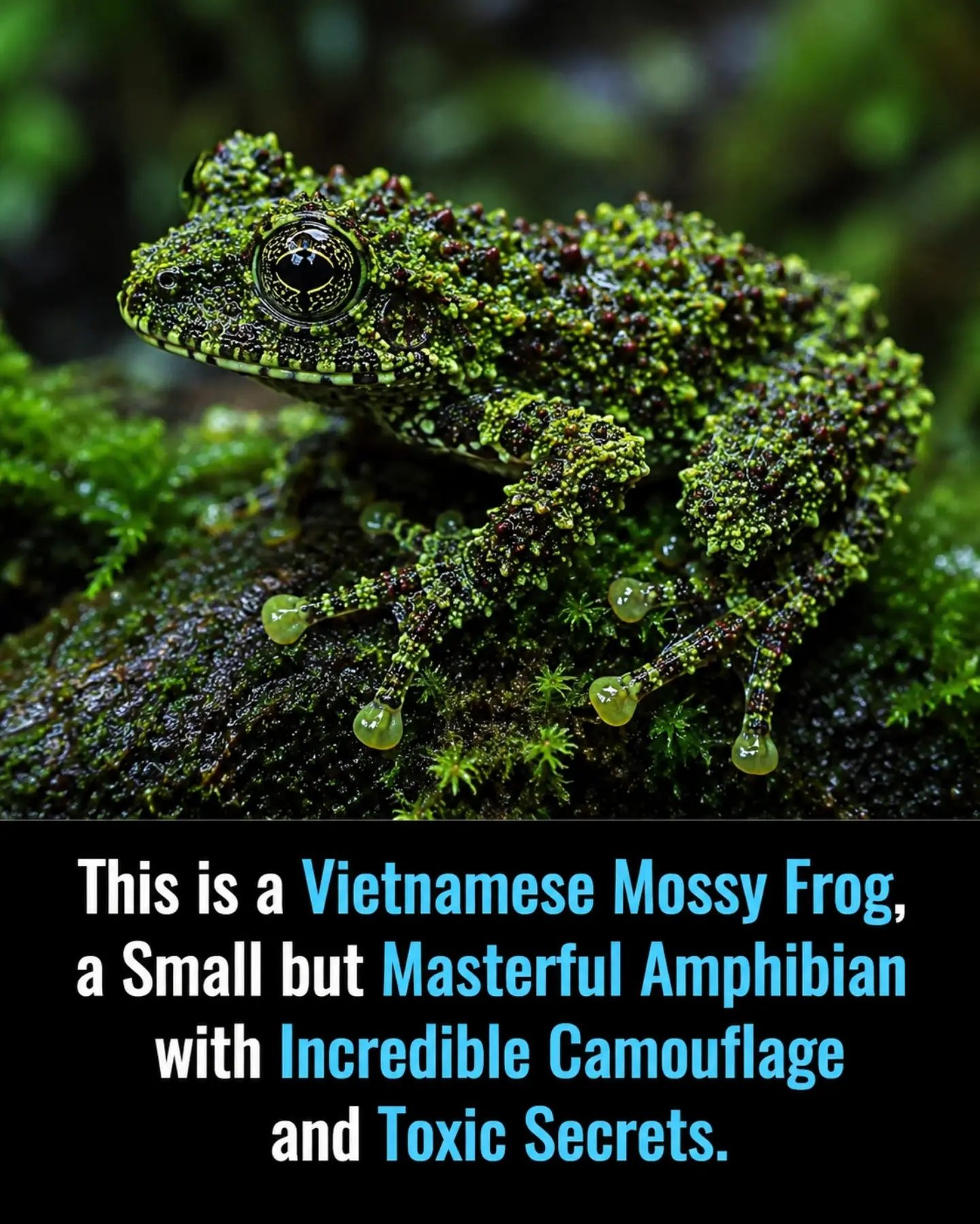
Vietnamese Mossy Frog
The Vietnamese Mossy Frog, a small but remarkable amphibian, is renowned for its exceptional camouflage and toxic defenses. This frog, native to the lush forests of Vietnam, has evolved unique adaptations that make it a fascinating subject of study in the world of nature.
Why this matters
Understanding the Vietnamese Mossy Frog's unique traits offers insights into the diverse strategies employed by animals for survival. Its remarkable camouflage and toxic defenses provide a glimpse into the complex interplay between predators and prey in natural ecosystems. These adaptations not only ensure the frog's survival but also highlight the intricate balance of nature.
Main discussion
Incredible Camouflage
The Vietnamese Mossy Frog's most striking feature is its ability to blend seamlessly with its mossy surroundings. This masterful camouflage is achieved through its skin, which is covered with small, moss-like protrusions. These protrusions mimic the texture and color of the foliage, making the frog nearly invisible to predators and prey alike. This adaptation is particularly effective in the damp, mossy environments where the frog resides, providing it with a reliable defense mechanism against potential threats.
The frog's camouflage is not static; it can adjust its appearance to some extent, depending on the environment. This adaptability further enhances its stealth, making it one of the most elusive creatures in its habitat. The ability to change its appearance subtly is a testament to the frog's evolutionary success and its role in the ecosystem.
Toxic Secrets
While the Vietnamese Mossy Frog's camouflage is its primary defense, it also possesses a more insidious means of protecting itself: toxicity. The frog secretes a potent toxin from its skin, which acts as a powerful deterrent to predators. This toxin is so potent that it can cause severe discomfort or even death to animals that attempt to eat the frog. This chemical defense is a critical aspect of the frog's survival strategy, ensuring that it remains unharmed in its natural habitat.
The toxin's potency and delivery method are fascinating. When threatened, the frog can release the toxin through its skin, creating a barrier that predators are reluctant to cross. This chemical defense, combined with its camouflage, makes the Vietnamese Mossy Frog a formidable opponent for any would-be predator.
Small but Masterful
Despite its small size, the Vietnamese Mossy Frog is a master of its environment. Its ability to remain hidden and defend itself against predators makes it a resilient and adaptable species. The frog's small stature allows it to navigate its habitat more efficiently, making it easier to find food and shelter. This small size is also an advantage in its stealth, allowing it to move quickly and quietly through its surroundings without attracting attention.
The frog's small size is also beneficial in terms of energy conservation. A smaller body requires less energy to sustain, which is particularly important in environments where food may be scarce. This energy efficiency, combined with its other adaptations, ensures the frog's survival in challenging conditions.
Practical tips
When exploring areas where the Vietnamese Mossy Frog might be found, it's important to be aware of its camouflage and toxic defenses. Here are some practical tips for observing this remarkable amphibian:
Respect the Environment
Always remember that the Vietnamese Mossy Frog is a wild animal and should be treated with respect. Avoid disturbing its habitat or handling the frog, as this can cause stress and potentially harm both the frog and the environment.
Observe from a Distance
Use binoculars or a camera with a zoom lens to observe the frog from a safe distance. This will allow you to appreciate its camouflage and behavior without disturbing it. Remember that the frog's stealth is a critical part of its defense, so avoid getting too close.
Be Aware of Toxic Defenses
The frog's toxic defenses are potent, so be cautious when handling any materials or surfaces where the frog may have been. Washing hands thoroughly is a good practice after any contact with its habitat.
Important takeaways
- The Vietnamese Mossy Frog is a small but highly adaptable amphibian with incredible camouflage and toxic defenses.
- Its moss-like skin and ability to blend into its surroundings make it nearly invisible to predators and prey.
- The toxic secretions from its skin are a potent deterrent, ensuring its survival in the wild.
- Its small size and energy efficiency contribute to its resilience and adaptability.
- Observing this frog requires respect for its habitat and cautious behavior to avoid disturbing it.
Conclusion
The Vietnamese Mossy Frog is a remarkable example of nature's ingenuity. Its exceptional camouflage and toxic defenses make it a fascinating subject of study, offering insights into the diverse strategies employed by animals for survival. Understanding this species provides a deeper appreciation for the complexity and beauty of natural ecosystems. Whether you're an avid naturalist or simply curious about the wonders of the natural world, the Vietnamese Mossy Frog is a creature that exemplifies the resilience and adaptability of life on Earth.
Watch the Reel
Questions readers ask
How does the Vietnamese Mossy Frog use camouflage to survive?
The Vietnamese Mossy Frog uses its moss-like skin protrusions to blend seamlessly with its forest surroundings. This exceptional camouflage helps it avoid predators by making it nearly invisible among the foliage and moss.
What makes the Vietnamese Mossy Frog's camouflage unique?
The frog's unique camouflage is achieved through specialized skin protrusions that mimic the appearance of moss. This adaptational trait sets it apart from other amphibians and contributes to its survival in the dense forests of Vietnam.
Are there other species that exhibit similar camouflage to the Vietnamese Mossy Frog?
While there are other amphibians and animals that use camouflage for survival, the Vietnamese Mossy Frog's moss-like skin protrusions are particularly distinctive. This type of camouflage is not commonly found among other species, making the Vietnamese Mossy Frog a standout example.
How do the toxic defenses of the Vietnamese Mossy Frog work?
The Vietnamese Mossy Frog secretes toxins through its skin that deter predators. These toxins can cause irritation or discomfort, making the frog an unappealing meal. This defense mechanism complements its camouflage, providing an additional layer of protection.
What role do the Vietnamese Mossy Frog's adaptations play in its ecosystem?
The adaptations of the Vietnamese Mossy Frog, including its camouflage and toxic defenses, play a crucial role in maintaining the balance of its ecosystem. By evading predators and thriving in its environment, the frog contributes to the biodiversity of the Vietnamese forests.
Can the Vietnamese Mossy Frog change its camouflage to match different environments?
The Vietnamese Mossy Frog's camouflage is primarily genetic and does not change to match different environments. However, its moss-like skin protrusions are highly effective in the specific forest habitats it inhabits, providing excellent concealment in its natural surroundings.
How has the Vietnamese Mossy Frog's survival strategy influenced other species?
While the Vietnamese Mossy Frog's survival strategies are unique to its species, they offer insights into the broader natural world. By studying its camouflage and defenses, biologists can gain a deeper understanding of the various ways animals adapt to their environments, potentially influencing research and conservation efforts.
Related deep dives
Similar reads based on topic and creator.


Recent articles
Fresh deep dives from the latest Reels we unpacked.


Comments
Be the first to comment.