Street Math Education in Vietnam
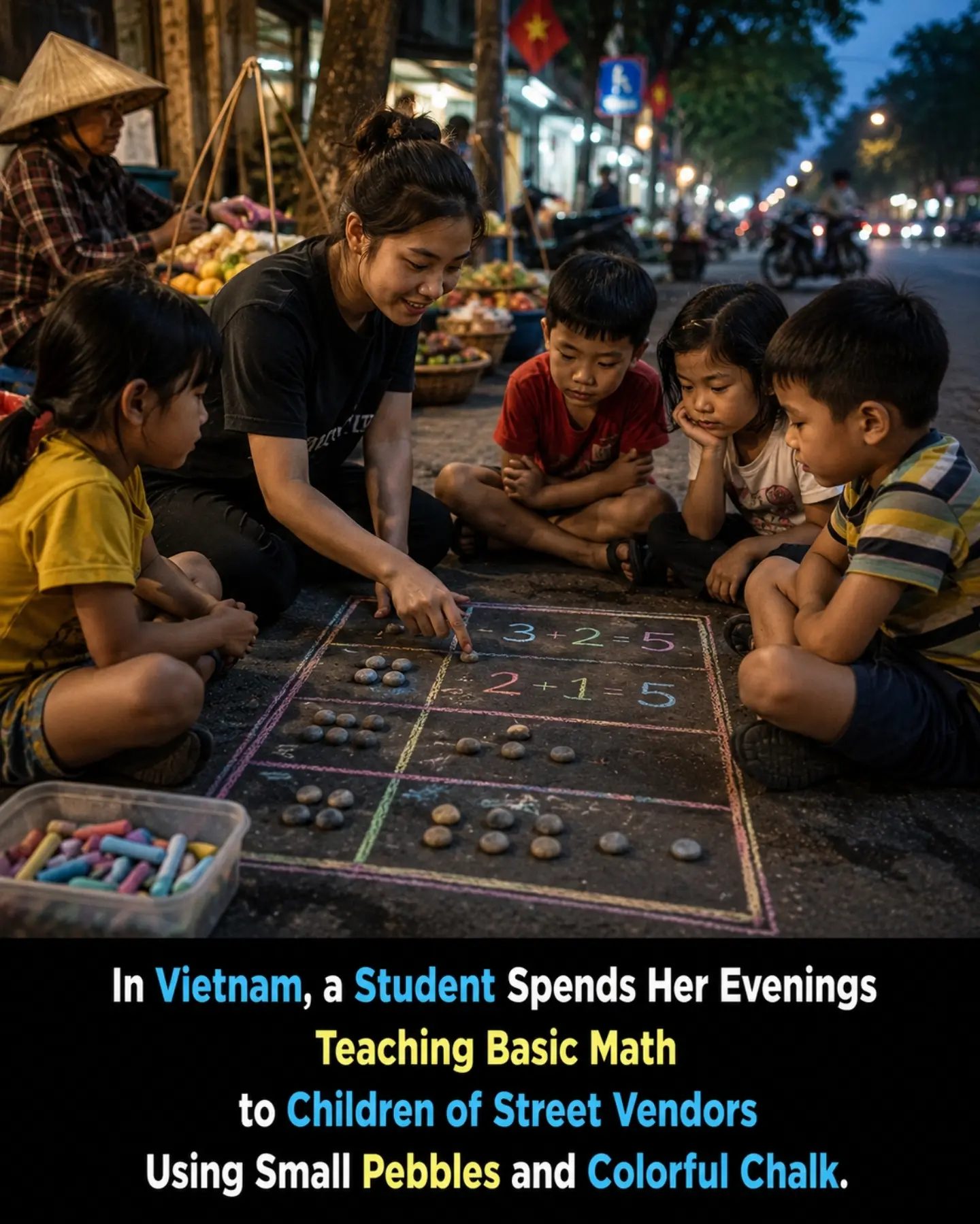
Street math education is a vibrant and accessible way to teach basic mathematical concepts, especially in environments where resources are limited. In Vietnam, a young student has taken the initiative to teach basic math to children of street vendors using simple, everyday materials like chalk and pebbles. This approach not only makes learning fun and interactive but also demonstrates the power of community engagement in education.
Why This Matters
This method of teaching basic math is particularly significant in contexts where traditional educational resources are scarce. By using readily available materials, the young teacher ensures that the learning process is both affordable and engaging. This kind of initiative highlights the importance of community-driven education and the potential for creative problem-solving in teaching.
Learning Math with Chalk and Pebbles
The Setting
The lessons take place in a lively Vietnamese street scene. The backdrop of street vendors adds a unique cultural context, making the learning environment dynamic and real-world. This setting not only provides a practical example of math in everyday life but also fosters a sense of community and shared learning.
Using Everyday Materials
One of the standout features of this teaching method is the use of simple, accessible materials like chalk and pebbles. Chalk is used to write equations directly on the ground, turning the street into an interactive blackboard. Pebbles serve as tactile representations of numbers, allowing children to visualize and manipulate mathematical concepts hands-on.
The tactile and visual nature of this learning approach is particularly effective for young learners. It engages multiple senses, making the learning experience more memorable and enjoyable. Additionally, this method allows for flexibility and adaptability. The teacher can easily adjust the complexity of the equations and the size of the groups based on the available materials and the children's understanding.
Teaching Basic Mathematical Concepts
The lessons focus on basic mathematical concepts such as addition, subtraction, and possibly more complex operations depending on the children's level of understanding. By using pebbles to represent numbers, the children can physically add and subtract, which helps in reinforcing these fundamental concepts. The use of chalk allows the teacher to create visual aids that further enhance the learning process.
Practical Tips for Street Math Education
Utilize Local Resources
One of the key takeaways from this approach is the importance of utilizing local resources. In many communities, especially those with limited access to traditional educational materials, everyday items can be repurposed for educational purposes. This not only makes learning more accessible but also encourages creativity and resourcefulness.
Engage with the Community
Involving community members in the teaching process can have a profound impact on the effectiveness of education. Local vendors, for example, can provide a rich context for learning. Their presence can also serve as motivation for the children, showing them that learning is relevant to their everyday lives.
Make Learning Interactive
Interactive learning methods, such as using chalk and pebbles, make the learning process more engaging and effective. When children are actively involved in their learning, they are more likely to retain the information and develop a deeper understanding of the concepts.
Important Takeaways
The Power of Community
Community-driven initiatives can play a crucial role in bridging educational gaps. When members of the community take an active interest in educating the younger generation, it not only enriches the learning experience but also strengthens community bonds.
Simple Materials, Big Impact
Simple, everyday materials can have a significant impact on education. Chalk and pebbles are not just tools for teaching; they are symbols of creativity and innovation in education. They show that with a bit of imagination, even the most basic resources can be transformed into powerful teaching aids.
Accessible Education for All
Education should be accessible to everyone, regardless of their circumstances. Initiatives like this one demonstrate that with the right approach and resources, education can reach even the most marginalized communities. This not only empowers the children but also contributes to the overall development of the community.
Conclusion
The method of teaching basic math using chalk and pebbles in a Vietnamese street scene is a testament to the power of community-driven education. By utilizing simple, accessible materials and involving the local community, this initiative makes learning fun, interactive, and relevant. It serves as an excellent example of how education can be made accessible and impactful, even in the most resource-constrained environments. This approach not only teaches basic mathematical concepts but also fosters a sense of community and shared learning, making it a valuable addition to any educational framework.
Watch the Reel
Questions readers ask
What inspired the young student to use chalk and pebbles for teaching math to street kids in Vietnam?
The young student likely chose chalk and pebbles to teach street kids math due to the materials' accessibility and affordability. This decision ensures that all children, regardless of their background, can participate in learning basic math concepts. This approach is particularly effective in resource-limited environments.
How does the use of chalk and pebbles make math learning more interactive?
Chalk and pebbles make math learning more interactive by engaging multiple senses. For example, children can physically count pebbles, draw shapes and numbers with chalk, and visualize abstract math concepts in a tangible way. This hands-on approach fosters a deeper understanding and retention of math concepts.
What are the benefits of teaching street kids basic math in Vietnam?
Teaching street kids basic math in Vietnam provides them with essential skills for everyday life and future opportunities. It also empowers children by giving them a sense of accomplishment and boosting their confidence. Additionally, it can help break the cycle of poverty by providing a foundation for further learning and employment.
How does this initiative demonstrate the power of community engagement in math learning?
This initiative shows the power of community engagement by involving a young student in the teaching process and providing a platform for local children to participate in learning. It encourages a sense of community responsibility and unity, where everyone plays an active role in the development and well-being of the children. It also sets an example for others to follow, fostering a ripple effect of support for children's learning.
What kind of basic math concepts can be taught using chalk and pebbles?
Using chalk and pebbles, a wide range of basic math concepts can be taught, including counting, addition, subtraction, multiplication, and division. Children can also learn about shapes, patterns, and basic geometry. These concepts can be reinforced through hands-on activities and games, making the learning process enjoyable and engaging for the children.
What challenges might this initiative face, and how can they be addressed?
One challenge might be the lack of consistent support and resources. To address this, community involvement and local partnerships can be fostered to ensure the sustainability of the initiative. Additionally, the initiative might face challenges from external factors, such as weather conditions, which could disrupt the learning sessions. To combat this, alternative indoor spaces could be secured when necessary, ensuring the continuity of the teaching sessions.
Related deep dives
Similar reads based on topic and creator.




Recent articles
Fresh deep dives from the latest Reels we unpacked.




Comments
Be the first to comment.