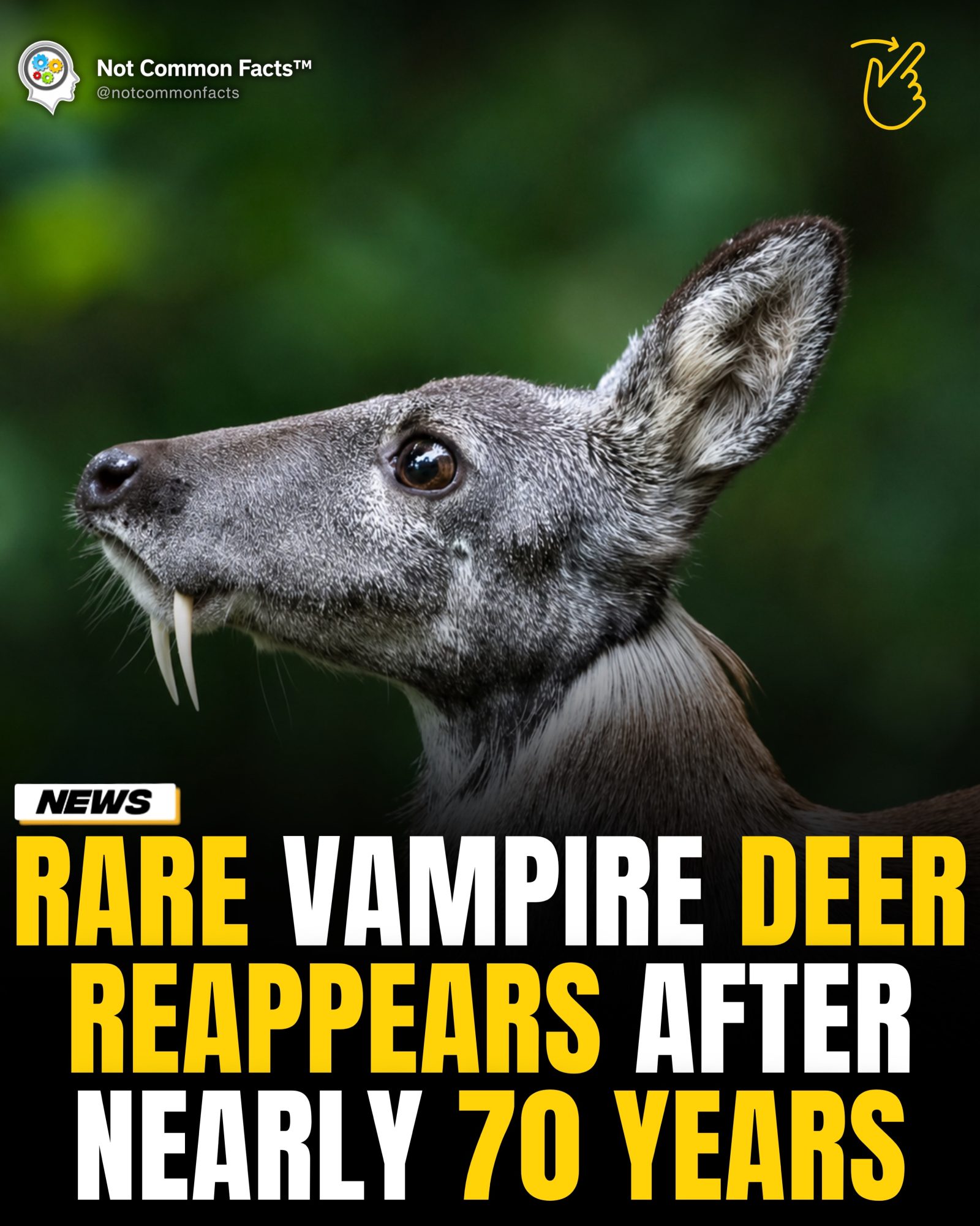
Vampire Deer: The Fascinating Resurgence of a Rare Species
The Vampire Deer, a rare and enigmatic species, has captivated both the scientific community and nature enthusiasts with its distinctive features and elusive nature. This tiny deer is renowned for its prominent, saber-like fangs, which are disproportionately large for its small body. These unique characteristics have earned it the moniker "Vampire Deer," despite its innocent and docile nature.
Why This Matters
The reappearance of the Vampire Deer after nearly 70 years of sparse sightings is a significant event for conservationists. This rediscovery offers new opportunities to study and protect this elusive species. Understanding the Vampire Deer's habits, diet, and habitat can provide valuable insights into broader ecological issues and conservation strategies. Moreover, the rediscovery serves as a reminder of the vast, unexplored natural wonders that still exist and the importance of preserving these habitats.
The Vampire Deer: An In-Depth Look
Unique Physical Traits
The most striking feature of the Vampire Deer is its elongated canine teeth, which resemble small sabers. These fangs are much larger than those of other deer species, giving the deer a distinctive and somewhat unsettling appearance. Despite their prominent teeth, these deer are herbivores, primarily feeding on leaves, fruits, and other plant materials. Their primary use for these teeth is unknown, but it is believed they may play a role in defense or attracting mates.
Habitat and Distribution
The Vampire Deer typically inhabits dense forests and wooded areas, where it can camouflage itself effectively. Their small size and elusiveness make them difficult to spot, contributing to their mysterious reputation. The recent sightings have occurred in specific regions where they were thought to be extinct, highlighting the importance of continued conservation efforts. These areas often have lush vegetation and ample water sources, providing the ideal environment for the deer to thrive.
Behavior and Social Structure
Vampire Deer are generally solitary animals, preferring to roam alone rather than in groups. This solitary nature adds to their elusiveness and makes them even harder to study. However, during mating seasons, males and females may come together briefly before returning to their solitary lives. Young deer, known as fawns, stay with their mothers for the first few months of their lives, learning essential survival skills.
Conservation Challenges
The Vampire Deer faces numerous threats to its survival, including habitat loss, poaching, and climate change. Conservation efforts are crucial to protect these deer and their habitats. Recent sightings have sparked renewed interest and hope among conservationists, who are now more determined than ever to safeguard this unique species.
Practical Tips for Conservation
Habitat Protection
Protecting the natural habitats of the Vampire Deer is paramount. This involves efforts to prevent deforestation, pollution, and other environmental degradation that can affect their living conditions. Creating protected areas and enforcing regulations can help ensure that these deer have a safe and stable environment to thrive in.
Research and Monitoring
Ongoing research and monitoring are essential to understand the behavior, population dynamics, and ecological needs of the Vampire Deer. Scientists and conservationists can use this information to develop effective strategies for their protection and conservation.
Public Awareness
Raising public awareness about the Vampire Deer and the importance of its conservation can generate support for conservation efforts. Educating the public about the challenges these deer face and the steps being taken to protect them can foster a sense of responsibility and encourage more people to get involved.
Community Involvement
Engaging local communities in conservation efforts is crucial. Providing them with the tools, knowledge, and resources to protect the Vampire Deer and their habitats can make a significant difference. Collaborative efforts can ensure that conservation goals are met and that the deer have the best chance of survival.
Important Takeaways
The reappearance of the Vampire Deer is a testament to nature's resilience and the importance of conservation efforts. This unique species, with its distinctive fangs and elusive behavior, serves as a reminder of the many wonders that still exist in our natural world. Protecting the Vampire Deer and its habitat is not just about preserving a single species but also about safeguarding the broader ecosystem and the rich biodiversity it supports.
Conclusion
The Vampire Deer's reemergence after nearly 70 years is a fascinating and encouraging development for wildlife conservation. Its unique features, elusive nature, and the significant threats it faces underscore the importance of ongoing efforts to protect and study this rare species. By understanding more about the Vampire Deer and working together to safeguard its habitat, we can ensure that this fascinating creature continues to thrive for generations to come.
Watch the Reel
Questions readers ask
What makes the Vampire Deer unique among other deer species?
The Vampire Deer stands out due to its prominent, saber-like fangs, which are unusually large compared to its small body size. This distinctive feature has earned it the intriguing name, despite its gentle and harmless nature.
Why is the reappearance of the Vampire Deer significant?
The resurgence of the Vampire Deer after nearly 70 years is notable because it provides a rare opportunity for scientists and conservationists to study and protect this elusive species. This could lead to important insights into broader ecological conservation efforts.
Are Vampire Deer dangerous due to their fangs?
Despite their menacing appearance, Vampire Deer are not dangerous. They are docile creatures and their fangs are not used for hunting or aggression. Instead, these fangs are likely used to strip bark from trees and branches.
What can we learn from the Vampire Deer's reappearance?
The reappearance of the Vampire Deer offers a unique chance to understand more about its habits, diet, and habitat. This knowledge can contribute to better conservation strategies not only for the Vampire Deer but also for other rare wildlife species.
How can the resurgence of the Vampire Deer aid in broader wildlife conservation?
By studying the Vampire Deer, we can gain insights into its ecological role and the health of its habitat. This information can help inform conservation strategies for other rare and elusive species, promoting overall wildlife preservation.
What might be the cause of the Vampire Deer's long absence?
The reasons for the Vampire Deer's prolonged absence could be due to several factors, including habitat loss, predation, or simply their elusive nature. The recent sightings suggest that their populations might be recovering or that they have adapted to new environments.
What role do conservationists play in the Vampire Deer's resurgence?
Conservationists play a crucial role in protecting the Vampire Deer by monitoring its habitat, studying its behavior, and implementing measures to safeguard its population. Their efforts are essential for ensuring the species' long-term survival and understanding its ecological impact.
Recent articles
Fresh deep dives from the latest Reels we unpacked.




Comments
Be the first to comment.