Agricultural Robots
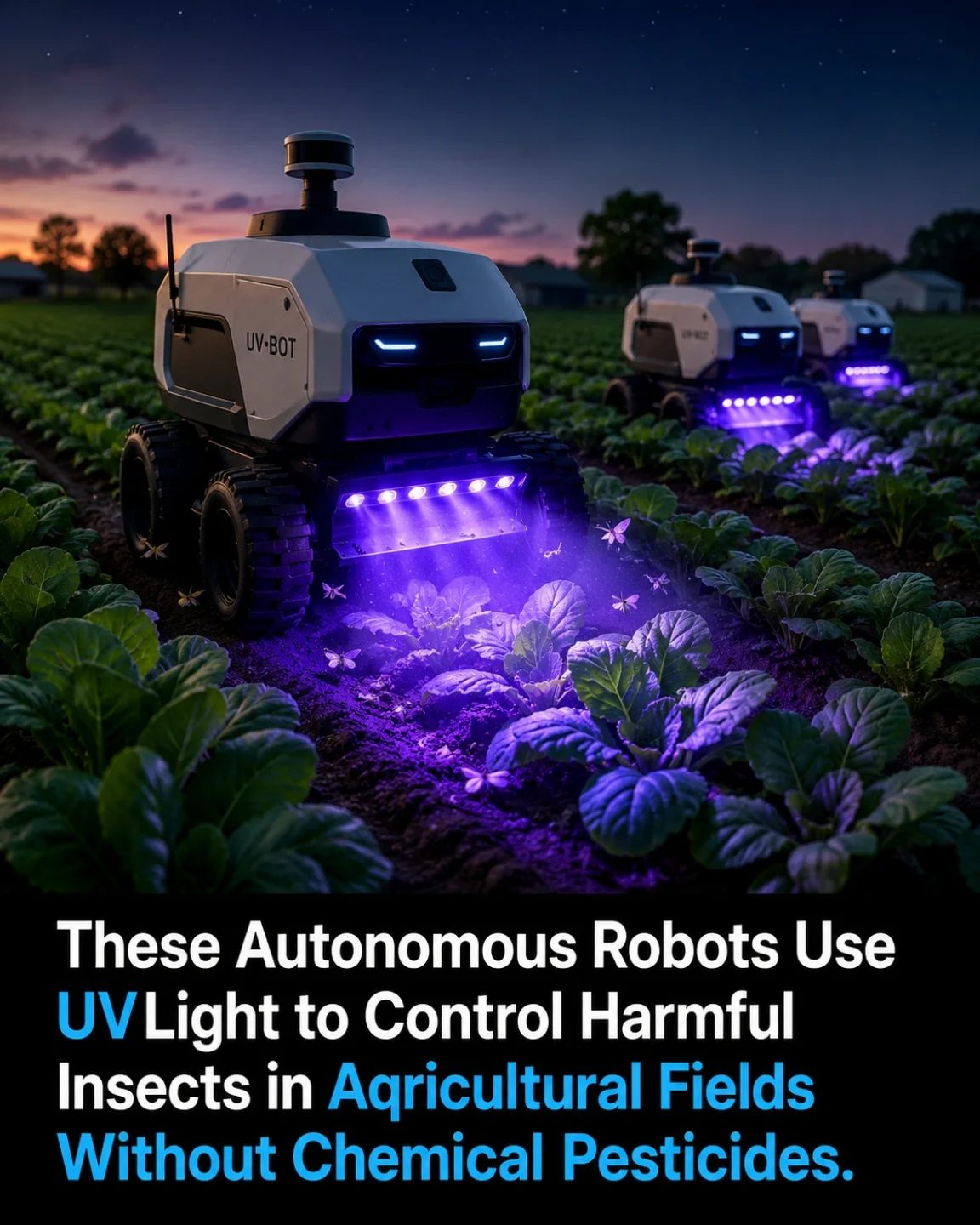
Autonomous agricultural robots are revolutionizing farming practices, offering a new approach to pest control that minimizes environmental impact. These robots, exemplified by the UV-BOT, use UV light to control harmful insects, providing a chemical-free alternative to traditional pesticides.
Context / Why this matters
In recent years, the agricultural sector has faced increasing pressure to adopt sustainable practices. Traditional methods of pest control, which often rely on chemical pesticides, can have detrimental effects on the environment, including soil and water contamination, as well as harm to beneficial insects and wildlife. The advent of UV-BOTs and similar technologies represents a significant shift towards more eco-friendly and sustainable farming methods. By using UV light to control pests, these robots offer a non-toxic solution that can help protect crops while preserving the ecosystem.
Main discussion
The technology behind UV-BOTs
UV-BOTs are designed to operate autonomously in agricultural fields, moving through crops to emit UV light. This light disrupts the life cycles of harmful insects, making it difficult for them to reproduce and survive. The UV-BOTs are equipped with sensors and advanced navigation systems that allow them to move efficiently through the fields, ensuring comprehensive coverage and effective pest control.
One of the key advantages of using UV light is its targeted effect on specific insects. Unlike chemical pesticides, which can indiscriminately harm a wide range of organisms, UV light can be calibrated to affect only the targeted pests. This selectivity helps to preserve beneficial insects, such as pollinators, which play a crucial role in the ecosystem.
Advantages of UV light in pest control
The use of UV light in pest control offers several benefits over traditional methods. Firstly, it is a non-toxic solution, eliminating the risks associated with chemical exposure for both humans and the environment. This makes it a safer option for farmers and agricultural workers, as well as for consumers who ultimately benefit from pesticide-free produce.
Secondly, UV light is an eco-friendly alternative that does not contribute to environmental pollution. Traditional pesticides can persist in the soil and water, causing long-term damage to the ecosystem. In contrast, UV light leaves no residual traces, making it a sustainable choice for long-term agricultural practices.
How UV-BOTs integrate into agricultural practices
Integrating UV-BOTs into existing agricultural practices is straightforward. These robots can be programmed to operate at specific times and in designated areas, ensuring that pest control measures are applied consistently and effectively. Farmers can use UV-BOTs in conjunction with other sustainable practices, such as crop rotation and natural predators, to create a comprehensive pest management strategy.
UV-BOTs are designed to be durable and reliable, capable of operating in various weather conditions. Their autonomous nature means that they can work continuously, reducing the need for manual labor and increasing overall efficiency. This allows farmers to focus on other aspects of their operations while ensuring that pest control is effectively managed.
Practical tips
Implementing UV-BOTs in your farm
When considering the implementation of UV-BOTs or similar agricultural robots, there are several practical tips to keep in mind:
-
Assess your needs: Determine the specific pest control challenges you face and how UV-BOTs can address them. Consider the types of pests affecting your crops and the extent of the infestation.
-
Plan your deployment: Map out the areas where the robots will operate and establish a schedule for their deployment. Ensure that the robots have clear paths and are programmed to cover all necessary areas.
-
Monitor and adjust: Regularly monitor the performance of the UV-BOTs and make adjustments as needed. Keep track of pest levels and crop health to evaluate the effectiveness of the UV light treatment.
-
Maintain your robots: Ensure that the UV-BOTs are well-maintained and serviced regularly. This includes checking sensors, navigation systems, and UV light emitters to ensure optimal performance.
-
Integrate with other practices: Use UV-BOTs as part of a broader pest management strategy that includes crop rotation, natural predators, and other sustainable practices.
Maximizing the benefits of UV light
To maximize the benefits of UV light in pest control, consider the following tips:
-
Optimize timing: UV light is most effective when used at specific times of the day and during certain stages of the pest life cycle. Research the optimal timing for your specific pests and adjust the UV-BOTs' schedule accordingly.
-
Combine with other methods: Use UV light in conjunction with other pest control methods to create a multi-pronged approach. This can include biological controls, such as beneficial insects, and physical barriers.
-
Regularly inspect crops: Conduct regular inspections of your crops to monitor pest levels and the effectiveness of the UV light treatment. This will help you identify any issues early and make necessary adjustments.
Important takeaways
UV-BOTs and similar agricultural robots offer a revolutionary approach to pest control, providing a non-toxic, eco-friendly solution that can help farmers protect their crops while preserving the environment. By using UV light to control harmful insects, these robots eliminate the need for chemical pesticides, reducing environmental pollution and promoting sustainable farming practices.
Integrating UV-BOTs into agricultural operations can significantly enhance pest management, making it a valuable tool for farmers seeking to adopt more sustainable practices. The advantages of UV light, including its targeted effect on specific pests and lack of residual traces, make it a highly effective and environmentally friendly option.
Conclusion
The use of UV-BOTs and other agricultural robots in pest control represents a significant advancement in sustainable farming. By harnessing the power of UV light, these robots offer a non-toxic, eco-friendly solution that can help protect crops while preserving the environment. Integrating UV-BOTs into existing agricultural practices can enhance pest management strategies, making them a valuable tool for farmers committed to sustainable farming.
Watch the Reel
Questions readers ask
How do UV-BOT robots help in pest control?
UV-BOT robots use UV light to interfere with the life cycles of harmful insects. By doing this they target pests and reduce their numbers without using chemicals.
Are UV-BOT robots safe for beneficial insects?
Yes, UV-BOT robots are designed to be safe for beneficial insects. They specifically target harmful pests, leaving helpful insects unharmed, unlike traditional pesticides.
What are the environmental benefits of using UV-BOT robots for pest control?
UV-BOTs greatly reduce soil and water contamination, as the robots do not use chemical pesticides. This makes them an eco-friendly solution for managing pests.
How do UV-BOT robots contribute to sustainable farming practices?
By providing a chemical-free alternative to traditional pesticides, UV-BOTs promote sustainable farming. They help minimize environmental impact and support long-term agricultural productivity.
Can UV-BOT robots be used in all farming environments?
UV-BOT robots are designed for outdoor use in agricultural settings. They are best suited for crops and fields where pests are a significant concern. However, specific suitability should be verified with the manufacturer.
What makes UV-BOT robots an autonomous pest control solution?
UV-BOT robots operate independently, navigating fields and emitting UV light to control pests without the need for constant human intervention. This autonomy enhances efficiency and consistency in pest management.
Related deep dives
Similar reads based on topic and creator.




Recent articles
Fresh deep dives from the latest Reels we unpacked.




Comments
Be the first to comment.