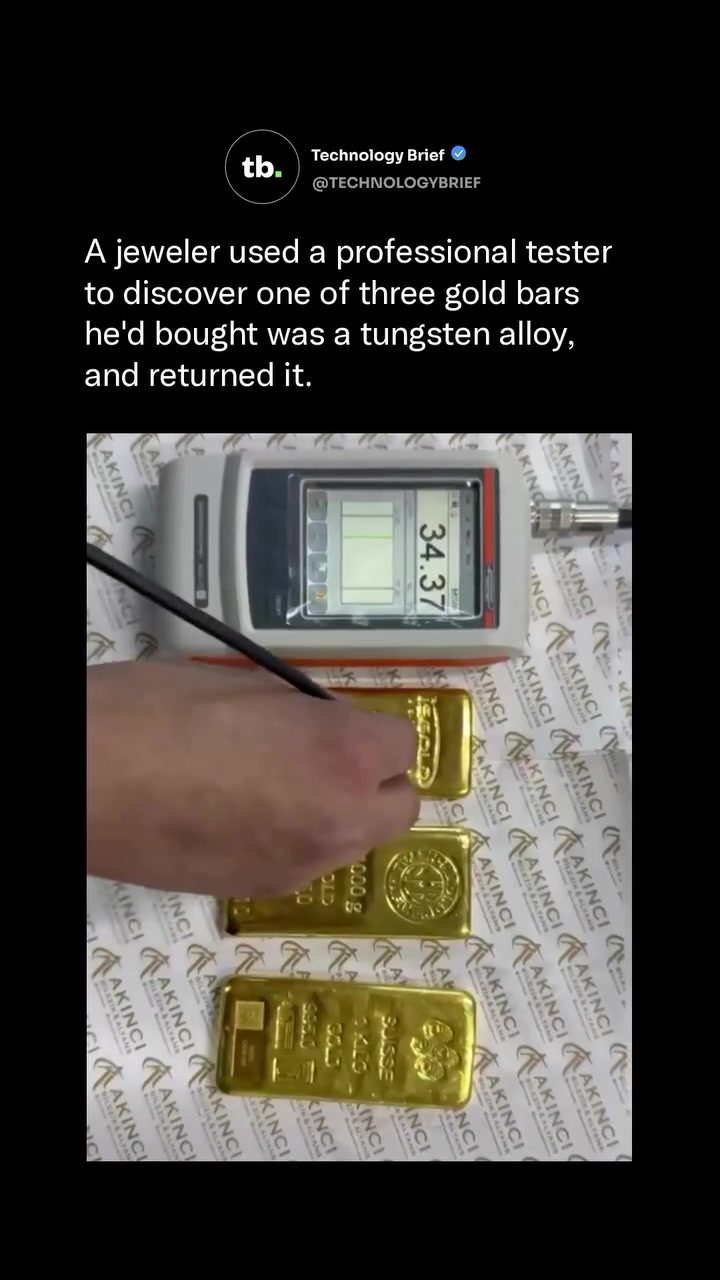
Gold Tester Devices: Detecting Counterfeit Gold Bars
Gold bars are a popular investment choice for their value and potential for portfolio diversification. However, the rise in gold prices in recent years has led to an increase in sophisticated counterfeit gold bars. To protect against such fraud, jewelers and bullion dealers rely on advanced testing methods, including the use of handheld XRF (X-ray fluorescence) gold tester devices.
Why This Matters
Counterfeit gold bars can pose significant risks to investors and jewelers. Tungsten, for example, is often used to create fake gold bars because its density is almost identical to that of gold, making weight tests ineffective. This makes it crucial for professionals to use reliable testing methods to verify the authenticity of gold bars, especially high-value, large bars like the 1-kilogram format.
The AKINCI gold tester is a key tool in this process. It uses X-ray fluorescence to analyze the composition of gold bars, providing accurate readings that help identify counterfeit materials. In one instance, a jeweler used an AKINCI gold tester to inspect three 1-kilogram gold bars. Two of the bars read within the expected 34–35 range, confirming their high purity, while the third bar showed a reading of around 31, raising suspicions.
Understanding the Gold Tester Process
How XRF Gold Testers Work
XRF (X-ray fluorescence) gold tester devices, including the AKINCI gold tester, work by emitting X-rays onto the surface of the gold bar. These X-rays interact with the atoms in the gold bar, causing them to emit secondary X-rays that are characteristic of their elemental composition. The device then analyzes these secondary X-rays to determine the precise composition of the bar, identifying any impurities or counterfeit materials.
Identifying Counterfeit Materials
In the case of the AKINCI gold tester, the device displayed readings of 34.37, 31.22, 35.23, and 30.73 on its screen. The reading of 31.22 was a red flag, indicating a potential counterfeit. Upon closer inspection, the jeweler peeled back a thin gold layer from the third bar, revealing a tungsten core underneath. This tungsten core then read in the 30–31 range on its own, confirming the bar as a counterfeit.
The Role of Tungsten in Counterfeit Gold Bars
Tungsten is the go-to material for counterfeit gold bars because its density of 19.25 g/cm³ is almost identical to gold’s 19.32 g/cm³. This makes weight tests essentially useless. A bar machined from tungsten and wrapped in a thin shell of real gold can pass a basic scale check and even fool a surface-level XRF scan if the gold plating is thick enough. This is why experts now recommend pairing XRF testing with ultrasound and electromagnetic conductivity checks.
Practical Tips for Verifying Gold Bars
Using XRF Testing
XRF gold tester devices are a reliable method for verifying the authenticity of gold bars. They provide accurate readings that can quickly identify counterfeit materials. When using an XRF tester:
- Ensure the device is properly calibrated.
- Scan the gold bar at multiple points to get a comprehensive reading.
- Compare the readings to the expected purity range for gold bars.
Combining Testing Methods
While XRF testing is effective, it is often recommended to pair it with other testing methods for added security. Some of these methods include:
- Ultrasound Testing: This involves using high-frequency sound waves to detect any internal anomalies in the gold bar, such as a tungsten core.
- Electromagnetic Conductivity Checks: This method measures the electrical conductivity of the gold bar to ensure it matches the expected conductivity of pure gold.
Preventing Counterfeit Gold Bars
To minimize the risk of counterfeit gold bars, consider the following tips:
- Purchasing from Reputable Sources: Buy gold bars from well-known, reputable dealers to ensure authenticity.
- Regular Testing: Regularly test your gold bars, especially if you are in a secondary market.
- Staying Informed: Keep up-to-date with the latest counterfeit trends and testing methods to protect your investment.
Important Takeaways
When it comes to gold bars, especially high-value, larger bars, the risk of counterfeit materials is significant. Using an AKINCI gold tester or similar XRF device is a crucial step in verifying the authenticity of these bars. By combining XRF testing with ultrasound and electromagnetic conductivity checks, professionals can better protect against sophisticated counterfeit materials like tungsten-core fakes. These methods ensure that the gold bars you invest in are genuine and of high purity, providing the value and security you expect.
Conclusion
The AKINCI gold tester is an essential tool for jewelers and bullion dealers in verifying the authenticity of gold bars. By using advanced XRF testing, professionals can quickly and accurately identify counterfeit materials, ensuring the integrity of their investments. Pairing XRF testing with other methods like ultrasound and electromagnetic conductivity checks provides an added layer of security, protecting against sophisticated fakes that can easily pass basic inspections. This multi-step approach is crucial in the current market, where the rise in gold prices has led to an increase in counterfeit activities.
Watch the Reel
Related deep dives
Similar reads based on topic and creator.




Recent articles
Fresh deep dives from the latest Reels we unpacked.




Comments
Be the first to comment.