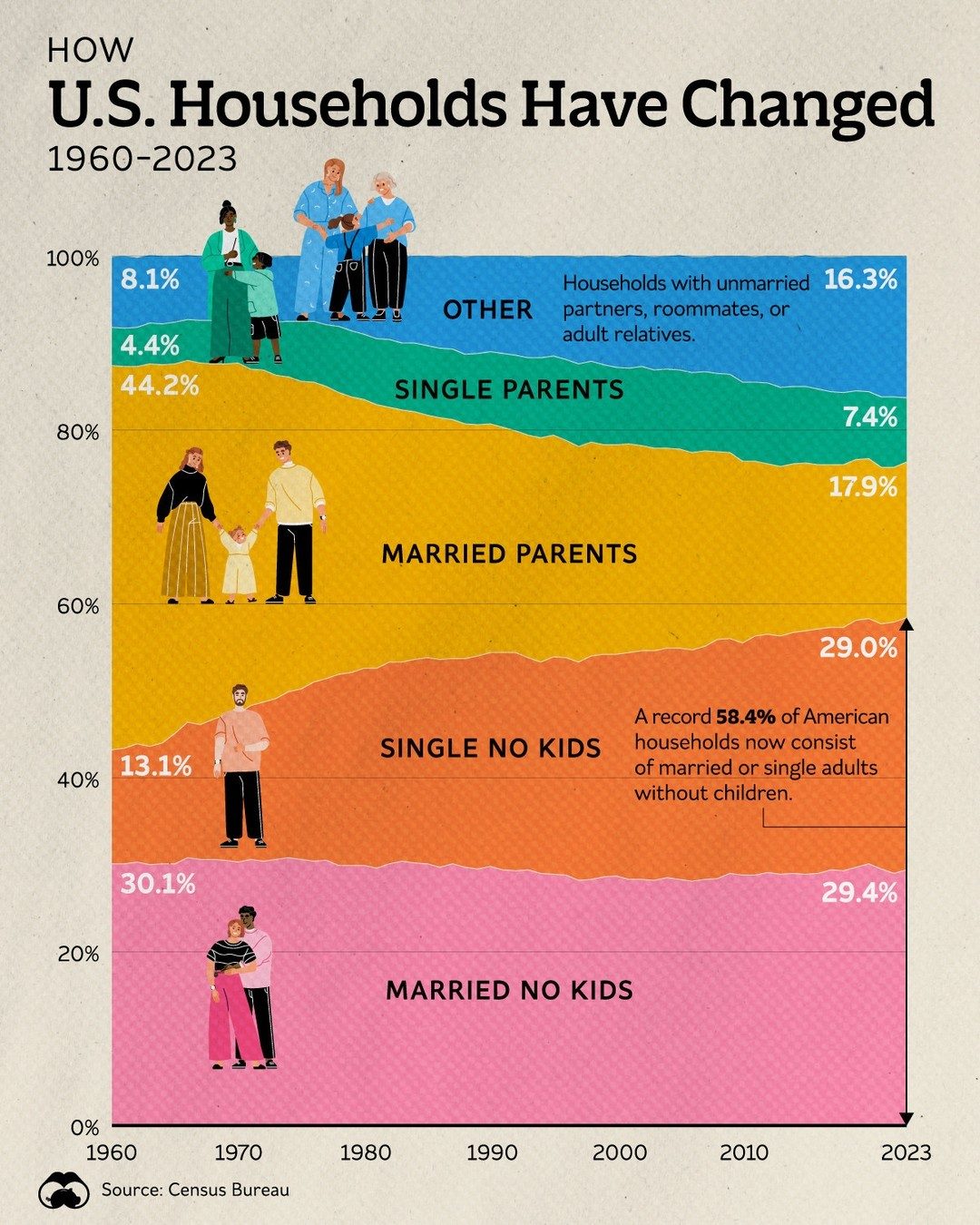
U.S. Household Changes
In 2023, a significant shift has occurred in the composition of U.S. households. Over half of American households no longer include children, reflecting a broader trend that has evolved since 1960. This demographic change is influenced by various factors, including declining fertility rates and shifting societal norms.
What This Means
The U.S. fertility rate hit a historic low of 1.6 children per woman in 2023. This rate is well below the 2.1 replacement level needed to sustain the population. Understanding these shifts in household composition is crucial for policymakers, urban planners, and businesses as they adapt to changing demographics. For example, the demand for family-friendly housing and services has decreased, while the need for age-friendly infrastructure and senior care services has risen.
Household Composition from 1960 to 2023
Changing Demographics
The infographic highlights the percentage breakdown of different household types from 1960 to 2023. In 1960, the majority of households were traditional family units with married parents and children. However, over the decades, this composition has changed dramatically.
By 2023, 58.4% of American households consist of married or single adults without children. Married parents make up 29.0% of households, while single parents represent 8.1%. This shift reflects a significant decline in the number of households with children and an increase in households without children.
Key Trends
-
Decrease in Traditional Family Households: The percentage of married parents with children has decreased from 40.1% in 1960 to 29.0% in 2023. This decline is accompanied by an increase in single-person households and married couples without children.
-
Rise in Single-Person Households: The number of single-person households has seen a substantial increase. From 1960 to 2023, the percentage of single-person households rose from 13.1% to 30.1%. This trend is particularly notable among older adults who are living alone.
-
Increase in Households Without Children: The most significant change is the increase in households without children. In 2023, 58.4% of American households consist of married or single adults without children, up from 25.5% in 1960.
Factors Influencing the Shift
Economic Considerations
One of the primary factors contributing to the shift in household composition is the increasing cost of living. Raising children has become more expensive, with costs related to childcare, education, and healthcare rising significantly. These financial pressures have led many couples to delay having children or choose not to have them at all.
Societal and Cultural Changes
Societal norms and cultural values have also played a role in the changing household composition. There is a growing acceptance of alternative family structures, including single-parent households and cohabiting couples without children. Additionally, more women are pursuing higher education and careers, which can lead to delayed marriage and childbearing.
Urbanization
Urbanization has contributed to the rise in single-person households and married couples without children. In urban areas, living alone or as a couple without children is often more feasible due to smaller living spaces and a greater focus on individual lifestyles.
Practical Tips for Adaptation
For Policymakers
Policymakers need to consider the changing demographics when developing policies related to housing, healthcare, and social services. Investing in age-friendly infrastructure and support services for older adults living alone can help address the needs of an aging population. Additionally, policies that support affordable childcare and family-friendly work environments can help encourage family formation.
For Businesses
Businesses should tailor their products and services to meet the needs of the changing demographic landscape. For example, there is a growing demand for age-friendly products and services, as well as services that cater to the needs of single-person households and couples without children.
For Individuals
For individuals, understanding these trends can help in making informed decisions about housing, family planning, and career choices. Those considering having children may want to factor in the financial and lifestyle implications, while those planning to live alone or as a couple without children can benefit from exploring the available support and resources.
Important Takeaways
-
Rise in Households Without Children: Over half of U.S. households now consist of married or single adults without children. This trend is driven by a combination of economic, societal, and cultural factors.
-
Economic Challenges: The increasing cost of living and financial pressures have contributed to the decline in traditional family households.
-
Changing Demographics: Understanding these demographic shifts is essential for policymakers, urban planners, and businesses to adapt to the evolving needs of the population. This includes investing in age-friendly infrastructure and support services.
-
Urbanization Impact: Urbanization has led to a rise in single-person households and married couples without children, influencing the demand for certain types of housing and services.
Conclusion
The changing composition of U.S. households reflects broader societal and economic trends. Over half of American households now consist of married or single adults without children, a shift influenced by declining fertility rates, the rising cost of living, and changing societal norms. Recognizing and adapting to these trends is crucial for policymakers, businesses, and individuals alike. By understanding these demographic shifts, we can better address the evolving needs of the population and create a more resilient and inclusive society.
Watch the Reel
Questions readers ask
Why has the number of households without children in the U.S. increased since 1960?
The increase in childless households can be attributed to several factors, including a decline in fertility rates, changes in societal norms surrounding marriage and family, and more people choosing to remain single or have children later in life.
What is the current U.S. fertility rate, and why is it significant?
As of 2023, the U.S. fertility rate is 1.6 children per woman, which is below the replacement level of 2.1 children needed to maintain the population. This significant decline affects household compositions and has implications for future population growth and aging.
How have single-person households contributed to the evolution of American households?
Single-person households have become more prevalent, driven by factors such as delayed marriage, increased divorce rates, and more people living alone by choice. This trend has led to increased demand for smaller living spaces and services catering to individuals rather than families.
What are the key differences in household composition between 1960 and 2023?
In 1960, traditional family structures were more common, with a higher proportion of households including children. By 2023, over half of U.S. households do not have children, reflecting a significant shift towards single-person households and families without children.
How do these demographic changes impact urban planning and infrastructure?
With fewer children and more single-person households, there is a reduced demand for family-friendly housing and services. Urban planners and policymakers need to focus on creating more age-friendly infrastructure and services to accommodate the growing elderly population.
Related deep dives
Similar reads based on topic and creator.


Recent articles
Fresh deep dives from the latest Reels we unpacked.




Comments
Be the first to comment.