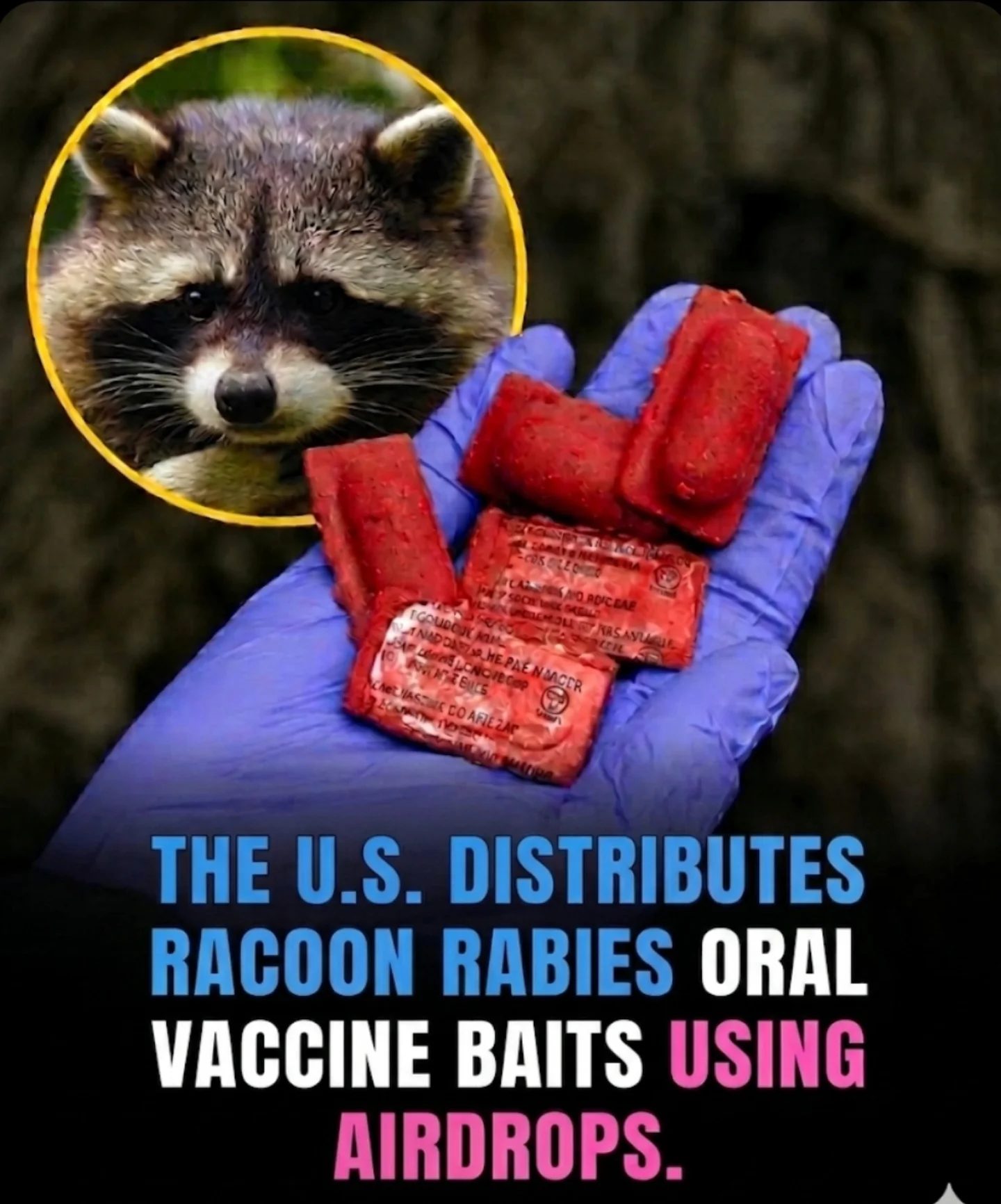
Raccoon Rabies Vaccine Baits
Raccoon rabies vaccine baits are a critical component of the Oral Rabies Vaccination (ORV) program, a joint initiative by the U.S. Department of Agriculture’s (USDA) Animal and Plant Health Inspection Service (APHIS) and state and local health departments. This program aims to create a vaccine barrier to halt the westward spread of raccoon rabies in the United States, ultimately confining the virus to the East Coast and working toward its eradication.
Why This Matters
Raccoon rabies poses significant risks to both wildlife and public health. Raccoons are one of the most common carriers of rabies in the eastern United States, and their movements can spread the disease to other areas, including residential and suburban regions. Effective control of raccoon rabies through vaccination can prevent the spread of the disease, protecting both wildlife and human populations.
The Oral Rabies Vaccination (ORV) Program
How the Vaccine Baits Work
The baits used in the ORV program are designed to be irresistible to raccoons. Here’s a breakdown of their components and mechanism:
The Bait
The baits are typically red blocks made from a fishmeal polymer or coated in a fish-flavor attractant. Raccoons, with their keen sense of smell, are drawn to the strong, fishy scent. This attractive bait ensures that raccoons will investigate and consume the bait, triggering the vaccination process.
The Packet
Inside each bait is a small plastic packet, often referred to as a blister pack. This packet contains a liquid rabies vaccine, specifically either RABORAL V-RG® or ONRAB. These vaccines are designed to be safe and effective when ingested orally.
The Mechanism
When a raccoon finds and bites into the bait, the plastic packet inside is punctured. This releases the liquid vaccine, coating the inside of the raccoon’s mouth and tonsils. The vaccine then triggers an immune response, making the raccoon immune to rabies without the need for direct handling or injection by humans. This method is not only effective but also humane, as it does not require trapping or capturing the animals.
Distribution Methods
Distributing millions of vaccine baits across vast geographic areas requires a well-coordinated and multi-faceted approach. The USDA employs several methods to ensure wide coverage:
Airdrops
In rural, forested, and agricultural areas, helicopters and low-flying airplanes are used to systematically drop baits in a grid pattern. This method allows for efficient distribution over large, hard-to-reach areas.
Ground Crews
In suburban or urban areas where airdrops are impractical or unsafe, ground crews distribute the baits manually. These teams place the baits in areas where raccoons are likely to forage, such as bushes, drainage ditches, and other typical raccoon habitats.
Practical Tips for Understanding and Supporting the Program
Staying Informed
Understanding the ORV program and its importance can help you support wildlife conservation efforts. The USDA and local health departments often provide updates and information on their websites and through public announcements. Keeping informed about the program’s progress and outcomes can help you stay engaged and supportive.
What to Do If You Find a Bait
If you encounter a bait packet, it's important to leave it undisturbed. The baits are designed to be safe for humans and pets, but they should not be handled or ingested. If you find a bait in an area where it could pose a risk, such as near children or pets, you can contact local health authorities or the USDA for guidance on safe disposal.
Supporting Wildlife Conservation
Supporting the ORV program and similar initiatives is crucial for wildlife conservation and public health. Participating in local conservation efforts, donating to wildlife organizations, and advocating for policies that protect wildlife can all contribute to the success of these programs. Your involvement can help ensure that future generations benefit from healthy wildlife populations and a rabies-free environment.
Important Takeaways
The ORV program’s use of vaccine baits is a strategic and effective method for controlling the spread of raccoon rabies. By understanding how the baits work and how they are distributed, you can better appreciate the importance of this initiative. Supporting and staying informed about these efforts can help contribute to the long-term success of the program and the protection of both wildlife and human health.
Conclusion
The ORV program, managed by the USDA and local health departments, plays a vital role in controlling the spread of raccoon rabies through the strategic use of vaccine baits. By employing a multi-tiered distribution strategy and leveraging raccoons’ natural behaviors, the program aims to create an effective vaccine barrier, ultimately working toward the eradication of the virus. Understanding and supporting this initiative can help ensure the continued health and safety of both wildlife and human populations.
Watch the Reel
Questions readers ask
How does the US government distribute rabies vaccines to raccoons?
The US government, through the USDA's APHIS and state and local health departments, distributes rabies vaccines to raccoons using oral rabies vaccination (ORV) baits. These baits are airdropped from aircraft over affected areas to create a vaccine barrier that slows the disease's spread and targets raccoons across large, remote, or difficult-to-reach landscapes.
What is the purpose of the vaccine barrier created by the ORV program?
The vaccine barrier created by the ORV program aims to halt the westward spread of raccoon rabies in the United States. It does this by vaccinating raccoons and preventing the disease from crossing into unaffected areas, especially west of the Mississippi River, helping to ultimately confine the virus to the East Coast.
Which agencies are involved in the distribution of the rabies vaccine baits?
The distribution of rabies vaccine baits is a collaborative effort involving the USDA's Animal and Plant Health Inspection Service (APHIS) and state and local health departments. These agencies work together to plan and execute the airdrop operations, monitor the progress and effectiveness of the program, and ensure public safety.
What are the key reasons for combating raccoon rabies in the US?
Combating raccoon rabies is crucial for protecting both wildlife and public health. Raccoons are one of the most common carriers of rabies in the eastern United States, and their movements can spread the disease to other areas, including residential and suburban regions. Effective control measures help minimize these risks and protect communities from potential outbreaks.
What is the long-term goal of the Oral Rabies Vaccination (ORV) program?
The long-term goal of the ORV program is to ultimately eradicate raccoon rabies in the United States. This is achieved by creating a vaccine barrier to prevent the disease from spreading westward, and by maintaining a consistent vaccination effort to protect wildlife and communities in affected areas.
How are the vaccine baits designed to target raccoons specifically?
The vaccine baits used in the ORV program are designed with raccoons' biological and behavioral characteristics in mind. The baits are encapsulated in a fishmeal-dye mixture that is appealing to raccoons. This encourages them to consume the bait, thereby ingesting the vaccine and contributing to the overall effectiveness of the program.
What measures are taken to ensure public safety during the airdrop of vaccine baits?
During the airdrop of vaccine baits, public safety is ensured through several measures. These include extensive planning, coordination with local authorities, and public awareness campaigns to inform residents about the airdrop operations. Additionally, the baits are designed to be safe for humans and pets, further minimizing any potential risks.
Related deep dives
Similar reads based on topic and creator.




Recent articles
Fresh deep dives from the latest Reels we unpacked.



Comments
Be the first to comment.