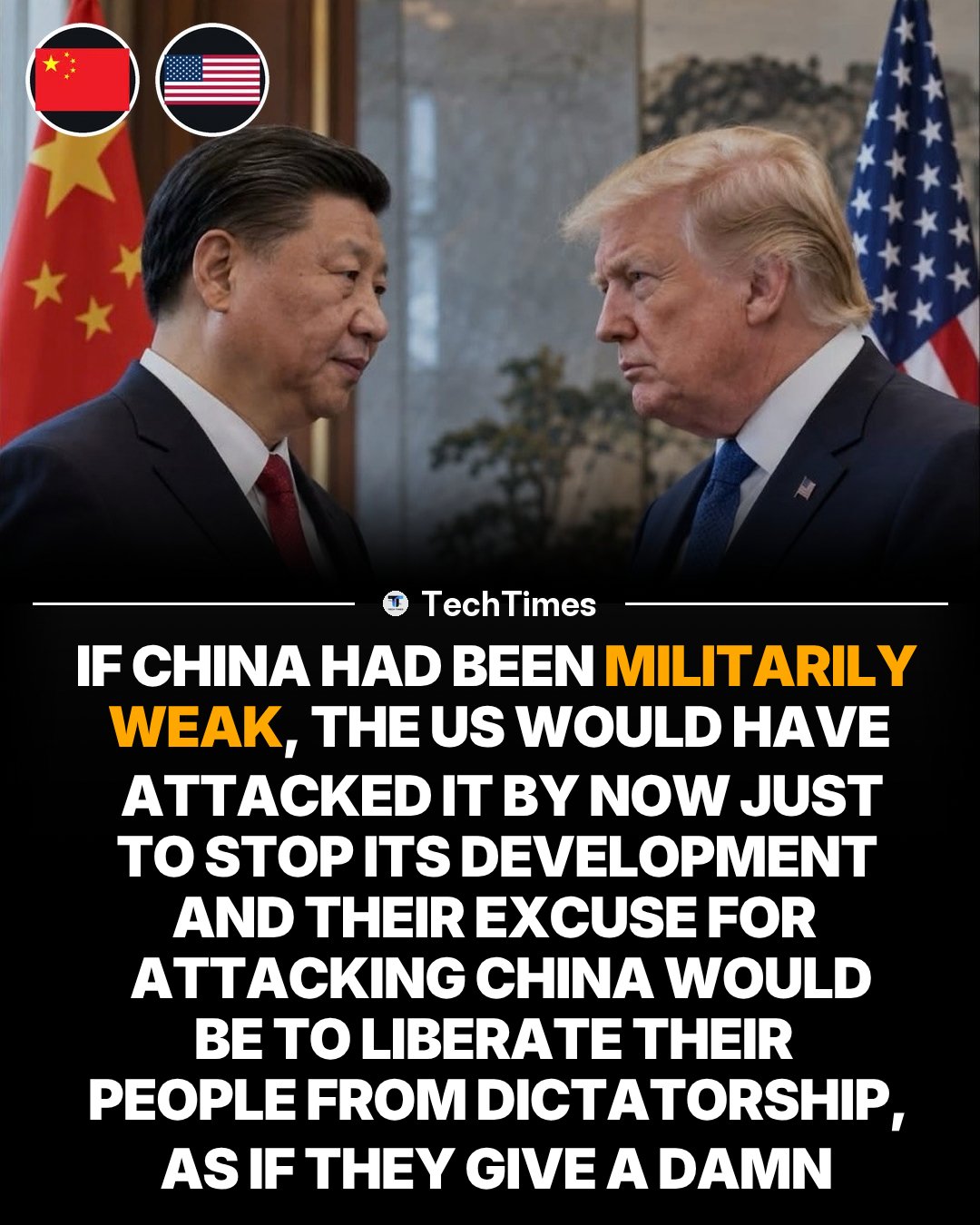
Unmasking Alleged Motives Behind US Relations with China China is America's major economic partner — and its primary geopolitical rival. In recent decades, US politicians have grown increasingly wary of China's rapid military and technological development. This video, a dramatic split-screen of Xi Jinping and Donald Trump, frames a controversial question: Would a US military attack stop or stall China's progress?
A Glossy Clash of Icons
The video presents a hypothetical scenario where the US attacks China to halt its development. At its center are Xi Jinping and Donald Trump, facing each other down. The split-screen layout, combined with bold text, creates stark visual contrast — a physical representation of geopolitical tension. The stark split-screen design is not just a stage for the presidents. It highlights the idea of conflict and confrontation. Though the images of Trump and Xi Jinping don't move or speak in this still image, their stern expressions convey tension. Overlayed text presents commentary. This text highlights the stark difference between China's development and liberating the Chinese people. The split-screen suggests opposing ideologies.
Stripping Down the "Liberation" Narrative
The nature of the U.S.-China relationship is a timely subject and a fraught one. Their ascent as major economic and military powers continues to define global politics. Amidst this geopolitical rivalry, key questions emerge: Is the dominant Western narrative about China's authoritarianism just a cover for maintaining economic and political ascendancy? Some argue that U.S. foreign policy toward China has become less about diplomacy and even less about democracy promotion, and more about military competition. China's development and military might continue to grow. This video, with its direct condemnation, suggests the U.S. could be reacting out of fear to that reality.
A Political Hard Sell
Flag imagery neither proves nor dismisses national intentions. They are a visual metaphor for power dynamics, not conclusive evidence. Analyzing national emblems of power can be as much about the viewer as about the flags' origins. The text, "Reel features a split-screen image of Xi Jinping and Donald Trump facing each other," suggests the image is charged with symbolism beyond mere faces. Juxtaposition of East and West could suggest cultural or ideological conflict. The two leaders, with their flags, face off. The text "IF CHINA HAD BEEN MILITARILY ATTACKED BY NOW JUST TO STOP ITS DEVELOPMENT" — suggests that China’s military might is a source of anxiety for the United States. Trump and Xi Jinping, framed by their national flags, represent larger geopolitical tensions. Jiang Zemin once said, "The rising China is viewed by some as a threat instead of an opportunity." That caution is reflected in the video.
Semedorization of US-China Relations
The visual metaphor of US-China relations as a battle between two leaders is a familiar one. Just as Trump vs. Xi is a personal conflict, the "U.S. vs. China" narrative is one of competition. However, this interpretation oversimplifies facets of the relationship.
The Reality Beyond the Hypothetical
The U.S. has been accused of using humanitarian narratives to justify interventions. The video’s text frames the excuse for an attack as "Liberate the Chinese people from dictatorship." This call-out, a single commentary, questions the sincerity of US motives. China’s development has not been linear. Its economic growth, military modernization, and technological advancements have raised concerns worldwide. How the U.S. responds continues to shape global geopolitics.
Getting Political at Home
Perhaps you're interested in expressing concerns within your own government. It's important to focus on the relationship between countries, instead of focusing on a few leaders. There's value in understanding multiple perspectives. This video shows how much power the visual medium holds. One image can convey a host of information, emotions, and perspectives. Consider the context and the intended audience. Remember that commentary is open to interpretation.
The Definitive Role of China’s Rise
Not all news platforms can offer a sustained critique of US foreign policy or American intervention. Their strength come from their independence and non-partisanship. TechTimes has built a reputation for having a critical perspective. Does this video align with their independent voice?
Watch the Reel
Questions readers ask
What is the primary message of the video featuring Xi Jinping and Donald Trump?
The video presents a hypothetical scenario where the US launches a military attack against China to halt its development. The split-screen layout of Xi Jinping and Donald Trump facing each other emphasizes the geopolitical tension and ideological conflict between the two nations.
Why is the split-screen design significant in this video?
The split-screen design is significant because it highlights the contrast and tension between the two leaders and their respective nations. It visually represents the geopolitical rivalry and the stark differences in ideologies between the U.S. and China.
What does the flag imagery in the video symbolize?
The flag imagery in the video serves as a visual metaphor for the power dynamics between the U.S. and China. It represents the national identities and the geopolitical tensions that exist between the two countries. The text overlay adds to the narrative of confrontation and ideological conflict.
How does the video address the narrative of China's authoritarianism?
The video hints at the idea that the Western narrative about China's authoritarianism might be a cover for maintaining economic and political ascendancy. It suggests that the U.S. could be reacting out of fear to China's growing military might and development, rather than purely out of concerns about democracy promotion.
Is the video suggesting that a military attack is a viable solution to halt China's development?
The video poses a hypothetical scenario where a military attack could be a response to China's development. However, it does not endorse this as a viable or desirable solution. Instead, it raises questions about the underlying motivations and fears driving such a consideration.
What are some of the key questions that emerge from the U.S.-China geopolitical rivalry?
Key questions include whether the U.S. foreign policy toward China is more about military competition than diplomacy or democracy promotion, and if the dominant Western narrative about China's authoritarianism is a cover for maintaining economic and political ascendancy.
How does the video's portrayal of Xi Jinping and Donald Trump compare to real-world dynamics?
The video simplifies the complex relationship between the U.S. and China by framing it as a personal conflict between Xi Jinping and Donald Trump. In reality, the relationship is multifaceted, involving economic, military, and diplomatic dimensions beyond the personalities of individual leaders.
Recent articles
Fresh deep dives from the latest Reels we unpacked.




Comments
Be the first to comment.