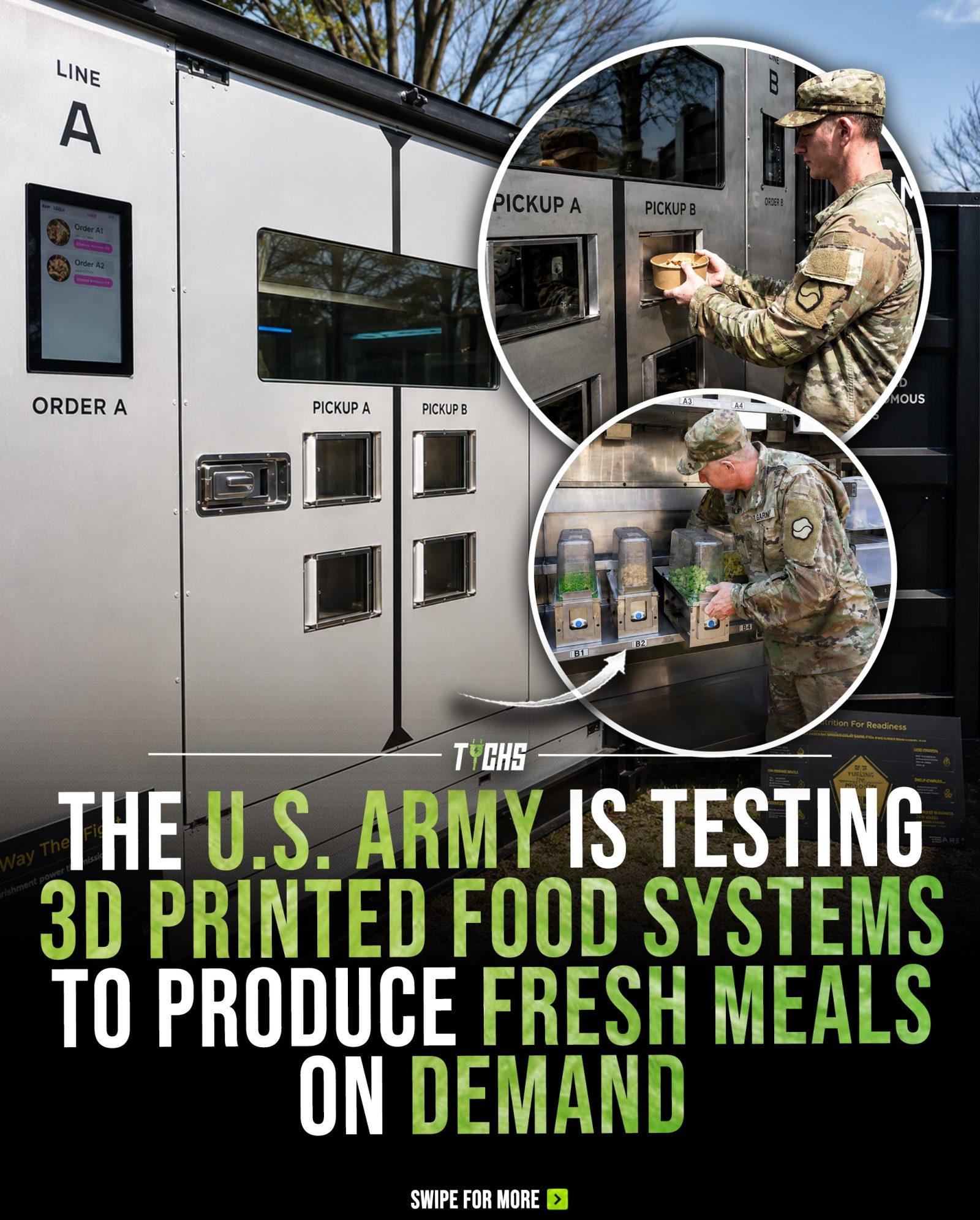
3D Printed Army Food Systems
The U.S. Army is revolutionizing field rations with the introduction of 3D printed food systems. Traditional Meals, Ready-to-Eat (MREs) have long been a staple for soldiers in the field, providing convenient, non-perishable meals. However, these meals often lack freshness, variety, and nutritional value. By testing 3D food printing systems, the U.S. Army aims to transform the way soldiers are fed during missions, offering fresh, customized meals on demand.
Why This Matters
The development of 3D printed food systems for military use is not just about innovation; it's about enhancing the well-being and operational effectiveness of soldiers. This technology addresses several key challenges faced by the military:
- Nutrition: Traditional MREs often fall short in providing balanced nutrition. 3D printed food can be tailored to meet specific dietary needs, ensuring soldiers receive the nutrients they require to maintain peak performance.
- Waste Reduction: MREs generate significant waste, which can be a logistical burden, especially during extended missions. 3D printing reduces waste by producing only what is needed, when it is needed.
- Logistics: The supply chain for MREs is complex and resource-intensive. 3D food printing simplifies logistics by allowing for on-demand production, reducing the need for large-scale transportation of pre-packaged meals.
- Flexibility: Soldiers on long missions often face unpredictable conditions and varying nutritional needs. 3D printed food offers the flexibility to adapt to these changing requirements, providing a range of meal options and portion sizes.
The 3D Printed Food System
The 3D food printing system being tested by the U.S. Army uses shelf-stable ingredients to produce fresh meals. The process involves several key steps:
Ordering and Customization
Soldiers can order meals tailored to their specific needs, selecting from a variety of options and customizing the calories, nutrition, texture, and portion sizes. This level of personalization ensures that soldiers receive meals that meet their individual dietary requirements.
Printing Process
Once an order is placed, the 3D food printer uses advanced manufacturing techniques to produce the meal. The printer layers ingredients to create the desired dish, ensuring that each meal is fresh and ready to eat. This process also reduces the risk of contamination and spoilage, which are common issues with traditional MREs.
Pickup and Distribution
After the meal is printed, it can be picked up by soldiers or distributed to different units. The system allows for efficient pickup and distribution, ensuring that soldiers receive their meals quickly and conveniently.
The Role of TYCHS
The TYCHS 3D food printing system is at the forefront of this innovation. The system is designed to produce fresh meals on demand, reducing the reliance on MREs and improving the overall quality of food available to soldiers. The technology aims to create a more sustainable and efficient food system for the military, ultimately enhancing the well-being and performance of soldiers.
Practical Tips for Implementation
While the 3D printed food system offers numerous benefits, its successful implementation requires careful planning and execution. Here are some practical tips for integrating this technology into military operations:
Training and Adaptation
Soldiers and support staff need to be trained on how to use the 3D food printing system effectively. This includes understanding the ordering process, operating the printer, and ensuring proper maintenance. Training programs should be comprehensive and ongoing to adapt to advancements in the technology.
Integration with Existing Systems
The 3D food printing system should be integrated with existing military logistics and supply chains. This involves coordinating with supply and distribution units to ensure that the necessary ingredients and materials are available when needed.
Feedback and Continuous Improvement
Continuous feedback from soldiers and support staff is crucial for improving the 3D food printing system. Their insights can help identify areas for improvement and ensure that the technology meets the evolving needs of military operations. Regular updates and enhancements should be made based on this feedback.
Important Takeaways
The U.S. Army's exploration of 3D printed food systems represents a significant step forward in military logistics and soldier well-being. By producing fresh, customized meals on demand, this technology addresses key challenges associated with traditional MREs, including nutrition, waste, logistics, and flexibility. The potential for 3D printed food to enhance military operations is substantial, combining advanced manufacturing with personalized nutrition to support soldiers in demanding environments.
Conclusion
The future of military rations lies in innovative technologies like 3D printed food systems. As the U.S. Army continues to test and develop this technology, it has the potential to revolutionize the way soldiers are fed, enhancing their performance and well-being. The integration of 3D food printing into military operations offers a more sustainable, efficient, and flexible solution for providing meals, ultimately supporting the success of missions and the health of soldiers.
Watch the Reel
Related deep dives
Similar reads based on topic and creator.




Recent articles
Fresh deep dives from the latest Reels we unpacked.




Comments
Be the first to comment.