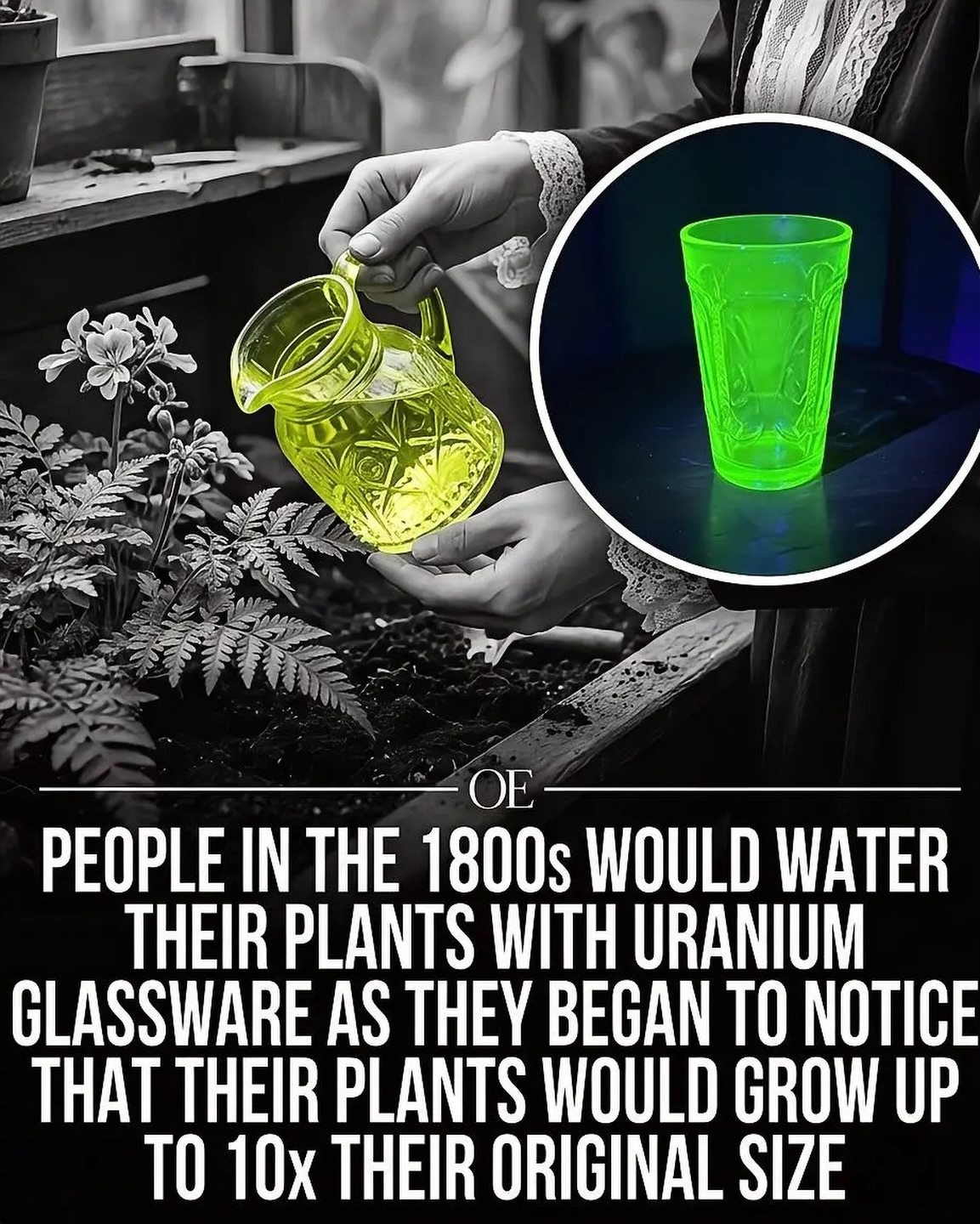
People’s Uranium Glassware Experiment
In the 19th century, before we knew how radioactive uranium could be, people used it to make vibrant glassware at home. Though they pondered stopping its use around 1800, it still remains in many homes. These everyday items had a fascinating side effect. If you poured water from a uranium glass pitcher, plants in the 1800s would grow more quickly. To clarify, "up to 10 times the original size".
The 1800s’ Unlikely Plant Fertilizer
Some homeowners had a significant impact on their plant life in the 1800s. They noticed their plants grew up to 10 times their original size. These glassware pieces were not only attractive ornaments, but were actively responsible for accelerating plant growth. Radiation was not the same as it is today. It was popular to make glassware, such as vases and drinking glasses. Uranium was USED to build glassware as it was cheap but not perceived as a threat. It was a widely used trend. People in the 1800s would water their plants with uranium glassware. People in the 19th century used uranium glassware for everyday use. It was present in the lifestyle of the time.
The rise of uranium's natural properties
A radioactive mixture of crystal and glass
The primary ingredient of uranium glass is uranium oxide. Uranium was found in them. The coloring of the glass was due to the uranium. But that’s not all, uranium was infused in the glassware for a good purpose.
A trend that has long-lasting effects
Uranium glassware was used regularly. They were everywhere people lived at the time. People used them to store water. A person poured liquid from a pitcher into a green glass. The pitcher was made from uranium.
The new discoveries about glassware
Uranium glassware was vibrant, but it could cause problems. Uranium glassware emits radiation. When they were exposed to long periods of time, the radiation would break down the uranium.
To collect water not water the plants
The discovery could have been a one-off. Even some materials found in the glassware still remain. One text overlay explains that people noticed their plants grew significantly larger when watered this way. It’s possible that plant growth was due to due to the reactions of the uranium with the water in the pitcher.
Never Left Behind
Why did people in the past water their plants with uranium glass? Uranium glassware was a popular item in the 1800s. It is possible that people in the 19th century were excited about the glassware. People used uranium glassware for everyday use. Even now, uranium glassware sticks around in people’s homes. One person referenced this phenomenon. Due to the durability and the utility of uranium it is possible that these still remain in people’s homes today.
Final observations
There are no products at this time that expose people to the level of uranium to create this kind of growth. People have become more aware of the dangers of uranium. Uranium glassware looks interesting, and the fact that it could have been used to grow plants is a curious fact. Know that uranium exists in glassware and could be present in your life in a different way, but avoid using products with uranium or where they have been exposed.
Watch the Reel
Questions readers ask
What exactly is uranium glassware and why was it used in the 1800s?
Uranium glassware refers to glass items made with uranium oxide, which gives the glass a vibrant yellow or green color. In the 1800s, it was popular for making decorative and functional items like vases and drinking glasses. People used it because it was cheap and aesthetically pleasing, and they were unaware of its radioactive properties.
How did uranium glassware accelerate plant growth?
The water stored in uranium glassware was found to accelerate plant growth, even up to 10 times the normal rate. This was likely due to the reaction between the uranium in the glass and the water, which created a solution that plants found beneficial. However, the exact mechanism behind this acceleration isn't fully understood.
Is it safe to use uranium glassware today?
No, it is not safe to use uranium glassware today. While it was popular in the 1800s, we now know that uranium is radioactive and can be harmful with long-term exposure. In the 19th century, people used uranium glassware for everyday use. It is possible that people in the 19th century were excited about the glassware. Even now, uranium glassware sticks around in people’s homes. Due to the durability and the utility of uranium it is possible that these still remain in people’s homes today. However, it is best to avoid using products with uranium, especially around food and water.
How does the radiation from uranium glassware break down over time?
Uranium glassware emits radiation, and over long periods, this radiation can break down the uranium in the glass. This process is gradual, and the glassware can remain relatively stable for many years. However, the radiation can eventually cause the glass to become brittle and less durable. It is possible that some materials found in the glassware still remain. One text overlay explains that people noticed their plants grew significantly larger when watered this way. It’s possible that plant growth was due to due to the reactions of the uranium with the water in the pitcher.
How was uranium glassware used in the 1800s?
Uranium glassware was used in the 1800s for a range of everyday items. It was used for storing water, drinking, and as decorative pieces. People would use uranium glass pitchers to water their plants, leading to the discovery that the water from these pitchers accelerated plant growth. This trend was widespread, and the glassware was a common sight in many homes.
Related deep dives
Similar reads based on topic and creator.



Recent articles
Fresh deep dives from the latest Reels we unpacked.




Comments
Be the first to comment.