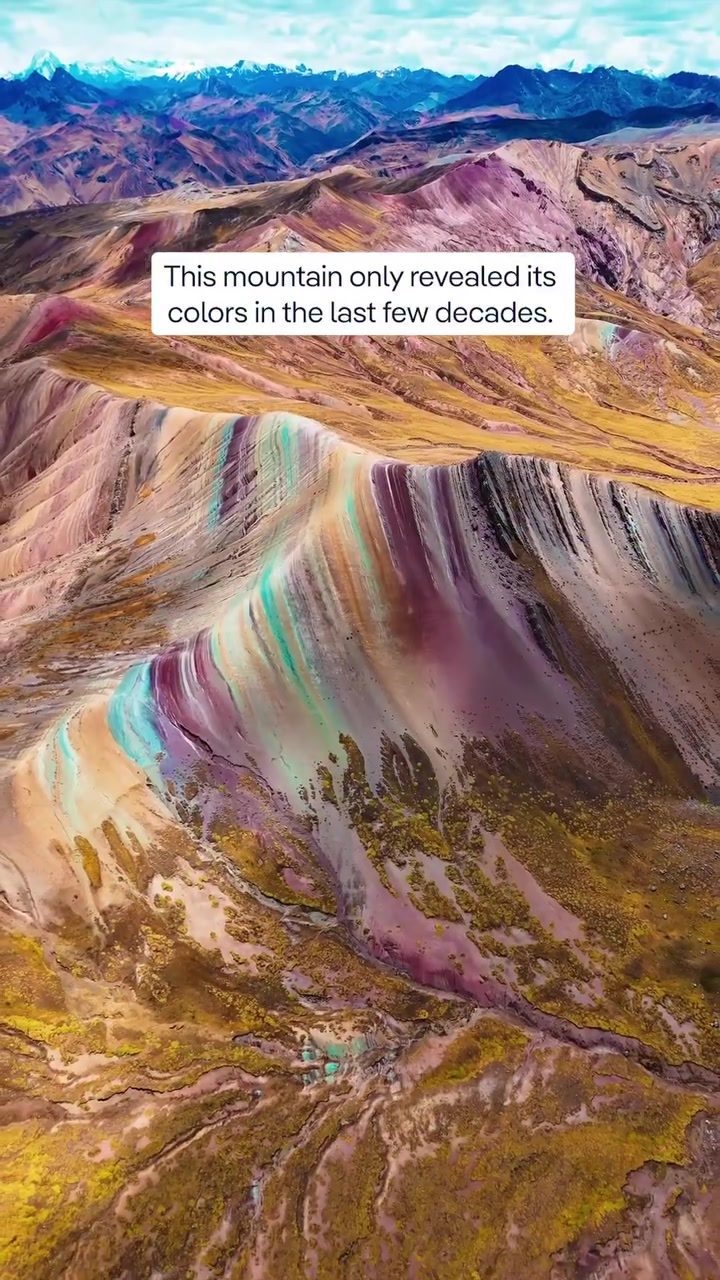
Rainbow Mountain, Peru
Rainbow Mountain, nestled in the Peruvian Andes, is a geological marvel that has only fully revealed its vibrant colors in recent decades. The mountain's distinct striped layers of red, yellow, and green are the result of millions of years of mineral deposits, exposed as glaciers melted and erosion took its course.
Why this matters
Rainbow Mountain is not just a stunning visual spectacle; it serves as a testament to the dynamic geological processes that shape our planet. Understanding the origins and recent revelation of these colors provides insight into how natural forces continue to transform landscapes. This knowledge enriches our appreciation of the natural world and highlights the significance of geographical features shaped by time and climate.
Main discussion
The geological origins of Rainbow Mountain
The colors of Rainbow Mountain come from various mineral deposits accumulated over millions of years. This process, known as mineralization, involved the slow deposition of different minerals within the rock layers. These minerals created the vibrant hues that we see today, but for a long time, they were concealed beneath glaciers.
The primary colors visible on the mountain are:
-
Red: The red hues come from iron oxide-rich deposits, particularly hematite, which gives the rocks a rusty color. This mineral is common in iron-rich environments.
-
Yellow: The yellow layers are primarily composed of sulfur-rich minerals such as goethite and limonite. These minerals form when iron-bearing minerals oxidize, giving them a characteristic yellow hue.
-
Green: The green layers are typically composed of iron-bearing mica and chlorite, which are rich in iron and magnesium. These minerals are often found in metamorphic rocks and give the green color.
The role of melting glaciers and erosion
The melting of glaciers in the Peruvian Andes has exposed the vibrant colors of Rainbow Mountain. Glaciers, which are massive sheets of ice, have a significant impact on the landscape as they move and erode the underlying rock. Over time, the melting and retreating of these glaciers have left behind the colorful mineral deposits that now adorn the mountain.
Erosion, driven by wind, water, and temperature changes, has further sculpted the landscape, revealing the intricate layers of minerals. This combination of erosion and glacial retreat has created one of the most distinctive natural landscapes in South America.
The hike to Rainbow Mountain
For many travelers, the journey to Rainbow Mountain is as rewarding as the destination itself. The trek typically begins in the town of Cusco, followed by a drive to the trailhead. The hike itself is fairly challenging, usually involving a 4-5 hour climb to reach the summit. The journey takes you through diverse ecosystems, including grasslands and alpine tundra, before reaching the top where the breathtaking view of the colorful mountain awaits.
Hikers are advised to start early in the morning to reach the summit before the afternoon clouds roll in, which can obscure the view. The best time to visit is from April to November, when the weather is generally clear and dry.
Practical tips
Preparation for your hike
Multiple factors need to be considered for a successful hike to Rainbow Mountain:
-
Physical Fitness: The hike is strenuous, so it's essential to be in good physical condition. Engage in regular exercise and build up your endurance before the trip.
-
Gear: Pack appropriately for the altitude and weather conditions. This includes warm clothing, a waterproof jacket, sturdy hiking boots, a hat for sun protection, and plenty of water and snacks.
-
Altitude Sickness: The trail reaches altitudes of over 5,000 meters. Give yourself time to acclimate to the altitude to avoid altitude sickness. Spend a few days in Cusco or nearby areas before embarking on the hike.
Best times to visit
The optimal times to visit Rainbow Mountain are during the dry season, from April to November. During these months, the weather is generally clear and stable, making for better visibility and safer hiking conditions. In contrast, the wet season from December to March can be rainy and muddy, making the trails more treacherous.
What to expect at the summit
Reaching the summit of Rainbow Mountain is an exhilarating experience. From the top, you'll see the unparalleled beauty of the colorful stripes in full view. The rocky terrain and vast, open skies create a surreal environment. Take a moment to appreciate the geological marvel and snap some photos to remember your journey.
Important takeaways
Rainbow Mountain is a unique and awe-inspiring landscape that tells the story of millions of years of geological processes. Its vibrant colors, a result of mineral deposits exposed by melting glaciers and erosion, offer a glimpse into the Earth's dynamic history. Whether you're a seasoned hiker or a curious traveler, the journey to Rainbow Mountain is an unforgettable adventure.
Conclusion
Rainbow Mountain, Peru, is a natural wonder that showcases the power and beauty of the Earth's geological forces. The vibrant colors, exposed by melting glaciers and erosion, create a spectacle that is both visually stunning and scientifically intriguing. Whether you're a nature enthusiast, a seasoned hiker, or someone seeking a unique adventure, a visit to Rainbow Mountain is sure to leave you with memories to cherish for a lifetime.
Watch the Reel
Questions readers ask
How were the vibrant colors of Rainbow Mountain formed?
The colors of Rainbow Mountain, Peru, are the result of mineral deposits that accumulated over millions of years. The red layers are due to iron oxide, while the yellow and green layers come from other minerals. These colors have only recently become visible due to the melting of glaciers and erosion, which have stripped away the soil covering the mountain.
When was Rainbow Mountain first discovered?
Rainbow Mountain was first discovered in 2011. However, it is a very remote and inaccessible location, so it was only recently revealed as glaciers melted and erosion took place.
What is the best time of year to visit Rainbow Mountain, Peru?
The best time to visit Rainbow Mountain in Peru is during the dry season, which runs from April to November. During this period, the weather is generally clear and stable, offering the best visibility for viewing the mountain's striking colors.
What are the advantages of taking a guided tour to Rainbow Mountain, Peru?
Guided tours to Rainbow Mountain, Peru, offer several advantages, including expert knowledge of the area, assistance with navigating the challenging terrain, and ensuring that visitors stay safe and on the right path. Guided tours also provide insight into the geological history of the mountain, enhancing the overall experience.
What should I pack for a hiking trip to Rainbow Mountain, Peru?
When packing for a hiking trip to Rainbow Mountain, Peru, it's essential to bring warm clothing, sturdy hiking boots, and waterproof gear, as the weather can be unpredictable. Additionally, packing high-energy snacks, plenty of water, and sun protection, such as sunscreen and a hat, is crucial for a successful and enjoyable trip.
Why are the colors of Rainbow Mountain, Peru, only visible now?
The colors of Rainbow Mountain, Peru, have only recently become visible due to the retreat of glaciers and erosion. The glaciers that once covered the mountain have melted, exposing the vibrant mineral layers beneath. This process of revealing the colors is ongoing, with the mountain continuously transforming as a result of natural forces.
Related deep dives
Similar reads based on topic and creator.




Recent articles
Fresh deep dives from the latest Reels we unpacked.




Comments
Be the first to comment.