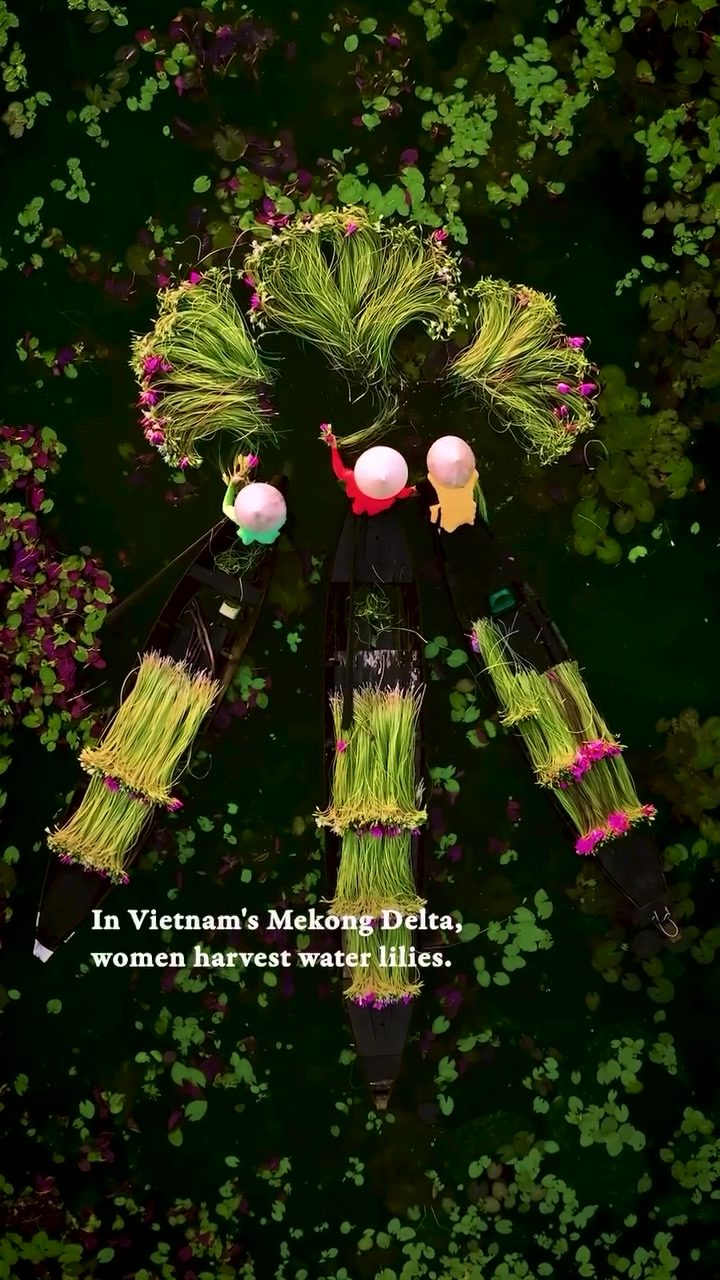
Water Lily Harvesting in Mekong Delta
The Mekong Delta, a vast network of rivers, swamps, and islands, is home to a unique and beautiful tradition: the harvesting of water lilies. This annual event, which takes place during the flooding season from early September to mid-November, transforms the landscape into a vibrant tapestry of red, purple, and white blooms.
Why This Matters
The water lily harvest in the Mekong Delta is more than just a picturesque sight; it is an essential part of the local culture and economy. The flowers are not merely decorative—they are a vital resource for local communities. They are used to adorn homes and restaurants, and their edible stalks are a popular ingredient in various dishes, including soups and teas.
The Harvesting Process
The harvesting process is a meticulous and labor-intensive activity. Women in the area navigate small boats through the flooded fields, carefully picking the lilies that bloom during the rainy season. This task requires a deep understanding of the local terrain and the timing of the blooms.
Navigating the Flooded Fields
During the rainy season, the Mekong Delta becomes a vast, watery expanse. Women navigate these flooded fields using small, flat-bottomed boats designed for shallow waters. They expertly maneuver through the water, using long poles to propel themselves and avoid obstacles.
Picking the Lilies
The lilies are picked by hand, a task that requires patience and skill. The harvesters select only the best blooms, leaving the rest to continue growing. This selective harvesting ensures that the lilies remain a sustainable resource for future seasons.
Rinsing and Bundling
Once harvested, the lilies are rinsed to remove any mud or debris. They are then carefully bundled and prepared for sale. The bundles are often tied with natural materials, adding to the rustic charm of the process. The women sell their bundles at local markets and restaurants, where they are highly sought after for both decorative and culinary purposes.
Culinary Uses of Water Lilies
Water lilies are not just beautiful; they are also delicious. The edible stalks, in particular, are a versatile ingredient in local cuisine. They are commonly used in soups, stews, and teas. The stalks have a mild, slightly sweet flavor and a crisp, refreshing texture, making them a popular addition to many dishes.
Sour Soups
One of the most popular dishes featuring water lily stalks is sour soup. This dish is a staple in the Mekong Delta region and is often made with a base of tamarind, fish, and various vegetables. The stalks, added towards the end of cooking, impart a unique crunch and a subtle sweetness that complements the sour flavors of the soup.
Water Lily Tea
Another popular use for water lily stalks is in teas. The stalks are infused with hot water, releasing their subtle flavors and aromas. The resulting tea is refreshing and soothing, making it a popular beverage choice, especially during the hot summer months.
Practical Tips
If you ever find yourself in the Mekong Delta during the water lily season, here are some practical tips to make the most of your experience:
- Wear Appropriate Clothing: The flooded fields can be muddy and wet, so dress in clothing that you don't mind getting a bit dirty. Waterproof boots and a hat are also a good idea to protect you from the elements.
- Respect the Local Culture: The water lily harvest is an important part of the local culture. Be respectful of the harvesters and their work. Engage with them, and if you're interested in participating, always ask for permission first.
- Try the Local Cuisine: Don't miss out on the chance to try dishes made with water lily stalks. Whether it's a bowl of sour soup or a cup of refreshing tea, these dishes are a unique and delicious part of the experience.
- Support Local Vendors: The women who harvest the lilies depend on their sales for income. By purchasing their products, you're directly supporting their livelihood and the local economy.
Important Takeaways
The water lily harvest in the Mekong Delta is a fascinating blend of natural beauty and cultural tradition. It's a glimpse into the lives of the people who call this region home, and into the ways they have adapted to and thrived in their unique environment. From the meticulous process of harvesting and preparing the lilies to the delicious dishes they are used in, this tradition is a testament to the resourcefulness and creativity of the local community.
Conclusion
The Mekong Delta's water lily harvest is a spectacle that captures the essence of the region's natural beauty and cultural richness. It's a tradition that not only provides sustenance but also brings joy and pride to the local community. As you wander through the flooded fields, surrounded by the vibrant blooms, you can't help but feel a sense of awe and appreciation for the harmony between nature and human endeavor.
Watch the Reel
Questions readers ask
When is the best time to witness the water lily harvest in the Mekong Delta?
The best time to witness the water lily harvest in the Mekong Delta is during the rainy season, from early September to mid-November. This period is when the flooded fields are in full bloom, and the harvest is at its peak.
What kinds of water lilies can be found during the Mekong Delta water lily season?
During the Mekong Delta water lily season, you can find a variety of vibrant lilies blooming in the flooded fields. The most common colors are red, purple, and white, each adding a unique touch to the landscape.
How do local women participate in the Lily Harvest in Mekong Delta?
Local women play a crucial role in the Mekong Delta lily preparations and harvest. They navigate flooded fields using small boats, carefully select the best lilies, and prepare them for sale. Their expertise and dedication are vital to the success of the harvest.
What are the most common uses for the harvested water lilies in the Mekong Delta?
Harvested water lilies in the Mekong Delta have several uses. They are often used to decorate homes and restaurants, and their edible stalks are a popular ingredient in local cuisine, including soups and teas. The lilies are also used in traditional medicines and cosmetics.
What role does the water lily harvest play in the local Mekong Delta culture?
The water lily harvest is deeply ingrained in the local Mekong Delta culture. It is a time of celebration and community involvement, where families and friends come together to participate in the harvest and share the bounty. The tradition is passed down through generations, maintaining its significance in the local community.
Why does the Mekong Delta water lily harvest occur during the rainy season?
The Mekong Delta water lily harvest occurs during the rainy season because the flooding creates ideal conditions for the lilies to bloom. The water-covered fields provide the perfect environment for the lilies to thrive, making the harvest more abundant and visually stunning.
Are there any traditional practices or rituals associated with the Mekong Delta water lily harvest?
Yes, there are several traditional practices associated with the harvest. Families often gather to share stories and meals, and local festivals may include performances and competitions. Women typically lead the harvesting, and specific methods are used to prepare the lilies, ensuring the harvest continues to thrive.
Related deep dives
Similar reads based on topic and creator.




Recent articles
Fresh deep dives from the latest Reels we unpacked.




Comments
Be the first to comment.