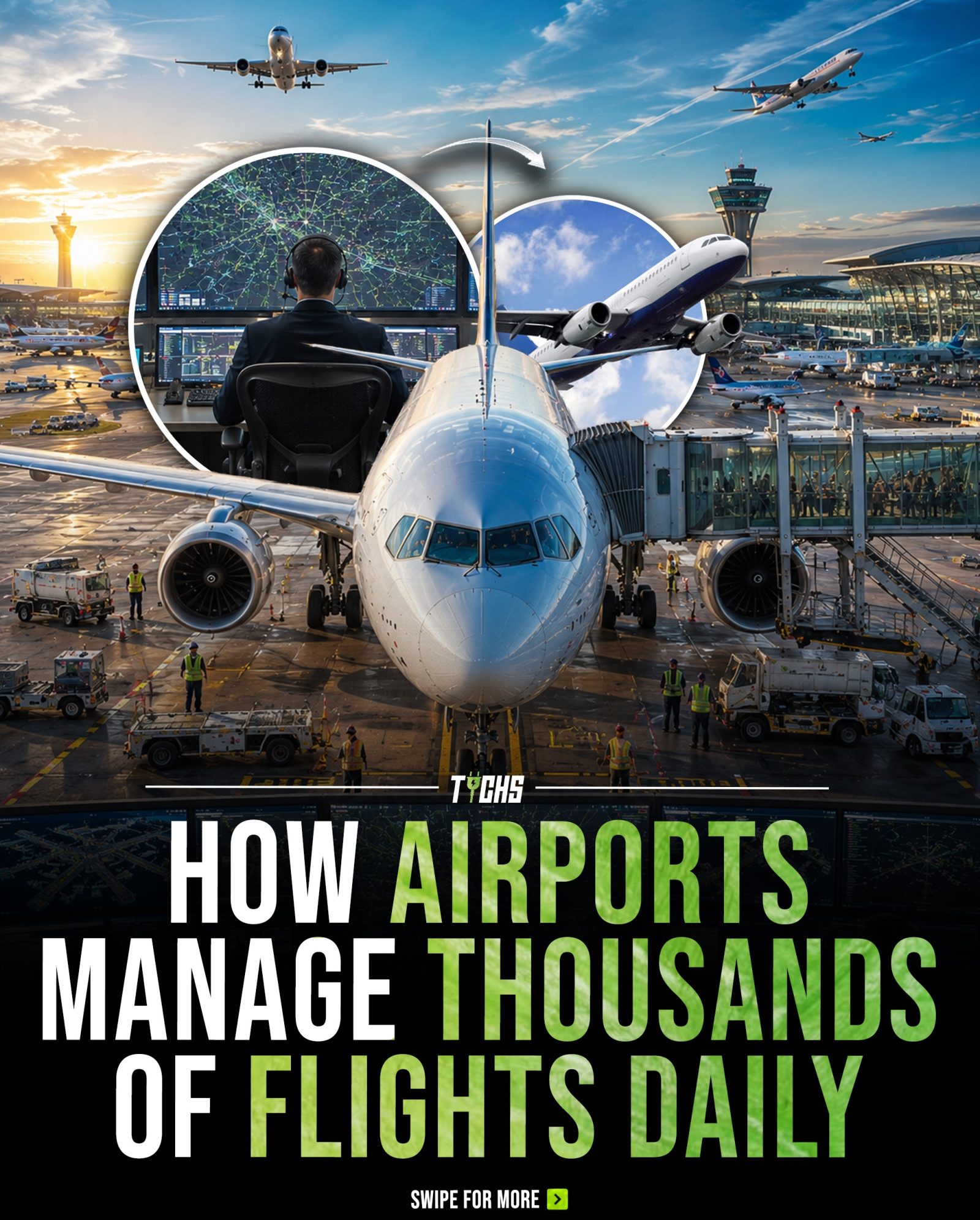
How Airports Manage Thousands of Flights Daily
Airports are bustling hubs where thousands of flights are managed daily with intricate coordination systems. These systems combine radar, scheduling software, baggage automation, and constant communication to ensure that global air travel runs smoothly.
Context
Behind the scenes, airports like Hartsfield–Jackson Atlanta International, Heathrow, Singapore Changi, and Dubai International operate with advanced control towers, automated baggage systems, and advanced gate optimization software. These facilities, including Munich Airport, Istanbul Airport, Haneda Airport, and Dallas/Fort Worth International Airport, function almost like self-sustaining cities, complete with emergency services, cargo systems, trains, fuel networks, and thousands of workers.
Advanced Gate Management
Airports like Singapore Changi employ advanced scheduling software to constantly reshuffle gates. This dynamic system considers aircraft size, delays, and passenger connections. For instance, a gate initially assigned to a large aircraft may be reassigned to a smaller plane if the smaller plane arrives early and needs immediate departure. This flexibility is crucial for maintaining efficient operations and minimizing delays.
Real-Time Operations
Real-time operations centers are the nerve centers of airport management. These centers continuously monitor and manage all aspects of airport operations, from flight arrivals and departures to baggage handling and ground services. Advanced radar and communication systems allow for precise coordination, ensuring that aircraft move smoothly and safely through the airspace.
Automated Baggage Systems
Automated baggage systems are essential for the smooth handling of luggage. These systems use advanced tracking and sorting mechanisms to ensure that bags are loaded onto the correct flights and delivered to the right destinations. Automated baggage systems significantly reduce the risk of lost luggage and improve the overall travel experience.
Coordinated Air Traffic Systems
Air traffic control systems are crucial for managing the flow of aircraft in and out of airports. These systems use a combination of radar and communication technologies to guide pilots and ensure safe distances between aircraft. Coordinated air traffic systems keep flights moving smoothly, even in high-traffic areas like Europe, where over 30,000 flights per day were handled in 2025.
Practical Tips
For Passengers
For travelers, understanding the complexity of airport operations can enhance the travel experience. Here are some tips:
- Check-In Early: Arriving at the airport with ample time allows for a smoother check-in process and reduces stress.
- Monitor Flight Status: Use airline apps or airport websites to stay updated on flight status and gate changes.
- Follow Instructions: Pay attention to airport announcements and signs for gate changes and boarding instructions.
For Airline Personnel
Airline personnel need to be well-versed in the use of advanced scheduling software and real-time operations centers. Regular training can help them stay updated on the latest technologies and best practices. Effective communication between ground staff, pilots, and air traffic controllers is crucial for efficient operations.
Important Takeaways
Airport management involves a complex web of systems and personnel working together to handle thousands of flights daily. Advanced gate management, real-time operations, automated baggage systems, and coordinated air traffic control are key components of this intricate process. Understanding these systems can provide valuable insights into the seamless operations that keep global air travel moving.
Conclusion
Airports are more than just buildings with runways; they are intricately designed systems that ensure smooth and efficient air travel. Advanced technologies and well-coordinated operations make it possible for thousands of flights to be managed daily, ensuring that passengers reach their destinations safely and on time. This behind-the-scenes look reveals the hidden mechanisms that keep the world moving efficiently.
Watch the Reel
Questions readers ask
How do airports coordinate thousands of flights daily?
Airports use a combination of radar technology, advanced flight scheduling software, and constant communication between air traffic controllers and pilots. This coordinated effort allows airports to manage the complex dance of arrivals and departures seamlessly. Additionally, airports use automated gate management and real-time operations software to optimize the use of resources and minimize delays.
What role do control towers play in managing airport traffic?
Control towers are crucial in managing airport traffic as they provide a central hub for air traffic controllers to oversee and coordinate the movement of aircraft on the ground and in the air. They use radar and advanced communication systems to guide pilots during takeoff, landing, and taxiing, ensuring safe distances between aircraft and maintaining the flow of traffic.
How do airports handle baggage for thousands of flights daily?
Airports employ automated baggage handling systems to manage the massive volume of luggage. These systems use conveyors, scanners, and sorting mechanisms to efficiently transport bags from check-in to the correct aircraft. Advanced tracking technologies ensure baggage is loaded onto the right flight, reducing the chances of mishandling, and expediting the process for passengers.
What measures are taken to manage congestion at busy international airports?
Airports implement several strategies to manage congestion, including advanced gate optimization software to allocate gates efficiently, real-time operations data to monitor and adjust scheduling, and dynamic routing for ground traffic. Additionally, ground transportation systems like automated trains and efficient bus services help move passengers quickly between terminals and gates.
How do flight scheduling software systems assist in daily airport operations?
Flight scheduling software assists in daily operations by optimizing flight times, gate assignments, and ground handling resources. These systems use algorithms to predict and minimize delays, and facilitate quick adjustments during disruptions. By integrating with other airport systems, they ensure a coordinated flow of flights, passengers, and baggage.
What are some of the most advanced airport traffic control systems in use today?
Some of the most advanced airport traffic control systems include automated gate management, real-time flight data processing, and advanced radar technology. These systems facilitate precise tracking and communication, ensuring safe and efficient operations even in high-traffic conditions. Additionally, airports utilize predictive analytics to anticipate and mitigate potential disruptions, further enhancing their operational effectiveness.
How do airports manage the logistics of fuel and cargo alongside passenger operations?
Airports treat fuel and cargo management as integral parts of their operations, much like passenger services. Dedicated fuel depots and facilities ensure that aircraft have access to the necessary fuel. Specialized cargo terminals and automated systems efficiently handle the loading and unloading of freight. This ensures that goods, mail, and other cargo are transported continuously, alongside the management of passenger flights, minimizing delays and maximizing efficiency.
Related deep dives
Similar reads based on topic and creator.




Recent articles
Fresh deep dives from the latest Reels we unpacked.




Comments
Be the first to comment.