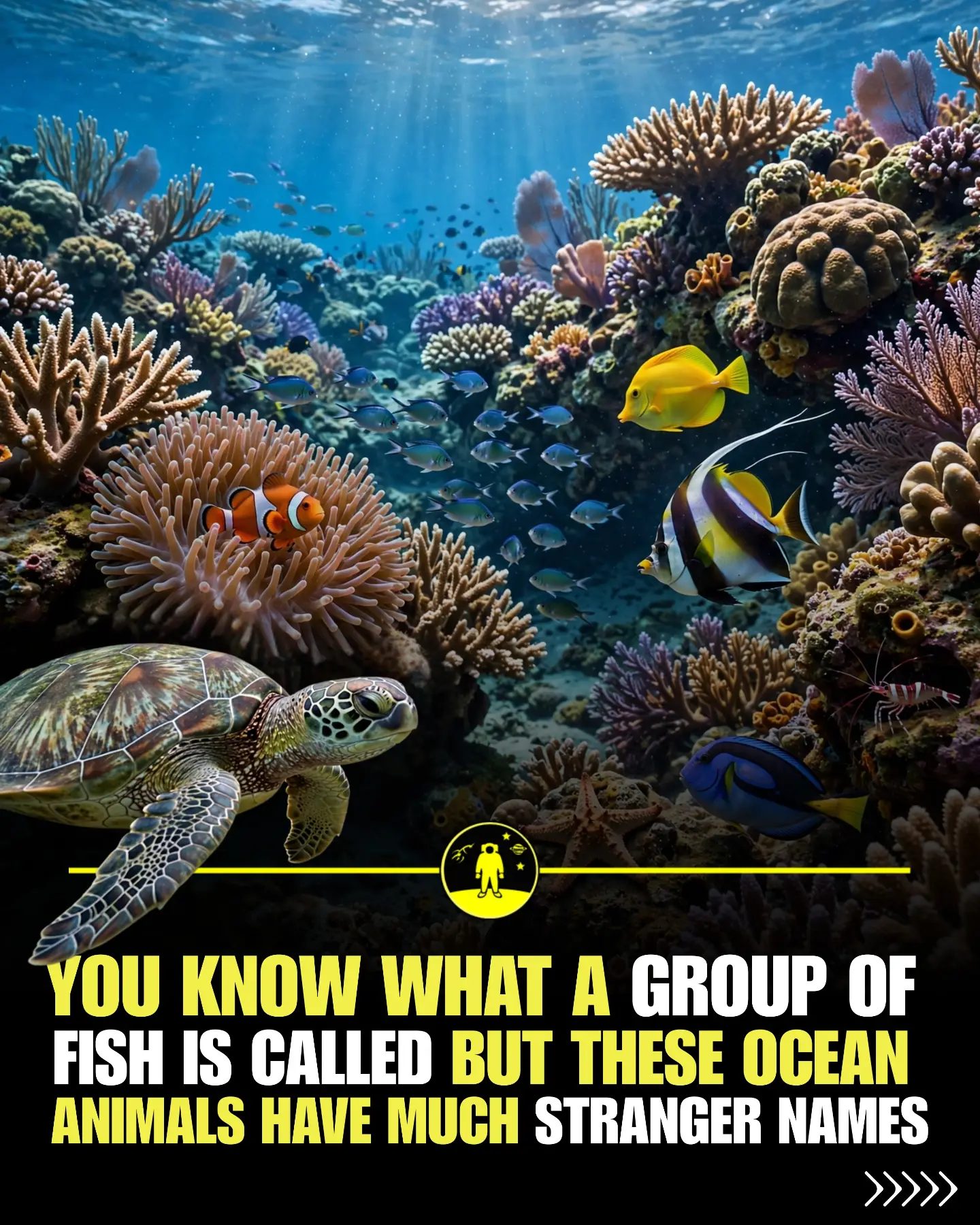
The ocean is a vast and mysterious world filled with a multitude of creatures, each with its own unique characteristics. Beyond their individual traits, many ocean animals also have fascinating collective names. These names often come from historical traditions, old English collective nouns, or even more modern, creative interpretations. While scientists typically use practical terms like school, shoal, colony, pod, or aggregation, the traditional and historical names add a layer of intrigue and personality to these marine inhabitants.
Why This Matters
Understanding the collective names of ocean animals can deepen appreciation for marine life. These names often reflect the behavior, appearance, or cultural significance of the creatures. For example, a group of narwhals is often called a "blessing," which evokes a sense of rarity and majesty. Similarly, a group of sharks is known as a "shiver," suggesting a collective menace or power. These names can also be a fun way to engage with marine biology, making the subject more accessible and enjoyable.
Collective Names of Ocean Animals
Narwhals and Sharks
A group of narwhals is often referred to as a "blessing." This name reflects the rarity and majesty of narwhals, which are often called the "unicorns of the sea" due to their distinctive tusks. In contrast, a group of sharks is known as a "shiver," which conveys a sense of collective power and danger.
Jellyfish and Rays
Jellyfish have a particularly intriguing collective name: a "smack." This term highlights the often mindless, drifting nature of jellyfish, which can appear to move as one in large groups. Rays, on the other hand, are known as a "fever," suggesting a group that is both graceful and potentially overwhelming in its size.
Crabs and Shrimp
Crabs are part of a "cast," a term that reflects their hard exoskeletons and the way they often gather in large numbers on the sea floor. Another crustacean, shrimp, is part of a "troupe," highlighting their tendency to gather in large, coordinated groups.
Other Notable Groups
Oysters often live in "beds," which refers to their habitat on the ocean floor. Seals may gather in "colonies" or "pods," depending on the situation and species. Squid commonly form "schools" or "shoals," while sea turtles may be called a "bale" when gathered together.
Historical and Modern Interpretations
Some of these collective names are commonly recognized and have historical roots. Others, however, are more modern interpretations or simply popular online. For instance, while "blessing" and "shiver" are well-known terms, others like "fever" and "troupe" might be less familiar.
It's always worth checking whether a collective noun is traditional, regional, or simply a popular online term. For example, the term "fever" for a group of rays is not as widely accepted as "shiver" for sharks. This highlights the importance of verifying the authenticity and historical context of these names.
Practical Tips for Remembering Collective Names
- Associate with Behavior: Connect the collective name with the animal's behavior. For example, a "smack" of jellyfish can be remembered by thinking of their drifting, aimless movement.
- Use Visual Cues: Visualize the animals in groups. For instance, imagine a "fever" of rays moving gracefully underwater.
- Historical Context: Learn about the historical or cultural significance of the names. This can make them more memorable and meaningful.
- Practical Terms: Use practical terms like "school" or "pod" in everyday conversations, but save the more unique names for special occasions to keep them interesting.
Important Takeaways
Collective names for ocean animals add a layer of fascination and uniqueness to marine life. These names often have historical or cultural significance, and understanding them can deepen appreciation for the ocean's inhabitants. Whether traditional or modern, these terms offer a glimpse into the rich tapestry of marine biology and human interaction with the sea.
Conclusion
The ocean is home to a diverse array of creatures, each with its own collective name. These names, whether traditional or modern, historical or creative, add a touch of personality and intrigue to marine life. From the majestic "blessing" of narwhals to the graceful "fever" of rays, these terms help us appreciate the beauty and complexity of the ocean world. Exploring these names can be both educational and enjoyable, offering a deeper connection to the underwater realm.
Watch the Reel
Questions readers ask
What is a 'blessing' of narwhals and why is it called that?
A 'blessing' refers to a group of narwhals. This term is likely inspired by the mystical and almost magical appeal of these creatures, with their long, spiraled tusks. The name reflects the cultural significance and awe that narwhals have held in various societies, particularly among Inuit communities.
Why are sharks collectively known as a 'shiver'?
A 'shiver' of sharks is a term that evokes the sense of fear and excitement that these predators can inspire. It may also refer to the way sharks move, as their finely-tuned senses can make them seem to shiver or vibrate as they detect prey or danger.
What does a 'fever' of stingrays represent?
A 'fever' of stingrays is a collective term that might refer to the way these creatures can appear to move in a rapid, almost frantic manner when disturbed. This name could also hint at the potential danger they pose, as their stings can cause discomfort or injury to humans and other animals.
What are some other unusual group names for ocean creatures?
The ocean is full of intriguing collective names. For instance, a group of jellyfish is sometimes called a 'smack,' while sea otters are known as a 'raft' when they float together. Other notable examples include a 'murder' of crows and a 'parliament' of owls, which, although not ocean creatures, are interesting collective nouns nonetheless.
Why do ocean creatures have these unique group names?
These unique group names often originate from historical traditions, old English collective nouns, or modern creative interpretations. They serve to highlight the distinctive behaviors, appearances, or cultural significances of these marine animals, making the study of ocean life both engaging and memorable.
What are some practical terms used by scientists for groups of ocean creatures?
Scientists typically use terms like 'school' for a group of fish, 'shool' for a group of fish that are the same species, 'shoal' for a smaller, less organized group, 'colony' for stationary creatures, 'pod' for marine mammals such as dolphins, or 'aggregation' for a loose gathering of individuals. These terms are more practical and descriptive, focusing on the behavior and structure of the group.
What is the significance of knowing these group names for ocean creatures?
Knowing these group names can enhance understanding and appreciation of marine life. They often provide insights into the behavior, habitat, and cultural significance of these creatures, making interactions with them more meaningful and memorable. These names also add a layer of intrigue and personality to the vast and mysterious world of the ocean.
Recent articles
Fresh deep dives from the latest Reels we unpacked.




Comments
Be the first to comment.