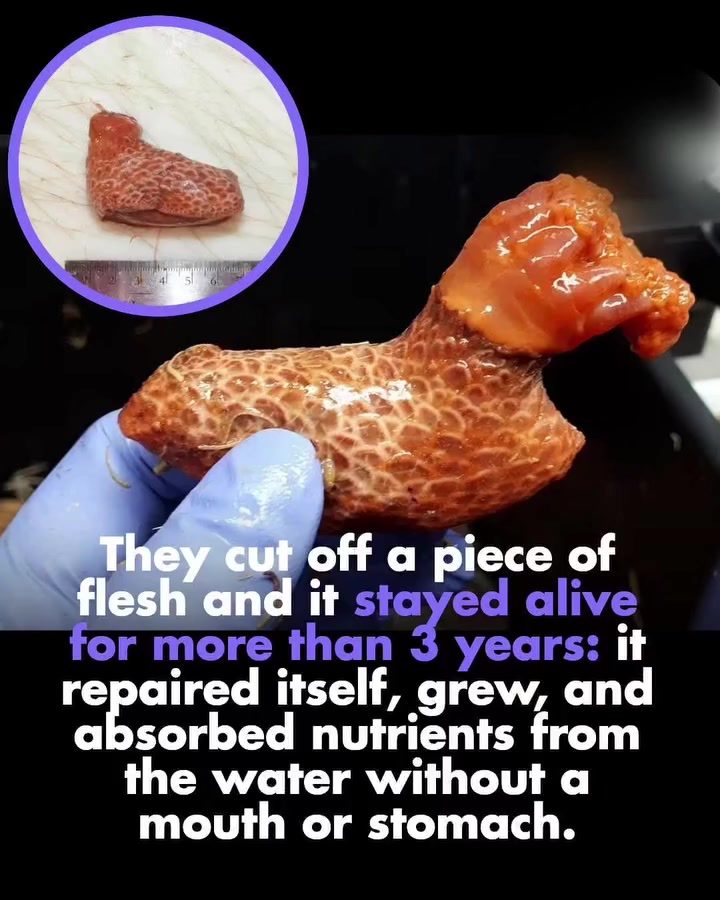
Turritopsis Döhrnii Jellyfish
The Turritopsis döhrnii jellyfish, a small, transparent species, has long intrigued scientists with its remarkable ability to regenerate. Unlike other organisms, the Turritopsis döhrnii can survive for over three years after a piece of its flesh is removed. This unique capability has made it a subject of intense study, particularly in the realm of regenerative biology.
Why This Matters
Understanding the mechanisms behind the Turritopsis döhrnii's regenerative abilities could have profound implications for medical research, particularly in areas such as tissue engineering and regenerative medicine. These jellyfish do not require a mouth or stomach to survive; they absorb nutrients directly from seawater. This unique adaptation raises fundamental questions about the nature of biological survival and raises possibilities for human tissue regeneration and healing.
Biology and Regenerative Abilities
The Regeneration Process
The Turritopsis döhrnii's regenerative process is quite remarkable. When a piece of its flesh is severed, the tissue doesn't simply die and degrade. Instead, it undergoes a series of transformations. Initially, the tissue clears away damaged parts and closes its own wounds. Over time, it reorganizes, continues to grow, and develops a new form. During the first week, the tissue might even shrink by as much as 23%, but within months, it regains its original size and, after a year, can grow to be 12% larger than its original size.
Nutrient Absorption
One of the most puzzling aspects of this jellyfish's survival is its ability to absorb nutrients without a mouth or stomach. The Turritopsis döhrnii absorbs amino acids directly from seawater to fuel its metabolism. This adaptation allows it to thrive in natural seawater, even in the presence of microorganisms, without the need for any added nutrients. This ability challenges traditional biological understandings of how organisms obtain and utilize nutrients.
Survival in Natural Environments
Another intriguing aspect of the Turritopsis döhrnii's survival is its ability to maintain immune activity and the capacity to repair its own tissues. This is not a laboratory phenomenon. These jellyfish survive in natural seawater, maintaining their health and regenerative abilities in the wild. The tissues, termed LiPfe (for living immortal P. fabricii explants) by researchers, continue to exist as independent biological units, raising questions about the definition of life and tissue viability.
Practical Tips for Studying Turritopsis Döhrnii
Studying the Turritopsis döhrnii jellyfish can provide valuable insights into regenerative biology. Researchers interested in this species should consider the following tips:
Tissue Handling and Observation
When handling tissue fragments of the Turritopsis döhrnii, it's important to observe the initial phases of regeneration carefully. The tissue will clear away damaged parts and begin to close its wounds almost immediately. Researchers should monitor this process to understand the early mechanisms of regeneration.
Nutrient Conditions
Understanding the nutrient absorption process is crucial. Since the Turritopsis döhrnii absorbs amino acids directly from seawater, it's essential to study the composition of the seawater and the specific amino acids involved. This can provide insights into how to replicate this process in other organisms.
Environmental Factors
The jellyfish's ability to thrive in natural seawater, surrounded by microorganisms, highlights the importance of environmental factors. Researchers should consider the natural conditions in which the Turritopsis döhrnii lives, including temperature, salinity, and microbial interactions, to fully understand its regenerative capabilities.
Important Takeaways
The Turritopsis döhrnii jellyfish offers a unique window into the world of regenerative biology. Key takeaways from its study include:
- The ability to regenerate and survive for over three years after tissue fragmentation.
- The unique mechanism of nutrient absorption without a mouth or stomach.
- The maintenance of immune activity and tissue repair capabilities in natural environments.
Conclusion
The Turritopsis döhrnii jellyfish stands as a testament to the remarkable adaptability and resilience of life. Its ability to regenerate and survive under such unique conditions offers valuable insights into the mechanisms of biological survival and regeneration. As researchers continue to uncover the secrets of this extraordinary organism, the potential applications in medical research and regenerative biology are vast. By understanding how the Turritopsis döhrnii thrives, we can explore new frontiers in tissue engineering and healing, potentially revolutionizing our approach to medical treatments and biological research.
Watch the Reel
Questions readers ask
What makes the Turritopsis döhrnii jellyfish unique among other marine species?
The Turritopsis döhrnii jellyfish is unique due to its exceptional regenerative abilities. It can survive and regrow even after significant injuries, setting it apart from other marine species. This capability allows it to potentially live indefinitely, making it a fascinating subject for biological research.
How does the Turritopsis döhrnii jellyfish regenerate after injuries?
After an injury, the Turritopsis döhrnii jellyfish can transform its existing cells into a younger state, effectively reverting to a polyp form. From this state, it can regrow into a fully functional jellyfish, demonstrating a remarkable healing process.
What potential implications does the jellyfish's regenerative ability have for human medicine?
The regenerative capabilities of the Turritopsis döhrnii jellyfish could inspire new approaches in human medicine, particularly in tissue engineering and regenerative therapies. By understanding how this jellyfish heals, researchers may develop innovative treatments for severe injuries and diseases.
How does the Turritopsis döhrnii jellyfish feed and survive in its marine environment?
Unlike many other animals, the Turritopsis döhrnii jellyfish does not require a mouth or stomach to consume food. Instead, it absorbs nutrients directly from the seawater, showcasing a unique and efficient method of survival in its aquatic habitat.
What is the lifespan of the Turritopsis döhrnii jellyfish?
The lifespan of the Turritopsis döhrnii jellyfish is theoretically infinite due to its ability to revert to a younger state and regrow. This has led to it being referred to as the 'immortal jellyfish,' as it can potentially live forever under the right conditions.
What are the benefits of studying the healing process of the Turritopsis döhrnii jellyfish?
Examining the healing process of the Turritopsis döhrnii jellyfish can provide valuable insights into biological survival mechanisms. This knowledge may contribute to advancements in medicine, particularly in areas focused on tissue repair and regeneration, benefitting both humans and other animals.
Can the Turritopsis döhrnii jellyfish be found in aquariums or research facilities?
Due to its delicate nature and specific habitat requirements, the Turritopsis döhrnii jellyfish is not commonly found in public aquariums. However, it is often studied in research facilities and laboratories, where scientists can closely observe and document its unique regenerative abilities.
Related deep dives
Similar reads based on topic and creator.

Recent articles
Fresh deep dives from the latest Reels we unpacked.




Comments
Be the first to comment.