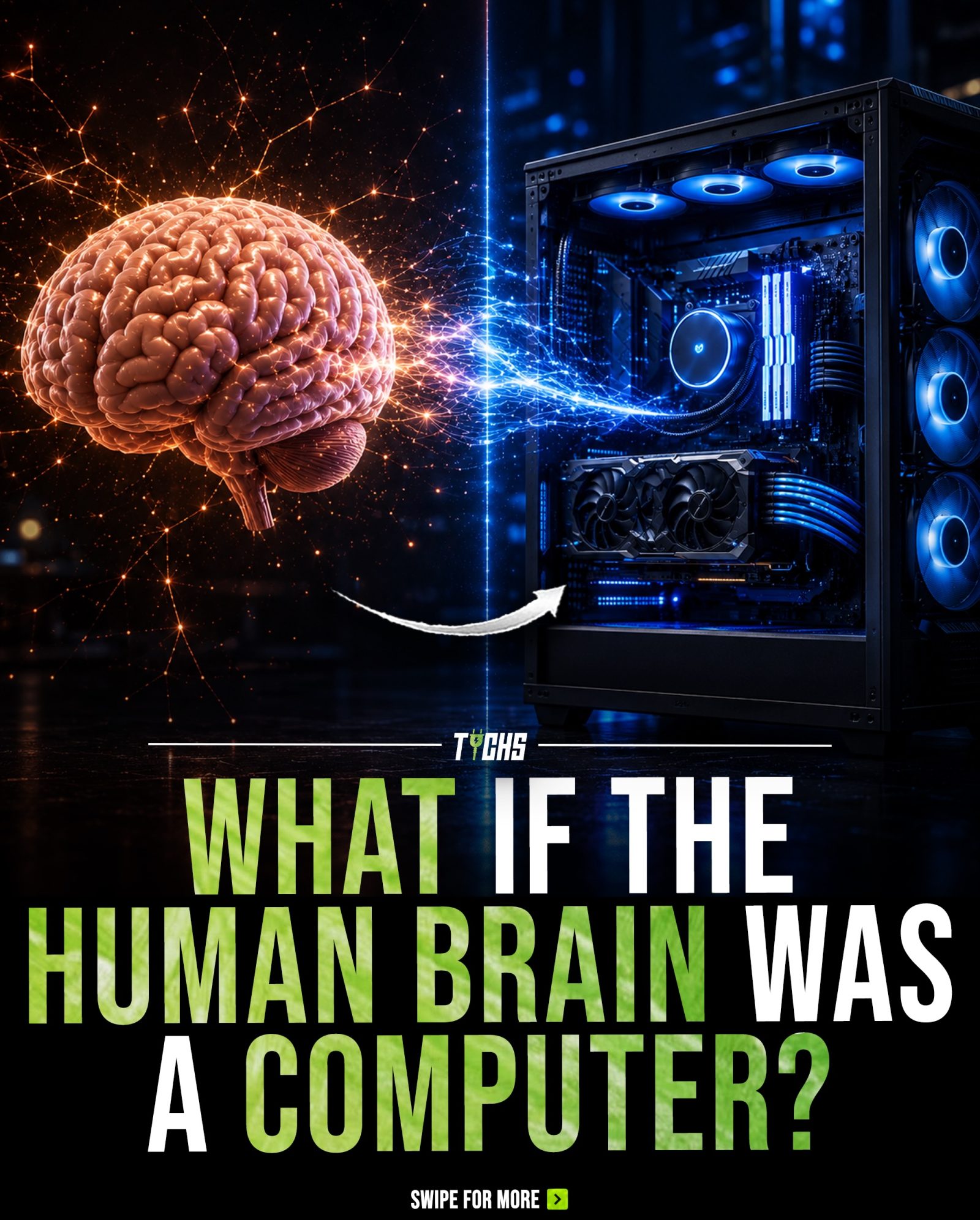
Human Brain vs. Computer: A Fascinating Comparison
The human brain remains an unparalleled computing system, and exploring its capabilities by comparing it to a computer provides an intriguing way to understand its power. This comparison, while only an approximation, reveals the brain's remarkable efficiency, adaptability, and processing speed. The brain operates on approximately 20 watts of power, contains around 86 billion neurons, and can store the equivalent of about 2.5 petabytes of information. It is capable of performing up to an exaflop of processing per second, far outpacing the capabilities of modern computers.
Context: Why This Matters
Understanding the brain's computing power not only highlights its biological prowess but also provides insights into how we can inspire advancements in computer technology. By examining the brain's processes, scientists and engineers can develop more efficient and powerful computers, potentially revolutionizing fields like artificial intelligence (AI) and data processing. This comparison also sheds light on the brain's structural and functional capabilities, providing future directions for research in neuroscience and technology.
Power and Efficiency
Energy Consumption
One of the most striking aspects of the brain is its power consumption. Despite its incredible capabilities, the brain operates on a mere 20 watts of power. This is significantly less than the power required by high-performance computers, which can consume thousands of watts. The brain's efficiency in processing vast amounts of information with minimal energy consumption is a testament to its optimized design.
Processing Speed
The brain's processing speed is another area where it outperforms traditional computers. With an estimated processing speed of up to 1 exaflop per second, the brain can handle complex calculations and information processing at lightning speeds. This capability is achieved through the brain's massively parallel neural networks, which allow for simultaneous processing of multiple tasks. In contrast, conventional computers rely on a central processor, limiting their ability to multitask efficiently.
Information Storage
Data Capacity
The brain's information storage capabilities are equally impressive. Scientists estimate that the brain can store the equivalent of about 2.5 petabytes of information. This vast data capacity allows the brain to retain and recall a wide range of experiences, knowledge, and memories. In comparison, the storage capacity of modern computers, while substantial, pales in comparison to the brain's storage potential.
Neural Networks
Unlike traditional computers, which use binary code to store information, the brain employs neural networks. These networks consist of interconnected neurons that communicate through electrical signals. This method of information storage and processing enables the brain to adapt and learn from experience, making it highly versatile and efficient. The brain's neural networks are responsible for its remarkable ability to recognize patterns, solve problems, and make decisions.
Adaptability and Learning
Massively Parallel Processing
One of the key advantages of the brain's architecture is its ability to process information through massively parallel neural networks. This means that multiple tasks can be performed simultaneously, allowing for efficient multitasking and quick data processing. This parallel processing capability is what enables the brain to handle complex tasks with ease, from recognizing faces to solving mathematical problems.
Learning and Adaptation
The brain's ability to learn and adapt is another area where it excels. Through a process called synaptic plasticity, the brain can modify its neural connections based on experience and learning. This adaptability allows the brain to continually evolve and improve its performance. In contrast, traditional computers require explicit programming and updates to learn and adapt, making them less flexible in dynamic environments.
Comparing to Modern Computers
While modern computers continue to become faster and more powerful, they still struggle to match the brain's remarkable efficiency, adaptability, and ability to learn from experience. The brain's massively parallel neural networks and energy-efficient design provide a blueprint for developing more advanced computer technologies. By understanding how the brain processes information, we can create more powerful and efficient computing systems.
Practical Tips
To better appreciate the brain's computing power, consider the following practical tips:
- Learn About Neural Networks: Familiarize yourself with the basics of neural networks and how they function. This will give you a deeper understanding of the brain's processing capabilities and how they compare to traditional computing systems.
- Explore AI and Machine Learning: Engage with AI and machine learning technologies to see how they mimic the brain's processes. This can provide a practical perspective on the brain's computing power and its potential applications.
- Study Neuroplasticity: Learn about neuroplasticity, the brain's ability to change and adapt. This concept highlights the brain's remarkable flexibility and adaptability, which are key to its computing prowess.
Important Takeaways
The brain's comparison to a computer reveals several key takeaways:
- The brain operates on significantly less power, making it highly energy-efficient.
- Its processing speed and storage capacity are unmatched by modern computers.
- The brain's massively parallel neural networks enable efficient multitasking and quick data processing.
- The brain's ability to learn and adapt through neuroplasticity sets it apart from traditional computing systems.
- Understanding the brain's computing capabilities can inspire advancements in computer technology and AI.
Conclusion
The human brain remains the most powerful computing system we know, with remarkable efficiency, adaptability, and processing speed. By comparing the brain to a computer, we gain valuable insights into its capabilities and potential applications in technology. As we continue to explore the brain's computing power, we can develop more advanced and efficient computing systems, paving the way for future innovations in AI and data processing.
Watch the Reel
Questions readers ask
How does the brain's power consumption compare to that of a computer?
The human brain operates on a mere 20 watts of power, which is incredibly efficient compared to the power consumption of modern computers. This efficiency is a key aspect of the brain's computing power and has inspired advancements in AI and data processing.
What is the storage capacity of the human brain in comparison to a computer?
The human brain can store around 2.5 petabytes of information, which is significantly more than the storage capacity of most computers. This makes the brain a model for inspiring advancements in data storage technology.
How many neurons are in the human brain and how does this contribute to its computing power?
The human brain contains approximately 86 billion neurons, which are interconnected to form a vast and intricate network. This dense network of neurons contributes to the brain's remarkable processing speed and computing power, allowing it to perform up to an exaflop of processing per second.
How does the brain compare to AI in terms of processing speed and efficiency?
The human brain outperforms AI in both processing speed and efficiency. While a computer might have to rely on supercomputers for high processing speeds, the brain can perform up to an exaflop of processing per second, using a fraction of the energy and resources.
What technological advancements can be inspired by the brain's computing capabilities?
By understanding the brain's computing power, we can drive innovations in technology, such as more efficient AI, neuromorphic engineering, and other brain-inspired technologies.
What does the comparison of a brain to a computer reveal about the brain's efficiency and processing speed?
By comparing a brain to a computer, we can see that the brain is highly efficient and has remarkable processing speeds. Specifically, the brain can perform complex tasks with very low power consumption and achieve high processing speeds.
How can neuroscience and technology benefit from exploring the brain's computing power?
Exploring the brain's computing power can provide insights into developing new technologies. For example, understanding the brain's efficiency, adaptability, and processing capabilities can lead to advancements in AI and data processing, enhancing our ability to harness technology for practical and innovative applications.
Related deep dives
Similar reads based on topic and creator.




Recent articles
Fresh deep dives from the latest Reels we unpacked.




Comments
Be the first to comment.