It's Not Just Winter
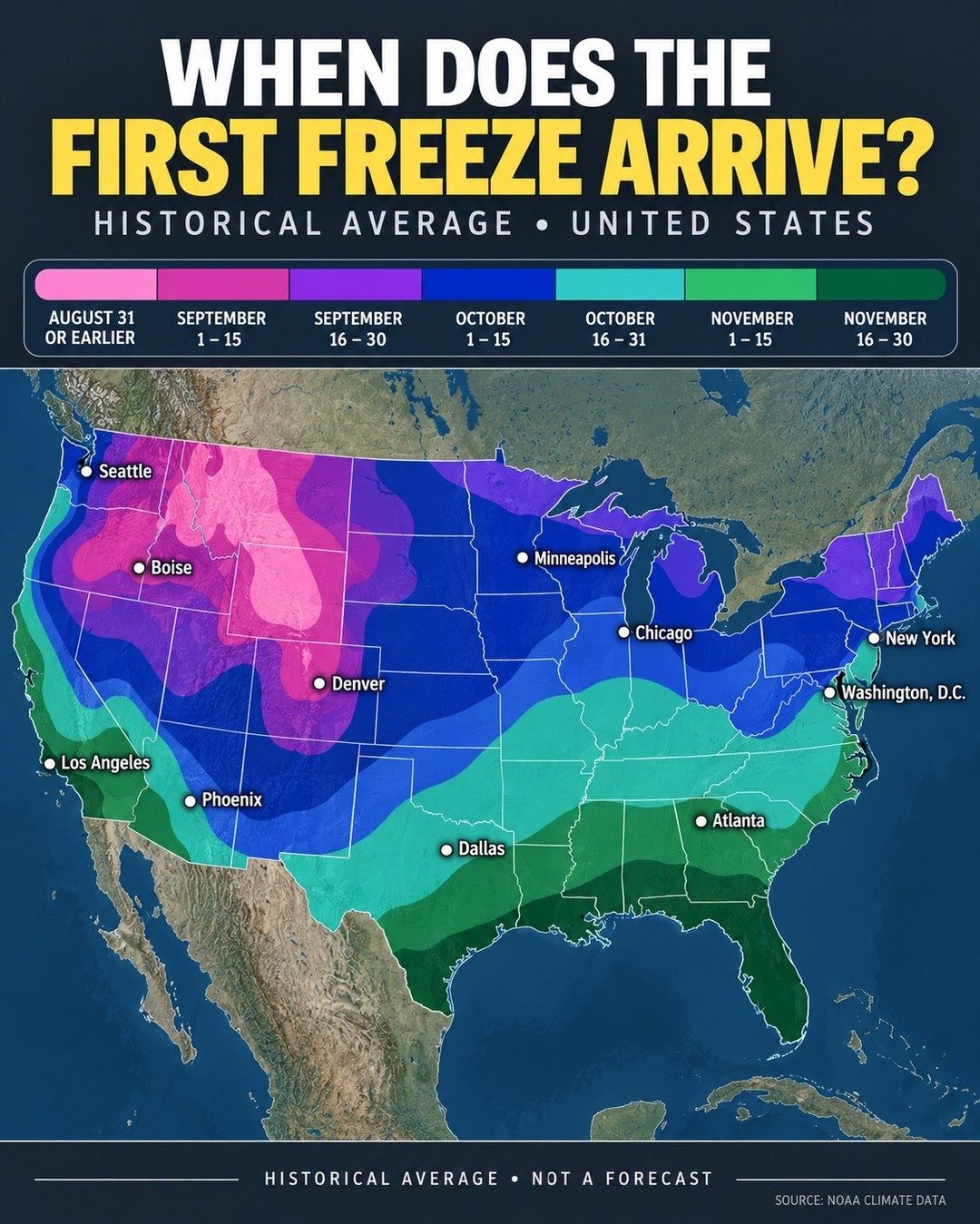
Freezing temperatures in the lower U.S. can come out of nowhere. In retrospect, it seems logical, but the actual details are less intuitive. The real question is, not "What happened to my plants?" but "Why now?" The answer is a blend of geography, ocean currents, and atmospheric conditions. In the U.S., the first freeze dates—when temps dip below 32°F (0°C)—vary wildly, even between neighboring cities. The East-Coast cities like New York and Washington, D.C. can require some heavy planning. Here, the first freeze might not arrive until mid- to late October. Meanwhile, in Minneapolis, the first freeze can happen in late September. This is a testament to the significant role latitude (and, by extension, the amount of daylight) plays in local climate. The phenomenon of freeze dates is more complicated than simply anticipating cold weather. Local geography shapes temperature and wind patterns. Sea-breezes and mountain ranges cause temperatures to rise and drop. For example, Los Angeles has more mild temperatures in the local climate due to them being near the pacific ocean, and Atlantic cities in the east like New York and Boston have milder climates in the winter due to the east coasts influenced by the Atlantic Ocean. Sea breezes, a common occurrence in coastal cities like Seattle and Los Angeles, bring mild air from the ocean, delaying the first freeze. In contrast, urban areas, such as Dallas and Atlanta, can experience earlier freezes due to the urban heat island effect, where built-up areas absorb and re-radiate heat.
Where to Put What
Climate data underscores this variability. For instance, August 31 is the earliest average date for the first freeze in Boise, Idaho, while Seattle, Washington, may not see it until November 16–30. This is due to their respective geographic features. Seattle's proximity to the Pacific Ocean and Puget Sound moderates temperatures, while Boise's inland location and higher elevation make it cooler earlier in the season. To complicate things further, Phoenix generally stays warm enough to avoid a freeze until November. The variation in freeze dates illuminates a key point: local climate is not simply a matter of latitude. It can be affected by urbanization, prevailing winds, and even topographical details. Los Angeles, for example, remains relatively warm year-round due to its coastal location. Further east, Seattle benefits from the moderating effects of the Puget Sound. The map is color-coded to show this — shades of orange and red signal the earliest freezes. As you move eastward, the colors shift towards the blue and green, denoting later freeze dates. Urban heat islands, where cities retain and radiate more heat than their rural surroundings, factor into this as well. This variability means that, to plan for the first freeze, gardeners, homeowners, and farmers need to look beyond generalizations. Seattle's maritime influence. Washington, D.C., and New York City's coastal characteristics, and Boise’s high altitude and inland position make for different climactic challenges.
Hunter and Traveler
The complications are further illustrated when you look at New Orleans and the Gulf Coast. There, the freezing temperatures may not occur until December due to the influence of the Gulf Stream, which brings warm water from the tropics, moderating the region's climate. New Orleans, for example, may not see its first freeze until mid-December. Urban heat islands can also delay the first freeze in cities like Atlanta and Dallas. These urban areas absorb and re-radiate heat, creating microclimates that can be several degrees warmer than surrounding rural areas. The historical average dates for first freeze across the United States offer valuable insights and climate variability. For many, this information is crucial for planning, from gardeners protecting sensitive plants to farmers scheduling harvests and even homeowners preparing their pipes. Though climate change is not addressed, these dates are a powerful reminder of the natural world's intricacies and become a resource for all.
Watch the Reel
Related deep dives
Similar reads based on topic and creator.
Recent articles
Fresh deep dives from the latest Reels we unpacked.


Comments
Be the first to comment.