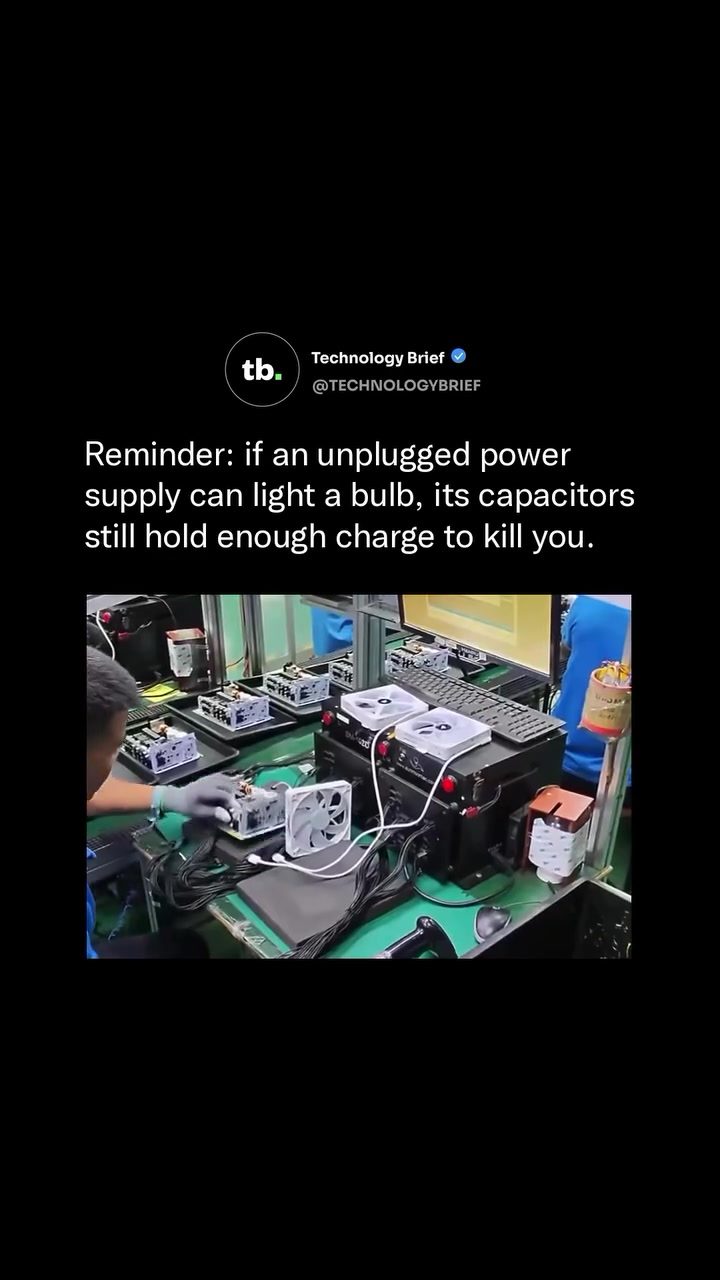
Power Supply Safety
Power supplies are vital components in computers and industrial equipment, ensuring a steady and smooth flow of power. However, they pose significant safety risks if not handled correctly, particularly due to the capacitors within them.
Context / Why this matters
Understanding the dangers associated with power supplies is crucial for anyone working with or around them. These units contain large capacitors that store electrical charge, which can remain even after the power supply is unplugged. This residual charge can cause serious or even fatal shocks if mishandled. Technicians and hobbyists alike need to be aware of these risks to ensure their safety and the safety of others.
Main discussion
The Role of Capacitors in Power Supplies
Capacitors are essential components in power supplies, designed to store and release electrical charge to maintain a steady power flow. In switching power supplies, the primary capacitors can store anywhere from 300 to 400 volts of DC charge. This high voltage is necessary for the power supply to function correctly, but it also poses a significant risk if not properly managed.
The Danger of Residual Charge
One of the key dangers of power supplies is that capacitors do not immediately discharge when the power supply is unplugged. A built-in component called a bleed resistor is designed to drain this charge within seconds, but if it fails, the voltage can remain on the capacitor for a much longer period. This residual charge can still be dangerous, as demonstrated by the ability to light a bulb even after the power supply is unplugged.
Handling Power Supplies Safely
Given the potential dangers, it's crucial to handle power supplies with caution. Factory technicians use insulated gloves and proper discharge tools, never bare hands or metal screwdrivers, and verify that the charge is gone with a voltmeter before touching any internal components. For anyone handling these units at home, the safest rule is to treat an unplugged power supply as live until the voltage has been confirmed to be near zero.
Proper Safety Procedures
- Insulated Gloves: Always wear insulated gloves when handling power supplies to protect against electric shock.
- Discharge Tools: Use proper discharge tools to safely remove any residual charge from the capacitors.
- Voltmeter: Verify that the voltage is near zero with a voltmeter before touching any internal components.
- Avoid Metal Tools: Never use metal screwdrivers or bare hands when working on power supplies, as they can conduct electricity and cause shock.
The Importance of Bleed Resistors
Bleed resistors are designed to drain the charge from capacitors quickly and safely. However, if a bleed resistor fails, the voltage can remain on the capacitor for an extended period. Regular maintenance and testing of power supplies can help ensure that bleed resistors are functioning correctly and that any potential issues are addressed promptly.
Demonstrating the Residual Charge
A simple demonstration can show the residual charge in unplugged power supplies. By connecting a light bulb to the capacitors, you can see that they still hold enough charge to light the bulb. This visualization highlights the importance of treating unplugged power supplies as live until the charge is confirmed to be zero.
Common Misconceptions
Many people believe that unplugging a power supply immediately discharges the capacitors. However, this is not the case. The residual charge can remain for a significant period, posing a serious risk. It's essential to understand this misconception and take the necessary precautions to ensure safety.
Practical tips
- Always Treat Unplugged Power Supplies as Live: Until you have verified with a voltmeter that the voltage is near zero, assume that the power supply still holds a dangerous charge.
- Use Proper Tools and Equipment: Invest in insulated gloves, discharge tools, and a reliable voltmeter to handle power supplies safely.
- Regular Maintenance: Perform regular maintenance and testing on power supplies to ensure that all components, including bleed resistors, are functioning correctly.
- Safety First: Never prioritize speed over safety. Take the time to discharge the capacitors properly and verify the charge before handling any internal components.
Important takeaways
- Capacitors in power supplies can store high voltages even after the power supply is unplugged.
- Residual charge can be dangerous and should be treated with caution.
- Proper safety procedures including insulated gloves, discharge tools, and a voltmeter are essential for handling power supplies safely.
- Bleed resistors are crucial for draining the charge from capacitors, but they can fail, so regular maintenance is necessary.
- Always verify the charge before handling any internal components to avoid electric shock.
Conclusion
Power supplies are essential for the operation of computers and industrial equipment, but they come with significant safety risks. Understanding the dangers associated with capacitors and residual charge is crucial for anyone working with these units. By following proper safety procedures and using the right tools, you can handle power supplies safely and avoid potential hazards. Always remember that an unplugged power supply can still hold a dangerous charge, and treat it with the necessary caution.
Watch the Reel
Questions readers ask
What makes capacitors in power supplies dangerous?
Capacitors in power supplies are dangerous because they store electrical charges, even after the power supply is unplugged. These charges can be released suddenly, causing severe or fatal electrical shocks.
How can I safely handle power supplies?
To safely handle power supplies, always assume they hold a residual charge. Before handling, discharge the capacitors by using a bleeder resistor or connecting the power supply safely to ground.
What should I do if I suspect a power supply has a residual charge?
If you suspect a power supply has a residual charge, do not touch it. Use an appropriate tool, like a screwdriver with an insulated handle, to short the terminals and discharge the capacitors.
Why is it important to know about capacitor safety procedures?
Knowing capacitor safety procedures is crucial because it helps prevent electrical shocks. These procedures ensure that the residual charges are safely discharged before handling power supplies, reducing the risk of injury or fatality.
What are the potential hazards of mishandling unplugged power supplies?
Mishandling unplugged power supplies can result in electrical shocks due to the residual charge stored in the capacitors. This charge can cause serious injury or even death if released suddenly through the body.
What steps should I take to discharge a capacitor safely?
To discharge a capacitor safely, use an insulated tool to touch both terminals of the capacitor simultaneously. This will allow the stored charge to dissipate safely without causing any harm to the user.
What precautions should be taken when working around power supplies?
When working around power supplies, always ensure that the power is completely off and unplugged before touching any components. Additionally, wear appropriate safety gear, such as insulated gloves, to protect against any accidental electrical hazards.
Related deep dives
Similar reads based on topic and creator.




Recent articles
Fresh deep dives from the latest Reels we unpacked.




Comments
Be the first to comment.