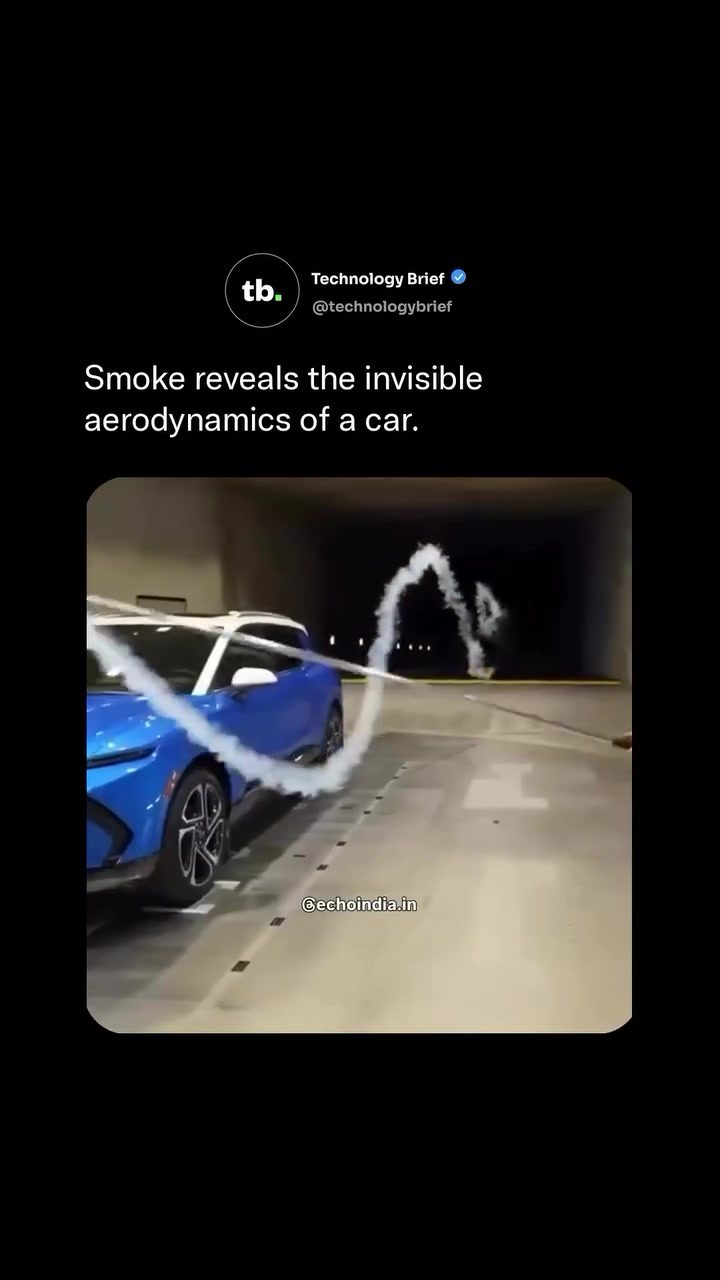
Car Aerodynamics and the Art of Smoke Testing
Aerodynamics play a crucial role in the design and performance of modern cars. Understanding how air flows around a vehicle can significantly impact its fuel efficiency, stability, and overall performance. One of the most effective methods to visualize and study these aerodynamic principles is through smoke testing. This technique involves releasing smoke around a car to observe how air moves over its surface, revealing invisible forces and interactions that engineers must consider.
Why This Matters
The aerodynamic properties of a car are not just about how it looks; they directly affect its performance and efficiency. A well-designed car body can reduce drag, which is the resistance caused by air as the car moves. Lower drag means the engine doesn't have to work as hard, resulting in better fuel efficiency and reduced emissions. For electric vehicles, this can also mean extended range per charge.
Understanding Drag and Drag Coefficient
What is Drag?
Drag is the force that opposes the motion of a car through the air. It is influenced by several factors, including the shape of the car, its speed, and the density of the air. The primary types of drag affecting cars are form drag and skin friction drag. Form drag is caused by the shape of the car and how it interrupts the airflow, while skin friction drag is caused by the friction between the air and the surface of the car.
Drag Coefficient
The drag coefficient, often denoted as Cd, is a dimensionless quantity used to quantify the drag or resistance of an object in a fluid environment, such as air. It describes how easily a car can slip through the air. A lower drag coefficient indicates better aerodynamic efficiency. For example, the Tesla Model S has a drag coefficient of 0.22, making it one of the most aerodynamic production cars.
Real-World Examples
To put this into perspective, consider the difference between a sleek sports car and a boxy SUV. The Tesla Model S, with its streamlined design, has a significantly lower drag coefficient compared to a Jeep Wrangler, which has a more boxy shape and a drag coefficient of around 0.45. This difference in drag coefficient means that the Tesla Model S will experience less aerodynamic drag, resulting in better fuel economy and handling.
How Smoke Testing Works
The Process
Smoke testing involves using a smoke wand to release thin streams of smoke around a car. The process is typically conducted in a controlled environment, such as a wind tunnel, where the airflow can be precisely controlled. The technician guides the wand near the car's body, observing where the smoke hugs the surface and where it breaks away. This visualization helps engineers understand how air moves around the car, identifying areas of high and low pressure, as well as turbulence.
Visualizing Airflow
The smoke wand test is particularly effective because it provides immediate, real-time feedback. Engineers can see exactly how air interacts with the car's surface, identifying areas where airflow separates from the body. This separation can create turbulence, which increases drag and reduces efficiency. By observing these interactions, engineers can make informed design decisions to optimize the car's aerodynamics.
Practical Tips for Conducting Smoke Testing
Preparation
Before conducting a smoke test, it's essential to prepare the environment and equipment properly. Ensure the wind tunnel or test area is free from external airflow that could interfere with the results. Calibrate the smoke wand to produce a consistent, thin stream of smoke. This consistency is crucial for accurate observations.
Conducting the Test
During the test, move the smoke wand slowly and steadily around the car's body. Pay close attention to areas where the smoke hugs the surface and where it breaks away. These observations will provide valuable insights into the car's aerodynamic properties. Repeat the test at different speeds and angles to get a comprehensive understanding of the airflow dynamics.
Analyzing the Results
After the test, analyze the observations to identify areas of high and low pressure, as well as regions of turbulence. Use this information to make design changes that improve the car's aerodynamics. For example, if the smoke breaks away from a particular area, consider modifying the shape of that section to promote better airflow attachment.
Important Takeaways
- Aerodynamics Matter: The aerodynamic properties of a car significantly impact its performance and efficiency. A well-designed car body can reduce drag, improving fuel economy and handling.
- Drag Coefficient: The drag coefficient is a crucial measure of a car's aerodynamic efficiency. Lower values indicate better performance.
- Smoke Testing: Smoke testing is a valuable tool for visualizing airflow around a car, providing immediate, real-time feedback to engineers.
- Design Improvements: By analyzing the results of smoke tests, engineers can make informed design decisions to optimize a car's aerodynamics.
Conclusion
Car aerodynamics are a critical aspect of automotive design, influencing everything from fuel efficiency to stability. Smoke testing is a tried-and-true method for visualizing and understanding the complex interactions between air and a car's surface. By using this technique, engineers can make precise design improvements that enhance a car's performance and efficiency. Whether you're a car enthusiast or an engineer, understanding the principles of aerodynamics and the role of smoke testing can deepen your appreciation for the science behind modern automotive design.
Watch the Reel
Questions readers ask
What is the purpose of smoke testing in car aerodynamics?
Smoke testing helps visualise the airflow around a car by releasing smoke, which allows engineers to observe how air moves over the vehicle's surface. This aids in identifying areas of high drag and optimizing the car's design for better performance and fuel efficiency.
How does aerodynamic drag affect a car's performance?
Aerodynamic drag is the resistance caused by air as a car moves. Reducing drag can significantly improve a car's performance by enhancing fuel efficiency, stability, and overall speed. This is particularly important for electric vehicles, where drag impacts range and efficiency.
What are the key benefits of optimizing car aerodynamics?
Optimizing car aerodynamics can lead to better fuel economy, reduced emissions, and enhanced vehicle stability. By minimizing drag, cars can achieve better performance and handle more efficiently, providing a smoother and more responsive driving experience.
How is smoke testing used in aerodynamic coefficient testing?
In aerodynamic coefficient testing, smoke testing helps visualize the flow of air around a car, which is crucial for measuring the aerodynamic coefficients. By observing the smoke patterns, engineers can determine how different parts of the car interact with airflow and make necessary design adjustments.
What are some other techniques used alongside smoke testing for car aerodynamic testing?
Other techniques used alongside smoke testing include wind tunnel testing, computational fluid dynamics (CFD) simulations, and real-world driving tests. These methods provide a comprehensive understanding of a car's aerodynamic properties by combining visual data with numerical analysis and practical observations.
How can understanding airflow around a car improve its design?
Understanding airflow around a car allows designers to modify the vehicle's shape and features to reduce drag and enhance stability. This can involve adjusting the vehicle's front and rear ends, adding spoilers, or optimizing the underbody design to improve overall aerodynamic performance.
Can smoke testing be performed on any car?
Smoke testing can be performed on most cars, but it is often more effective on prototypes or vehicles specifically designed for testing. This allows engineers to make changes to the car's design and observe the results in real-time, ensuring that any modifications lead to better aerodynamic performance.
Recent articles
Fresh deep dives from the latest Reels we unpacked.




Comments
Be the first to comment.