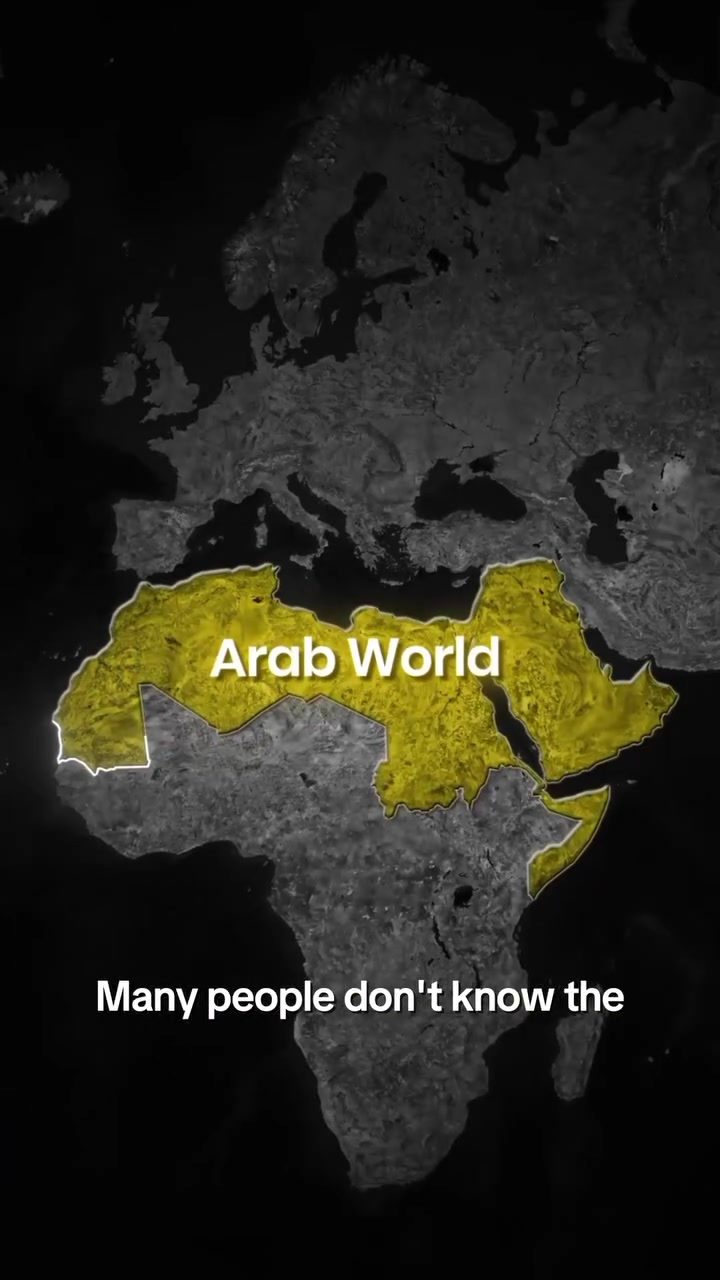
The Difference Between Arabs, Muslims, and the Middle East
Navigating the terms "Arabs," "Muslims," and the "Middle East" can be confusing. These terms are often used interchangeably, but they refer to distinct cultural, geographic, and religious identities. Understanding these differences is crucial for a clear perspective on the region and its people.
Context / Why this matters
The Middle East is a hotspot for global politics, economics, and cultural exchange. Misunderstandings about the people and places in this region can lead to misinformed decisions and biased perceptions. Clarifying the distinctions between Arabs, Muslims, and the Middle East helps foster a more accurate and respectful understanding of the region.
The Arab World
The Arab world is defined by a shared cultural and linguistic identity. An Arab is anyone who speaks the Arabic language. This encompasses 24 countries, stretching from Morocco in the west to Oman in the east.
Demographics and Geography
The Arab world is home to approximately 470 million people. This diverse population includes a significant number of Christians, among other religions, demonstrating that being Arab does not inherently mean being Muslim. The region's cultural richness is reflected in its varied traditions, cuisines, and historical sites.
Countries in the Arab world include Saudi Arabia, Egypt, Iraq, and Syria, to name a few. The region's geography is as varied as its cultures, with deserts, coastal areas, and mountainous terrains.
The Middle East
The term "Middle East" is a geographic designation. Coined by a British naval officer in 1902, it originally described a region relative to Europe. Generally, it includes the Arabian Peninsula but can also encompass countries like Iran, Turkey, and Egypt, depending on the context.
Geographic Ambiguity
The Middle East's definition is somewhat ambiguous, leading to confusion. It often includes countries that are not part of the Arab world, such as Iran and Turkey. This geographic chaos makes it a complex term to define strictly.
Key Regions
Key regions within the Middle East include the Arabian Peninsula, the Gulf of Oman, and the Arabian Sea. These areas are not only significant for their geographic features but also for their cultural and economic importance.
The Muslim World
The Muslim world refers to the global community of Muslims, numbering approximately 2 billion people across every continent. It is a religious identity rather than a geographic or cultural one.
Geographic Diversity
The largest Muslim country is not in the Middle East; it is Indonesia. This highlights the global reach of Islam, which encompasses diverse cultures and ethnicities. The Muslim world is as varied as the countries it spans, from the bustling cities of Southeast Asia to the vast landscapes of Africa and the Middle East.
Practical Tips
When discussing the Middle East, Arabs, and Muslims, it’s important to be specific about the context:
- Use "Arab" for cultural and linguistic identity. Speak of Arabic-speaking regions or Arabic culture.
- Use "Middle East" for geographic context. Reference it when discussing the region’s geography or specific countries within it.
- Use "Muslim" for religious identity. Discuss Islam as a global religion, not confined to a single region.
Important Takeaways
- Arabs are defined by language and culture, not religion. They include diverse religious groups.
- The Middle East is a geographic term with varying definitions and inclusions.
- The Muslim world is a global religious community, with its largest population in Indonesia rather than the Middle East.
Conclusion
Understanding the distinctions between Arabs, Muslims, and the Middle East is essential for accurate and respectful discussions about the region and its people. By recognizing the cultural, geographic, and religious differences, we can foster a deeper and more nuanced understanding of this complex and vibrant part of the world.
Watch the Reel
Questions readers ask
What is the difference between Arabs and Muslims?
Arabs refer to a distinct ethnic group sharing a common language (Arabic) and cultural heritage, primarily found in the Arab world, encompassing countries like Egypt, Saudi Arabia, and the UAE. Muslims, on the other hand, are adherents of the Islamic faith, found worldwide, including in countries like Indonesia, Pakistan, and Nigeria, as well as in the Middle East. Not all Arabs are Muslims, and not all Muslims are Arabs.
Which countries are part of the Middle East?
The Middle East is a geographic and cultural region that includes countries like Saudi Arabia, Iran, Iraq, Syria, Lebanon, Israel, Palestine, Turkey, and the countries of the Arabian Peninsula, such as Oman and the United Arab Emirates. The region's boundaries can vary depending on the context, but it generally includes the lands around the Arabian Peninsula, the Levant, and the eastern Mediterranean.
Is the Arab world the same as the Middle East?
No, the Arab world and the Middle East are not the same. The Arab world refers to countries where Arabic is the primary language and Arabic culture is dominant, such as the Arabian Peninsula, North Africa, and the Levant. The Middle East, however, includes non-Arab countries such as Iran, Turkey, and Israel, and has a broader geographic and cultural scope.
Is Arabic the official language of all Middle Eastern countries?
No, Arabic is not the official language of all Middle Eastern countries. While Arabic is widely spoken in countries like Saudi Arabia, Egypt, and the UAE, other countries in the Middle East have different official languages, such as Farsi in Iran, Turkish in Turkey, and Hebrew in Israel. Arabic is, however, the language of the Qur'an, Islam's holy book, and thus is of historical and cultural significance to Muslims worldwide, including those in the Middle East.
What is the significance of the Arabian Peninsula in the Middle East?
The Arabian Peninsula is significant in the Middle East for several reasons. It is the birthplace of Islam, with key historical cities like Mecca and Medina. It is also home to some of the world's largest oil reserves, making it a crucial player in global economics. Additionally, the Arabian Peninsula includes countries like Saudi Arabia and the UAE, which have significant cultural and political influence in the region.
How do cultural differences vary among Middle Eastern countries?
Cultural differences among Middle Eastern countries can be significant due to varied historical influences, languages, and religious practices. For example, Egyptian culture has been influenced by ancient Egyptian and Mediterranean civilizations, while the culture in Oman is influenced by its history of trade and maritime activities. In addition, while Islam is the dominant religion, the specific practices and interpretations can differ, contributing to the region's cultural diversity.
Can I experience Arab culture in countries outside the Arab world?
Yes, Arab culture can be experienced in countries outside the Arab world, particularly in regions with significant Arabic-speaking populations, such as in the United States, France, and Brazil. Arab cultural festivals, cuisine, and arts can be found in many global cities, allowing people to engage with and appreciate Arab heritage and traditions, even if they are not in the Arab world.
Related deep dives
Similar reads based on topic and creator.




Recent articles
Fresh deep dives from the latest Reels we unpacked.




Comments
Be the first to comment.