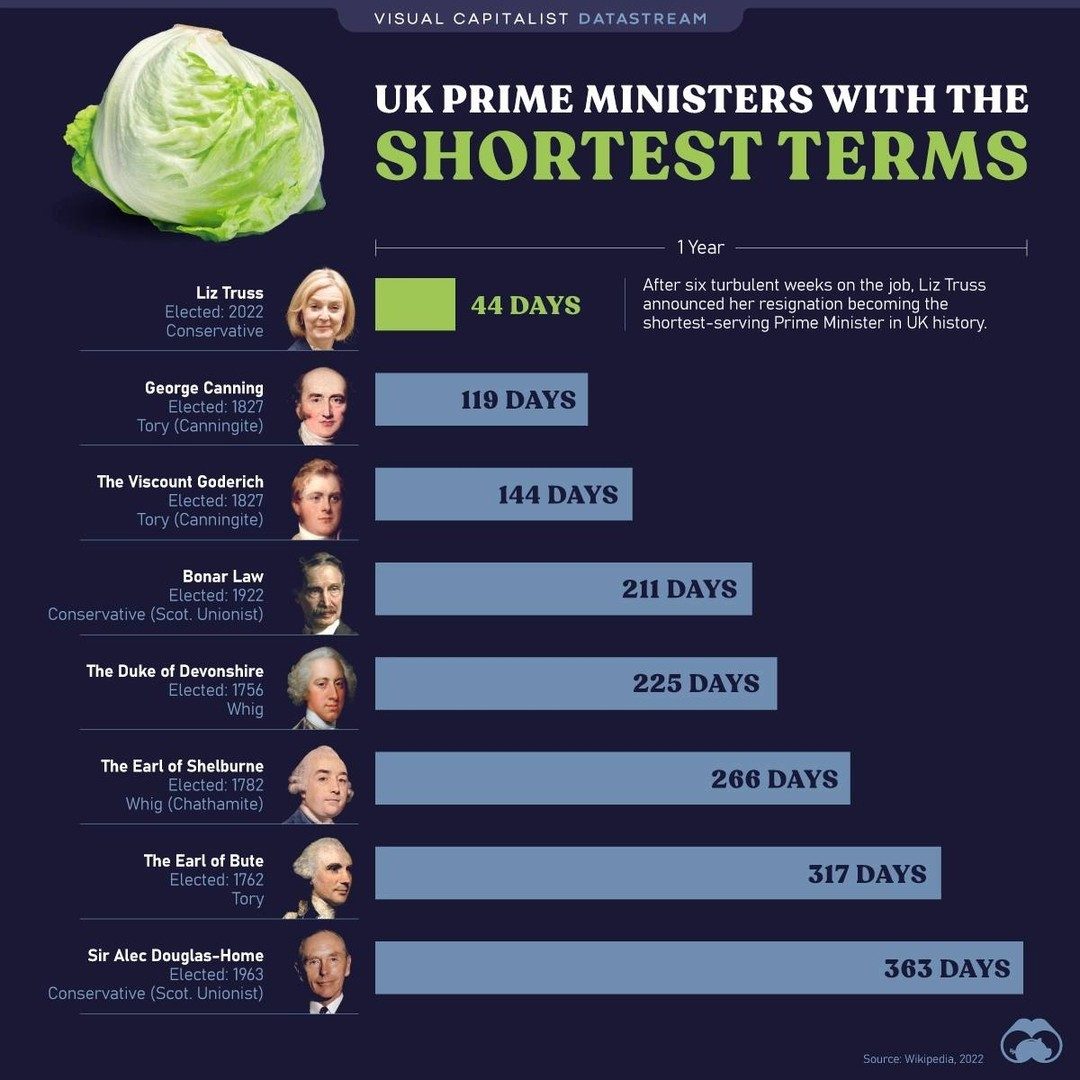
UK Prime Ministers with the Shortest Terms
The resignation of UK Prime Minister Liz Truss after only six weeks in office has made her the shortest-serving Prime Minister in British history. Interestingly, Truss is not the only leader to have a brief tenure. Out of the 56 individuals who have held the position, eight have served less than a year. This reveals an interesting aspect of UK political history, highlighting the challenges and volatility that can come with the role of Prime Minister.
Context
The British Prime Minister is the head of the government and plays a crucial role in shaping the country's policies and direction. The position is inherently political, subject to the vagaries of parliamentary dynamics, public opinion, and intra-party politics. Understanding the brief tenures of some Prime Ministers provides a lens into the complexities and pressures of the role.
A term of less than a year is notably short, indicating significant turmoil or urgent political needs. Several factors can contribute to such brief tenures, including health issues, political scandals, resignations, or significant policy failures. The reasons behind these short-term leaders can vary, but they often reflect the intense and demanding nature of the job.
Main Discussion
Liz Truss
Liz Truss's tenure as Prime Minister was marked by significant turbulence. Elected in 2022, her term lasted only 44 days. This brief period was characterized by economic policy missteps, including the controversial "mini-budget" that led to market instability and a significant drop in the value of the pound. Truss's resignation marked a swift end to her tenure, making her the shortest-serving Prime Minister in UK history.
Historical Context
To put Truss's tenure into perspective, it's essential to look at other Prime Ministers with similarly short terms. The following is a list of Prime Ministers who served less than a year, along with their respective terms and political affiliations:
- The Earl of Bute (Tory) — 317 days (Elected: 1762)
- The Earl of Shelburne (Whig, Chathamite) — 266 days (Elected: 1782)
- The Earl of Devonshire (Whig) — 225 days (Elected: 1756)
- Bonar Law (Conservative, Scot. Unionist) — 211 days (Elected: 1922)
- The Viscount Goderich (Tory, Canningite) — 144 days (Elected: 1827)
- George Canning (Tory, Canningite) — 119 days (Elected: 1827)
- Sir Alec Douglas-Home (Conservative, Scot. Unionist) — 363 days (Elected: 1963)
The Earl of Bute
The Earl of Bute's tenure, which lasted 317 days, was during a tumultuous period in British history. Elected in 1762, Bute faced significant political opposition and public unrest, which ultimately led to his resignation.
The Earl of Shelburne
The Earl of Shelburne served for 266 days, elected in 1782. His tenure was marked by the end of the American Revolutionary War and the signing of the Treaty of Paris. Despite his significant achievements, Shelburne's term ended abruptly due to political infighting and a lack of support from his own party.
The Earl of Devonshire
The Earl of Devonshire's tenure lasted 225 days, elected in 1756. His short term was influenced by the Seven Years' War and the political turmoil of the time. Devonshire's tenure is often remembered for his efforts to stabilize the country during a period of intense conflict.
Bonar Law
Bonar Law's term lasted 211 days, elected in 1922. Law's tenure was brief but eventful, marked by significant political changes and the aftermath of World War I. His resignation was driven by health issues, which ultimately forced him to step down.
The Viscount Goderich
The Viscount Goderich served for 144 days, elected in 1827. Known for his moderate political leanings, Goderich faced significant challenges, including economic instability and political opposition. His tenure ended after a brief period of service.
George Canning
George Canning's tenure was the second shortest, lasting 119 days, elected in 1827. Canning's tenure was marked by significant political and economic challenges, including the need to address the country's financial woes and manage the complexities of foreign policy.
Sir Alec Douglas-Home
Sir Alec Douglas-Home served for 363 days, elected in 1963. His tenure was notable for the Suez Crisis and the transition from the post-war era to the modern age. Despite his relatively longer term compared to others on this list, Douglas-Home's tenure was still marked by political instability and economic challenges.
Practical Tips
Understanding Political Dynamics
The brief tenures of these Prime Ministers underscore the importance of understanding the political dynamics at play. Public opinion, party politics, and external pressures can all influence the longevity of a Prime Minister's term. Keeping an eye on these factors can provide insights into the stability and direction of a government.
Economic Policy
Economic policy plays a crucial role in the success of a Prime Minister. Missteps in economic policy, as seen with Liz Truss, can lead to market instability and public backlash. A balanced and well-thought-out economic strategy is essential for maintaining stability and public support.
Health and Well-being
The health and well-being of a Prime Minister are also critical factors. The demands of the role can be physically and mentally taxing, as seen with Bonar Law. Ensuring that the Prime Minister is in good health is essential for the continuity of governance.
Important Takeaways
- Political Instability: The UK has a history of political instability, with several Prime Ministers serving less than a year.
- Economic Factors: Economic policy missteps can lead to market instability and public backlash, as seen with Liz Truss.
- Public Opinion: Public opinion and party dynamics play a crucial role in the longevity of a Prime Minister's term.
- Health and Well-being: The health and well-being of a Prime Minister are essential for the continuity of governance, as seen with Bonar Law.
Conclusion
The short tenures of UK Prime Ministers highlight the complexities and pressures of the role. From Liz Truss to The Earl of Bute, these leaders faced significant challenges that ultimately led to their brief terms. Understanding the factors that contribute to these short tenures provides valuable insights into the political landscape and the demands of governance. By examining these historical examples, we can gain a deeper appreciation for the complexities and challenges of leadership in the UK.
Watch the Reel
Questions readers ask
Who was the previous holder of the record for the shortest-serving Prime Minister before Liz Truss?
Before Liz Truss, the record for the shortest-serving Prime Minister was held by George Canning, who served for 119 days in 1827. His tenure was cut short due to his untimely death from pneumonia and other health complications.
What are some common factors that have led to short tenures for UK Prime Ministers?
Short tenures for UK Prime Ministers can be attributed to various factors, including political scandals that erode public trust, health issues that necessitate resignation, and significant policy failures that lead to loss of party or parliamentary support. The high-stakes nature of the role often means that any missteps can have immediate and severe consequences.
How many Prime Ministers have served less than a year in the UK?
As of 2022, there have been eight Prime Ministers who have served less than a year. These brief tenures highlight the challenges and unpredictability of the role, as well as the volatile nature of UK politics.
What was the impact of Liz Truss's tenure on the Conservative Party leadership?
Liz Truss's 44-day tenure as Prime Minister had significant implications for the Conservative Party. Her brief time in office was marked by controversial policies and political turmoil, leading to a swift loss of support from her own party. This event underscored the fragility of political leadership and the importance of consensus and stability within the party.
What are the main responsibilities of a UK Prime Minister?
The UK Prime Minister is the head of the government, responsible for overseeing the implementation of policies and leading the country. The role involves navigating complex parliamentary dynamics, managing public opinion, and maintaining party unity. The Prime Minister also plays a crucial role in shaping the nation's policies and direction, making it a position of significant influence and responsibility.
What was notable about the Conservative Party leadership changes in 2022?
The Conservative Party leadership changes in 2022 were particularly notable for their rapid succession and the brief tenures of the leaders involved. Liz Truss's 44-day term as Prime Minister, followed by the appointment of her successor, Rishi Sunak, marked a period of significant political instability within the party, reflecting broader challenges and uncertainties within the UK's political landscape.
How does the UK Prime Minister's role reflect the political volatility of the country?
The role of the UK Prime Minister often reflects the political volatility of the country, as it is inherently political and subject to changes in public opinion and parliamentary dynamics. The high-stakes nature of the position, combined with the pressures of intra-party politics, can lead to frequent leadership changes and brief tenures, as seen with Liz Truss and other short-serving Prime Ministers.
Related deep dives
Similar reads based on topic and creator.


Recent articles
Fresh deep dives from the latest Reels we unpacked.




Comments
Be the first to comment.