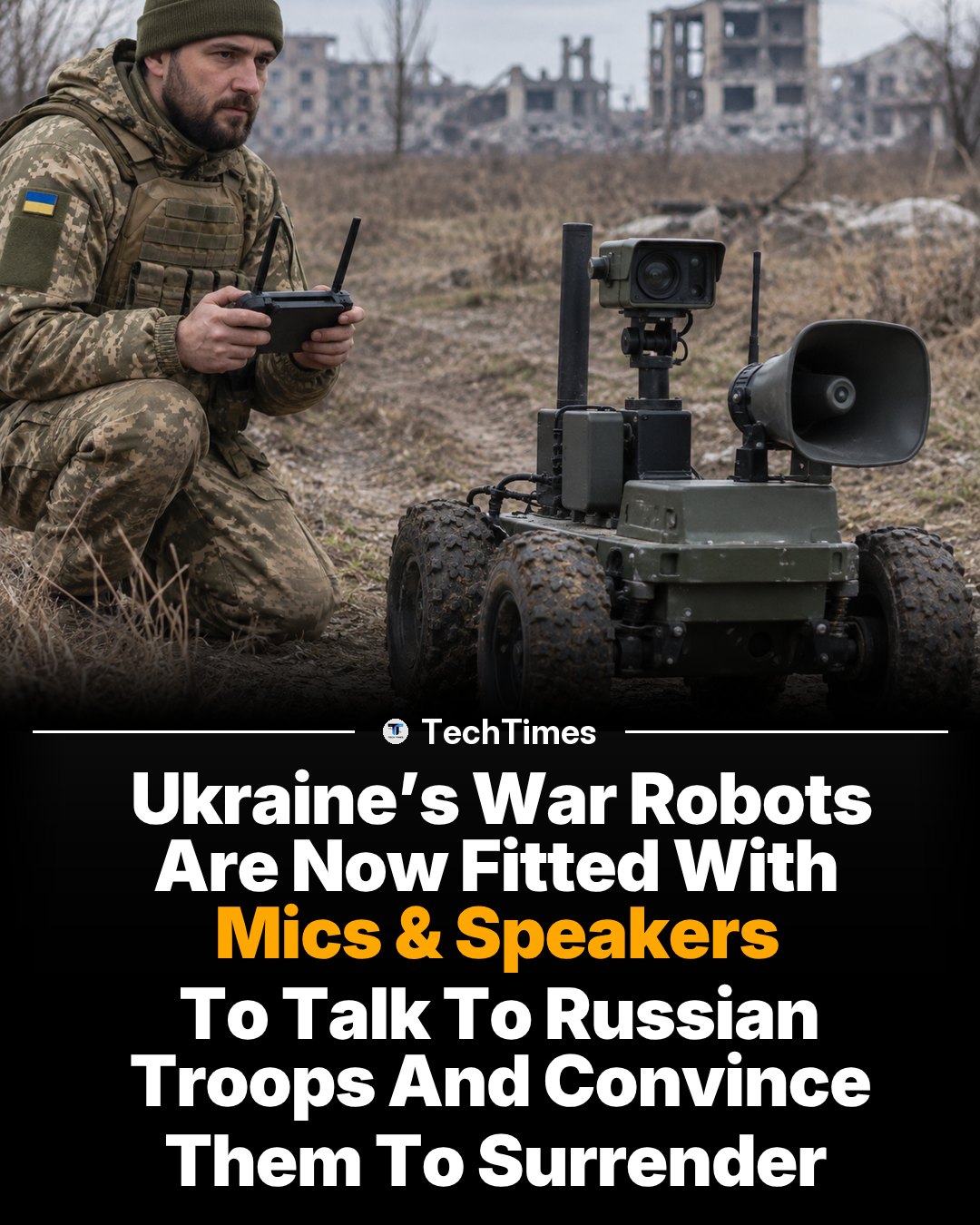
Ukrainian military robots are being equipped with microphones and speakers as a non-lethal tool for negotiating with Russian troops. These smart machines are part of the latest developments in military technology that emphasize communication rather than combat. Robots in military operations are not new; however, their function as negotiation mediators is disruptive. These robots are designed to infiltrate dangerous areas without risking human lives. They communicate via powerful speakers that project surrender messages while microphones record and transmit any information back to base. The latest developments show robots fitted with microphones being used to reach out to Russian soldiers. This is a stark shift from the traditional view of robots as purely offensive weapons; now, they serve a humanitarian purpose. The goal is to encourage Russian forces to lay down their arms by encouraging them to surrender to their persuadable undamaged troops. Ukrainian forces' use of military robots is a new example of how modern warfare strategies are evolving to minimize loss of life. Advances in artificial intelligence, robotics, and war tech are increasingly dictating how battles are fought, focusing on innovative solutions for non-lethal conflict resolution. This approach may sound like a new form of psychological warfare, but it is a strategic method rooted in the necessity of minimizing both sides' casualties.
The New Mediation Bot
These military robots are compact and equipped with the sensors needed to navigate through battlefield landscapes. The key to their effectiveness lies in the microphones and speakers. Microphones capture audio from the surrounding area, feeding crucial battlefield intelligence back to base. The speakers then broadcast pre-recorded messages aimed at convincing soldiers to surrender. At the core of the robot's communicative capabilities is the use of pre-programmed messaging. The messages are designed to be persuasive and unthreatening, intended to encourage Russian soldiers to lay down their arms rather than encouraging them to fight. The robot's placement of microphones and speakers enables multi-directional communication, ensuring the message is heard clearly and without interference. One of the military robots’ key features is their mobility. These robots can traverse varied terrains with ease, allowing them to infiltrate enemy lines without endangering human soldiers. This capability makes them invaluable for replacing soldiers in reconnaissance missions. Their mobility also means they can be deployed to specific positions where verbal persuasion might be most effective.
The Key to Their Communication
The military robots' microphones and speakers are paramount to their role in the mediation effort. A microphone captures and relays real-time data, offering situational awareness. These devices enhance recon capabilities and contribute to the overall intelligence profile of the battlefield. The speakers, on the other hand, are crucial for executing the non-lethal warfare strategy. Role transitions for military robots reflect the Ukrainian army's approach to modern warfare. Instead of relying solely on brute force, these non-lethal alternatives aim to minimize human casualties. By using robots in psychological warfare, Ukraine has demonstrated the possibility of technology aiding in resolving conflicts through unconventional methods.
Psychological Warfare
Practicing psychological warfare through military robots is a radical step in the realm of modern combat. It shifts the battlefield dynamic to one of diplomacy and dialogue. As non-lethal strategies gain prominence, more countries may adopt this tactic to reduce civilian and soldier casualties. Ukraine's use of robots for this purpose is a groundbreaking demonstration of how technology can be utilized to resolve conflicts.
Beyond the Battlefield
Unlike traditional military uses of robots, the current focus on non-lethal strategies opens up new avenues for deployment. This technology can be adapted for a variety of situations, such as hostage negotiations or civil unrest management. By leveraging robots as mediators, strategic advantages can be achieved without resorting to violence.
The Battlefront on the Frontline of Tech
Since military robots are fueled by the latest advancements in technology, their role in war is a reflection of the rapid progress in AI and robotics. Military robots have evolved from simple drones to sophisticated mediatory machines. This evolution mirrors the ongoing development of AI-driven solutions in industries like medicine, autonomous vehicles, and cybersecurity, showcasing the broader impact of technological advancements. Beyond AI, the ability for robots to handle complex negotiations through microphones and speakers reflects the importance of communication technology. The speakers ensure the messages are clear and persuasive, while microphones gather crucial intelligence from the battlefield. This high-tech communication system is a significant advancement in military strategies, emphasizing the ethical use of technology in conflict resolution. Additionally, robots fitted with microphones and speakers are a product of the increasing importance of non-lethal warfare. As technology advances, the emphasis shifts from brute force to more strategic, less violent methods. This reflects a broader trend toward ethical warfare practices, prioritizing the minimization of civilian and soldier casualties.
Is It Just a Tactic?
These robots could be considered another form of psychological warfare, a tactic intended to deceive and disarm the enemy. Their communication tools, designed to project persuasive messages, inevitably evoke a sense of manipulation. While the goal is to encourage surrender, the methods raise ethical questions about the use of deception in warfare. This tool of deception in psychological warfare highlights the disconnect between the intended civilian protection and the actual manipulation tactics. While robots fitted with microphones and speakers serve a tactical purpose, they also represent a method of psychological warfare that prioritizes conflict resolution over combat, a problem stemming from the conflicting use of psy-ops in a zone of active hostilities.
When to Deploy the Message Carrier
Anyone interested in using this kind of unconventional warfare can deploy robots equipped with microphones and speakers for specific situations: access surveillance and intelligence, recording surrounding areas to identify human presence and possible locations for negotiation.
- Identify Strategic Locations: Deploy the robots to areas where enemy soldiers are likely present to ensure communication tactics are best utilized.
- Real-time Communication: Use the robots’ speakers to broadcast messages designed to persuade surrender. Choose messages that are simple, clear, and reassuring to avoid misinterpretation.
- Monitor Reactions: Capture audio through the robots’ microphones to monitor enemy reactions, adjustments, or any resistance to the messaging. In conflicts seeking a resolution without escalation, deploying these robots as part of a psychological strategy provides a path for non-lethal negotiation. Ukraine's use of military robots with microphones and speakers illustrates a significant shift in modern warfare, emphasizing the importance of avoiding escalation. The use of robots in warfare is not new, but their role as mediators is, underscoring the evolving nature of modern conflict. As AI and robotics continue to develop, so too will the methods used in warfare. The future of military technology may see more robots like these, equipped with advanced capabilities to navigate complex conflicts with minimal loss of life, essentially creating a new landscape of diplomacy in warfare.
Watch the Reel
Questions readers ask
What exactly are these Ukrainian military robots designed to do?
These robots are designed to communicate with Russian troops, encouraging them to surrender. They use microphones to capture audio and speakers to broadcast pre-recorded messages, all while navigating through dangerous areas without risking human lives.
How do the robots' microphones and speakers work together in this context?
The microphones capture real-time audio from the battlefield, providing crucial intelligence back to the base. The speakers then broadcast persuasive, non-threatening messages aimed at convincing Russian soldiers to surrender, ensuring the message is heard clearly and without interference.
Can these robots operate in all types of terrains?
Yes, these robots are designed to traverse varied terrains with ease. This mobility allows them to infiltrate enemy lines and reach positions where verbal persuasion might be most effective, making them valuable for reconnaissance missions and minimizing the risk to human soldiers.
Are there any risks or limitations to using these robots in battlefield scenarios?
While the robots are designed to minimize the risk to human lives, there are still potential risks, such as malfunctioning or being detected and targeted by enemy forces. Additionally, the effectiveness of the persuasive messages may vary based on the psychological state and situational awareness of the Russian soldiers.
How does this use of robots fit into broader military strategies?
This use of robots represents a shift in military strategy, prioritizing communication and negotiation over combat. It's part of a broader trend in modern warfare that focuses on minimizing casualties and using innovative, non-lethal solutions to resolve conflicts. This approach is rooted in the necessity of reducing loss of life on both sides.
Are these robots a new form of psychological warfare?
While it may sound like a new form of psychological warfare, the use of these robots is more accurately described as a strategic method for non-lethal conflict resolution. The goal is to convince enemy soldiers to surrender, thereby reducing the need for direct combat and minimizing casualties.
Related deep dives
Similar reads based on topic and creator.



Recent articles
Fresh deep dives from the latest Reels we unpacked.



Comments
Be the first to comment.