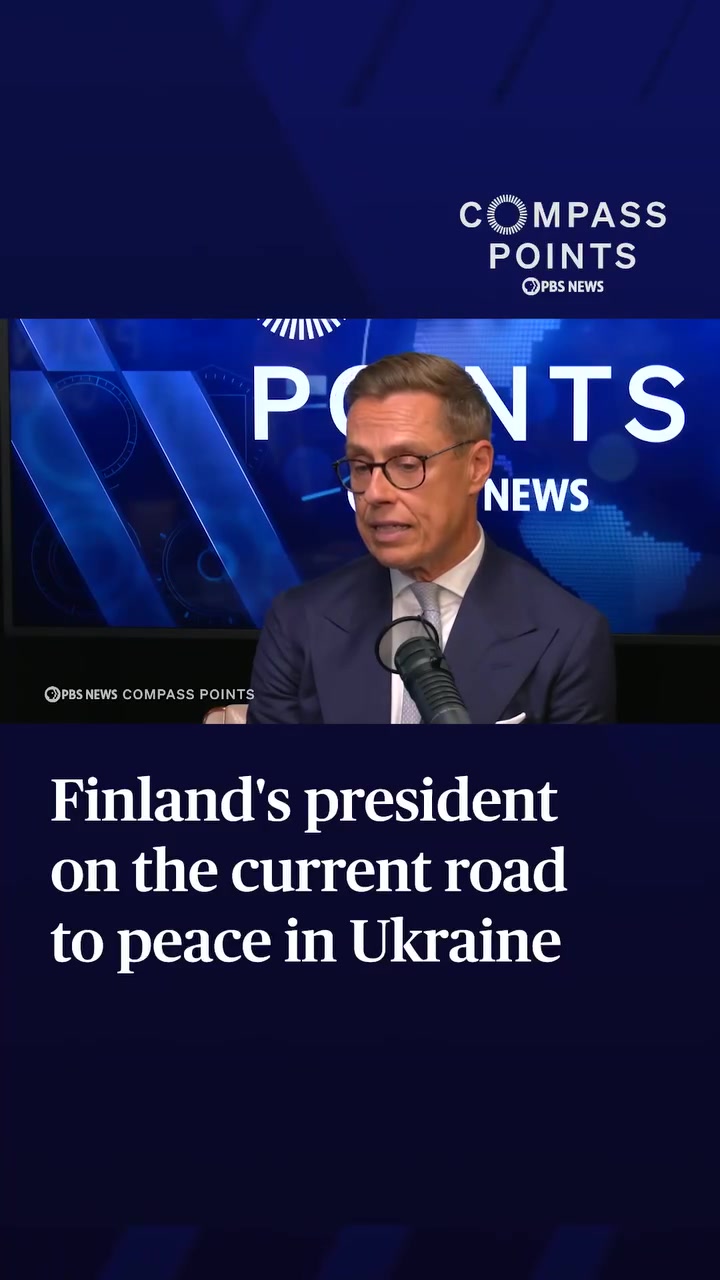
Discussions outlining the path to peace in Ukraine are fraught with intricate details around sovereignty, territorial integrity, and strategic negotiations. The Finnish President Sauli Niinistö, via PBS NEWS, underscored the core principles that shape Ukraine's prospect for peace. Among key points was a focus on Ukraine's territorial integrity, including the status of the contested region of Donbass. But what does Niinistö's stance mean for the current state of affairs and what are the challenges facing Ukraine?
The Core Principles of Ukrainian Sovereignty
Sovereignty, independence, and territorial integrity are the three pillars that nationhood is built upon, especially for Ukraine. This country's path to peace hinges on maintaining these foundations, which are under threat from Russia's aggression. European officials highlighted that there is still a ways to go; said the U.S. is still insisting on a deal where Ukraine would have to give up some of its territories. The phrase, "European officials tell me the U.S. is still insisting on this deal whereby Ukraine would have to give up", provides a rare window into diplomatic pressures on Ukraine. The Finnish President Sauli Niinistö emphasized that these three principles are indispensable to Ukraine. Nationhood, integrity, and territorial sovereignty are all key to Ukraine it is a country in need of peace. However, because these things are still under threat, the road to peace remains challenging. Ukraine has had to navigate a complex landscape of negotiations and territorial disputes. The Finnish President Sauli Niinistö highlighted the significance of keeping these three pillars intact for Ukraine, saying, "Our take is that, you know, nationhood is based on three things, independence, sovereignty, and territorial integrity. And we want to make sure that these things stay intact for Ukraine."
Ukraine's landscape pains. Troubles around Donbass, the real current landscape
Ukraine's current landscape is marked by escalating tensions between Russia and Ukraine, with Russia advancing 900 square kilometers and Ukraine reclaiming 800 square kilometers. The three-plus-two deal, which involved Russia taking control of Donbass in exchange for Ukraine regaining three other southern territories, is no longer viable. The current strategic impasse is that of territorial control of Donbass, a region where Russia has advanced 900 square kilometers, and Ukraine has taken back 800. The territorial back-and-forth has become a key point in the negotiations. Additionally, the idea of Ukrainian neutrality is no longer on the table, as Russia is not accepting it. Ukraine is currently not a NATO member, and this neutrality complicates the calculations of all involved. The speaker was definite in his stance, saying, "Ukrainian neutrality is off the table as well. And I think this is the basis that we're negotiating. Ukraine's not going to join NATO." The speaker also highlighted the need for a realistic approach, suggesting that an off-ramp for Putin will not be Finnish and Swedish NATO membership alongside Ukrainian NATO membership. Some of the key stakeholders in this situation are the U.S, Russia, and Ukraine. Ukraine’s strategic importance as the strongest in terms of capability to conduct modern warfare is also a critical factor. The ongoing conflict has underscored Ukraine's military prowess, making it a key player in the region. The discussion highlighted that while Ukraine is not currently a NATO member, its military capability is the strongest in the region, making it a significant player in the conflict.
Donbass and the peace negotiation
Negotiations around Donbass are particularly complex, with Russia's advances and Ukraine's counter-offensives shaping the region's future. The strategic impasse in negotiations is the current one. The current scenario revolves around the territorial exchange. The three-plus-two deal is out of the window. This year, Russia has advanced 900 square kilometers. Ukraine has taken back 800 square kilometers. The crucial point here could be the time. It would take years and years for Russia to get Donbass at that pace. So there's no point for Ukraine to give it up. Niinistö emphasized the reality on the ground. Since the three-plus-two deal is out, the future of Donbass hangs in the balance. The slow pace of territorial gains and losses suggests a prolonged conflict, with Ukraine's refusal to give up Donbass adding to the complexities.
The Role of NATO in the Conflict
Ukraine's potential for joining NATO remains a contentious issue. The speaker clarified that Ukraine is not going to join NATO, as this would not provide an off-ramp for Putin. NATO membership for Ukraine could complicate the situation further, as it would add to the tensions and might not offer a clear path to peace. The speaker's remarks on NATO membership highlighted the delicate balance between security and diplomatic strategy. The Finnish President Sauli Niinistö's statement that Ukrainian NATO membership will not be part of the solution underscores the strategic considerations at play. The speaker also emphasized the long-term perspective, saying, "So we need to think about it in the long term. But of course, you know, an off-ramp for Putin will not be Finnish and Swedish NATO membership added by Ukrainian NATO membership. So we have to be realistic and look at the time here."
War's timeframe outlooks
Resolving the conflict is a long-term endeavor. There will be no real progress if the current pace continues. Ukraine's territorial integrity is of utmost importance, and this makes it a big player in the negotiations. Synthesizing multiple statements from the discussion, the speaker emphasized the need for a realistic and long-term approach to resolving the conflict. The speaker noted, "So we need to think about it in the long term. But of course, you know, an off-ramp for Putin will not be Finnish and Swedish NATO membership added by Ukrainian NATO membership. So we have to be realistic and look at the time here." In this complex geopolitical landscape, Ukraine's sovereignty, territorial integrity, and strategic importance remain at the forefront of discussions. As negotiations continue, the focus on these principles will be crucial in shaping the path to peace. Finland’s role as a mediator and its President's remarks offer hope for a balanced approach, but the road ahead is fraught with challenges and strategic calculations.
Watch the Reel
Recent articles
Fresh deep dives from the latest Reels we unpacked.




Comments
Be the first to comment.