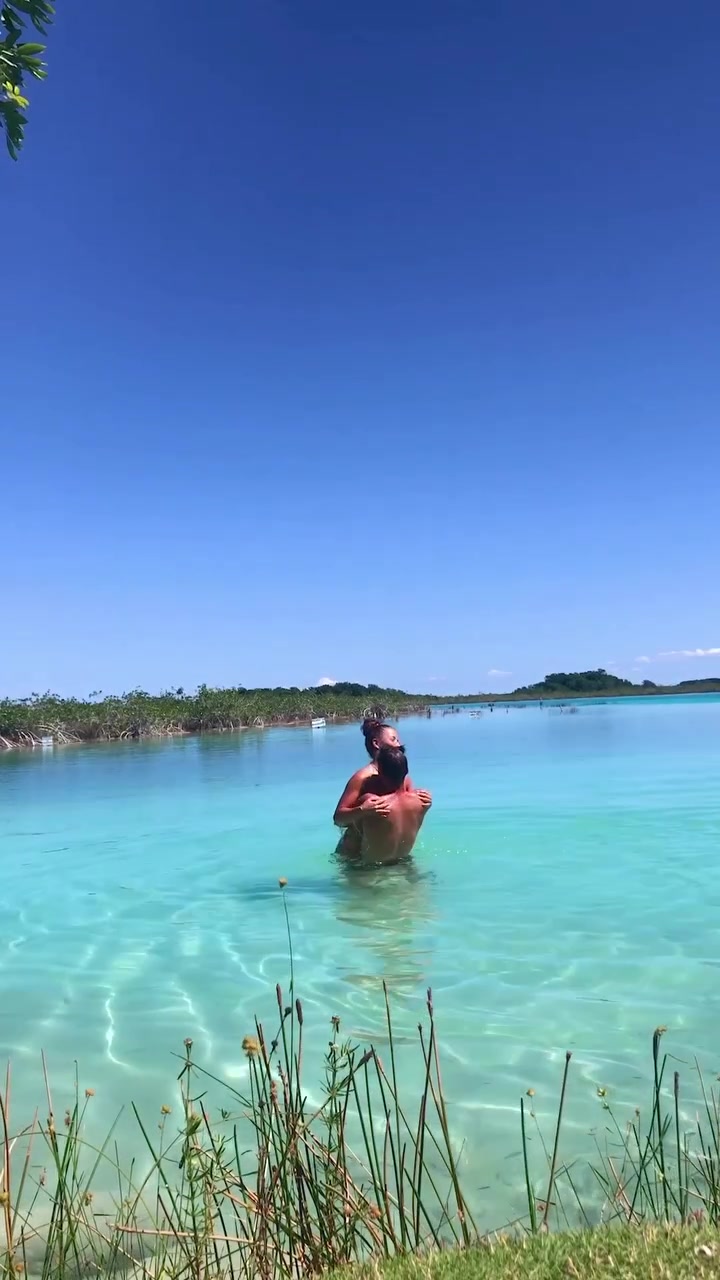
Kick back in a tranquil paradise. Turquoise hues thrive. Water this clear and vibrant is rare enough. Airy shots of turquoise water rippling with life, and the plant's dense cover surrounding it. But this unique natural lagoon or cenote also bursts with beauty: astonishing aerial views of a turquoise lagoon or cenote. The water is incredibly clear and vibrant, with lush vegetation surrounding the edges. The person swimming in the water and a structure resembling a thatched-roof hut over the water also adds to the beauty and tranquility of the location.
The Dance of Water and Greenery
What they call a lagoon, or cenote? The word "cenote" comes from a Mayan word meaning "wells". Behold: a natural pit, or sinkhole, resulting from the collapse of limestone bedrock that exposes groundwater underneath. This is not just an underground cave or tunnel but an actual water body. The lush vegetation and water look dynamic, inviting you to relax and immerse yourself in the beauty of the landscape. There are no signs of any buildings or roads in the videos, making it an ideal place to retreat from the world for a while.
Vibrant Veins of Tropical Wilderness
There is no denying that the turquoise color of the water highlights the need for preserving the environment. How come? The water isn't filtered or tainted by human activities, which causes it to become crystal clear. These areas are few and far between, such as the deep waters at the Blue Hole in Belize, and the Rio Azul in Mexico. The video doesn't reveal where it was filmed, but the distinctiveness of the area—with lush foliage, beautiful skies, and no signs of human life—adds to its appeal.
What’s in a Name
To some, turquoise waters evoke images of tropical paradises, with crystal-clear lagoons, white-sand beaches, and lush, verdant foliage. What about these turquoise waters? Unlike a lake or a river, the water at this location washes in from the ground below. That's why this is a cenote; it is the name for a water-filled sinkhole. The term "cenote," which originates from the Mayan word d'zonot, meaning "well," refers to natural pits or sinkholes resulting from the collapse of limestone bedrock that exposes groundwater underneath. It is not an underground cave or tunnel, but an actual water source of the earth. The flooding is caused by rainwater collecting on the surface of the limestone, which gradually creates a small, underground network of caverns and tunnels, which in turn causes the ground above to collapse into a sinkhole.
The Lugubrious Lushness
Tropical oceans seem to be the only way to see water like this. The water appears vibrant and blue when there are no digits from nearby oceans. The immaculate blue waters are due to the lack of pollutants and contaminants. This lagoon is a living stream of pristine water that has not been contaminated or altered by human life. The lush foliage and natural geography around the lake give it a tropical appearance. This is because the isolated cenote is surrounded by dense vegetation and virgin and unspoiled tropical forest, which have made it difficult for humans to tamper with it.
Experiencing Paradise
Turquoise waters have a unique feeling. They have the sensation of being there. The water has a refreshing and invigorating feel to it. You may see and sense the water's clear blue color. You're mesmerized by its beauty, and its blue colors and a sense of tranquility.
Going Wild
Visit tourist spots with cenotes and lagoons. The turquoise waters can be found in some of the best tourist spots around the world. The film includes a vibrant turquoise lagoon or cenote that showcases the beauty of nature, but it doesn’t specify the location, leaving viewers to explore these natural wonders on their own. Where can one find turquoise waters? Turquoise waters can be found in the deepest and most splendid areas of nature. The names of these areas are not specified, but the locations can be found in the natural world.
How to Prepare
For Paradise
Go for lagoons and cenotes. The turquoise lagoon or cenote showcased in the video emphasizes the beauty and tranquility of such natural wonders, making it an ideal spot for a picturesque vacation:
- Accessibility: Choose a typically accessible cenote. How deep it is depends on the route.
- Lighting: Bring a flashlight in case it gets dark.
- Stay Safe: When exploring cenotes, always prioritize safety by wearing appropriate swimming gear, carrying essential supplies, and following local guidelines.
Watch the Reel
Questions readers ask
What exactly is a cenote, and how does it form?
A cenote is a natural sinkhole formed when limestone bedrock collapses, exposing groundwater underneath. This process begins with rainwater collecting on the limestone surface, gradually creating underground caverns and tunnels that eventually cause the ground above to cave in, forming a water-filled pit. Unlike lakes or rivers, cenotes are fed by groundwater, making them unique and often incredibly clear.
Why is the water in this cenote so vibrantly turquoise?
The vibrant turquoise color of the water in this cenote is due to its purity and the way light interacts with it. The water is incredibly clear and free from pollutants, allowing light to penetrate deeply and reflect back in a stunning turquoise hue. This clarity is a result of the water being untouched by human activities, making it a rare and pristine sight.
How common are cenotes like the one featured in the video?
Cenotes are relatively rare and are primarily found in regions with limestone bedrock, such as the Yucatan Peninsula in Mexico. While there are many cenotes in these areas, each one is unique in its formation and appearance. The one featured in the video is particularly notable for its vibrant turquoise water and lush, untouched surroundings, making it a standout example.
Can visitors access and swim in cenotes like the one in the video?
Many cenotes, including those in popular tourist destinations like the Yucatan Peninsula, are accessible to visitors and offer swimming opportunities. However, the specific cenote featured in the video does not reveal its location, so it's unclear if it is open to the public. It's always a good idea to research and follow local guidelines and regulations when visiting cenotes to ensure their preservation.
What makes cenotes different from other bodies of water like lakes or rivers?
Cenotes are different from lakes and rivers because they are formed by the collapse of limestone bedrock and are fed by groundwater rather than surface water. This unique formation process results in water that is often incredibly clear and free from pollutants, giving cenotes their distinctive turquoise appearance. Additionally, cenotes are often surrounded by lush vegetation and untouched landscapes, adding to their allure.
Are there any cenotes that are famous for their turquoise waters?
Yes, there are several famous cenotes known for their turquoise waters. For example, the Blue Hole in Belize and the Rio Azul in Mexico are renowned for their deep, clear waters. While the specific cenote in the video is not identified, its vibrant turquoise color and pristine surroundings suggest it is a rare and beautiful example of these natural wonders.
What can be done to preserve the beauty of cenotes like the one in the video?
Preserving the beauty of cenotes involves minimizing human impact on these delicate ecosystems. This can include limiting the number of visitors, enforcing strict environmental regulations, and promoting sustainable tourism practices. By protecting cenotes from pollution and other human activities, we can ensure that future generations can continue to enjoy their stunning turquoise waters and lush surroundings.
Related deep dives
Similar reads based on topic and creator.

Recent articles
Fresh deep dives from the latest Reels we unpacked.

Comments
Be the first to comment.