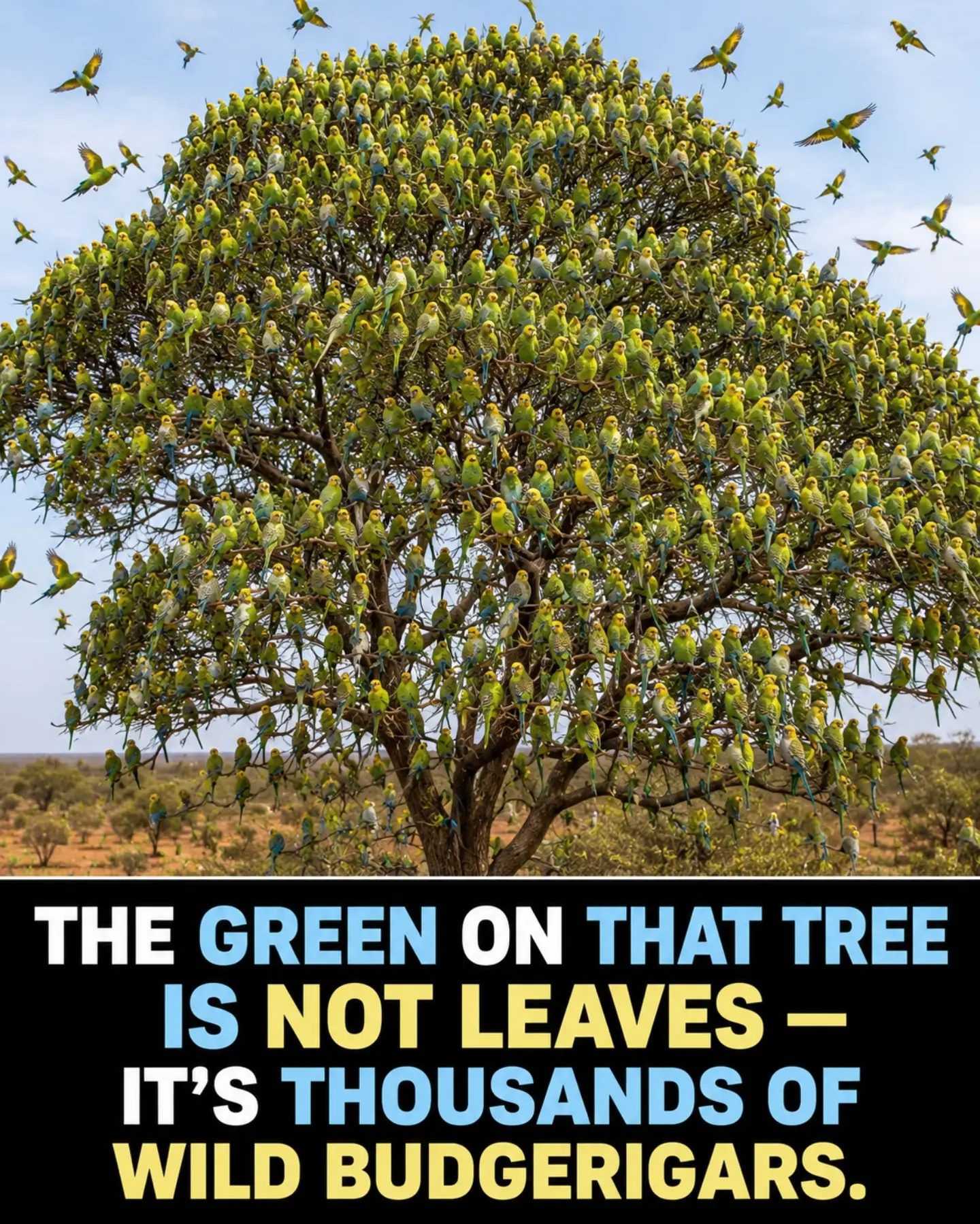
Massive Budgerigar Flock
Imagine looking at a tree and assuming it's full of lush, green leaves. Suddenly, you realize that the green mass is not foliage, but thousands of wild budgerigars, a sight that is both breathtaking and surprising. This extraordinary gathering of budgerigars is a testament to the remarkable flocking behavior of these birds.
Context / Why This Matters
Budgerigars, also known as budgies or parakeets, are small, vibrant parrots native to Australia. They are known for their social behavior and often gather in large groups, but seeing such a massive congregation is a rare and awe-inspiring sight. Understanding the dynamics of such large gatherings can provide insights into the social structure, communication, and ecological significance of these birds.
Budgerigars in the Wild
Budgerigars are one of the most abundant and widely distributed parrot species in the world. They are known for their adaptive nature and can thrive in a variety of habitats, including grasslands, woodlands, and even urban areas. Their ability to form large flocks is a critical aspect of their survival strategy, offering protection from predators, aiding in foraging, and facilitating social interaction.
Flocking Behavior
Flocking behavior is a common trait among many bird species, but budgerigars are particularly notable for their coordinated movements and synchronized actions. The sight of thousands of budgerigars moving in unison around a tree creates a mesmerizing visual spectacle. This behavior is driven by a combination of social bonding and environmental cues, allowing the birds to navigate and adapt to their surroundings effectively.
Green Illusion
The sheer number of budgerigars in the flock creates a visual illusion, making the tree appear entirely green. This illusion is created by the dense clustering of the birds, which can be so tight that it blocks out the view of the actual leaves. The green color is a result of the birds' plumage, which can vary from light green to dark olive, depending on the subspecies and individual variation. This natural camouflage helps them blend in with their surroundings, providing protection from predators and aiding in their survival.
Ecological Importance
Large gatherings of budgerigars play a crucial role in their ecosystems. They help in seed dispersal, pollination, and nutrient cycling. Their feeding habits, which often involve grazing on grass seeds and other vegetation, contribute to the maintenance of grasslands and woodlands. Additionally, their presence can indicate the health of the ecosystem, as they are sensitive to changes in vegetation and water availability.
Practical Tips for Birdwatching
If you're interested in witnessing such a remarkable sight, consider the following tips for birdwatching, particularly for observing budgerigars in the wild:
Best Times and Locations
Budgerigars are often seen in open grasslands and wooded areas. The best times to spot them are during the early morning or late afternoon when they are most active. Look for areas with tall trees and dense vegetation, as these are prime locations for budgerigar roosting and nesting.
Essential Gear
While binoculars are essential for any birdwatching expedition, a good camera with a telephoto lens can help you capture stunning images of the flock. Comfortable and sturdy footwear is also important, as you may need to walk through uneven terrain and long grass.
Patience and Silence
Birdwatching requires patience and a keen sense of observation. Approach the area quietly and avoid sudden movements that could startle the birds. Stay hidden and observe from a distance to avoid disturbing the flock.
Important Takeaways
Witnessing a massive flock of budgerigars is a unique and unforgettable experience. It provides valuable insights into the social behavior, ecological role, and adaptive strategies of these remarkable birds. Understanding the dynamics of such large gatherings can also help conservation efforts aimed at protecting these birds and their habitats.
Appreciate Nature's Wonders
The sight of thousands of budgerigars gathered in a single tree is a testament to the wonders of nature. It highlights the intricate balance and relationships within ecosystems, making us appreciate the delicate web of life that sustains our planet.
Conservation Efforts
Conservation efforts for budgerigars and their habitats are crucial for maintaining biodiversity. Supporting initiatives that protect their natural habitats, promote sustainable practices, and raise awareness about their ecological importance can help ensure the survival of these birds for future generations.
Conclusion
The sight of a massive budgerigar flock is a natural marvel that showcases the beauty and complexity of avian behavior. From their coordinated movements to their ecological significance, budgerigars offer a fascinating glimpse into the interconnected world of nature. Whether you're a seasoned birdwatcher or a curious observer, the experience of witnessing such a spectacle is sure to leave a lasting impression.
Watch the Reel
Questions readers ask
Why do budgerigars gather in such large numbers on trees?
Budgerigars are highly social birds and often congregate in large flocks to find food, water, and safety. However, the sheer number of budgerigars in these massive gatherings can be caused by an abundance of food and water sources in the area, making it an attractive spot for a large group. This situation is often a result of the birds' social behavior and the availability of resources.
How common is it to see a tree covered in thousands of wild budgerigars?
Seeing a tree covered in thousands of wild budgerigars is a rare and extraordinary sight. While budgerigars are known for their flocking behavior, the mass gathering of thousands of birds in a single location, such as a tree, is an uncommon occurrence. This spectacle often arises due to unique conditions that attract a large number of birds to a specific area.
What can we learn from observing massive budgerigar gatherings?
Observing massive budgerigar gatherings can offer valuable insights into the social dynamics and communication methods of these birds. It provides an opportunity to study their flocking behavior, such as how they coordinate their movements, communicate with each other, and interact within the group. These observations can also contribute to a better understanding of their ecological role and the impact of their behavior on the environment.
Are there specific trees that attract large flocks of budgerigars?
There are no specific tree species that universally attract large flocks of budgerigars. However, budgerigars are often drawn to trees that provide suitable nesting sites, food, and water. Trees located near water sources or in areas with abundant vegetation are more likely to attract large flocks. The key factors are the availability of resources and suitable habitat for the birds.
Is it safe for the tree and the budgerigars when thousands of birds cover it?
While it may seem overwhelming, the presence of thousands of budgerigars on a tree is generally safe for both the birds and the tree. Budgerigars are lightweight, and their presence does not typically cause significant damage to the tree. However, the tree should have enough foliage and branches to support the weight of the birds. For the birds, the tree provides a safe haven for resting, nesting, and socializing.
How do budgerigars communicate within such large flocks?
Budgerigars use a combination of vocalizations, body language, and visual cues to communicate within large flocks. They employ a variety of calls and squawks to convey messages, such as warnings, alerts, or social interactions. Body language, like head movements and wing gestures, also plays a crucial role in their communication. These methods help them coordinate their movements and maintain the cohesion of the flock.
What should I do if I encounter a massive budgerigar flock?
If you encounter a massive budgerigar flock, it's important to observe from a safe distance to avoid disturbing the birds. Sudden movements or loud noises can startle the flock, causing them to take flight all at once. This can potentially lead to disruption in their activities and may stress the birds. Enjoy the spectacle quietly and respectfully, and consider documenting the experience with photographs or videos for future reference.
Related deep dives
Similar reads based on topic and creator.



Recent articles
Fresh deep dives from the latest Reels we unpacked.



Comments
Be the first to comment.