The Next Wave of Breakthrough Technologies
The next wave of breakthrough technologies is already taking shape, poised to revolutionize multiple sectors. From medicine to energy, and from agriculture to transportation, these advancements are pushing the limits of what is possible. In this article, we explore the significance of these technologies and their implications for the future.
Why This Matters
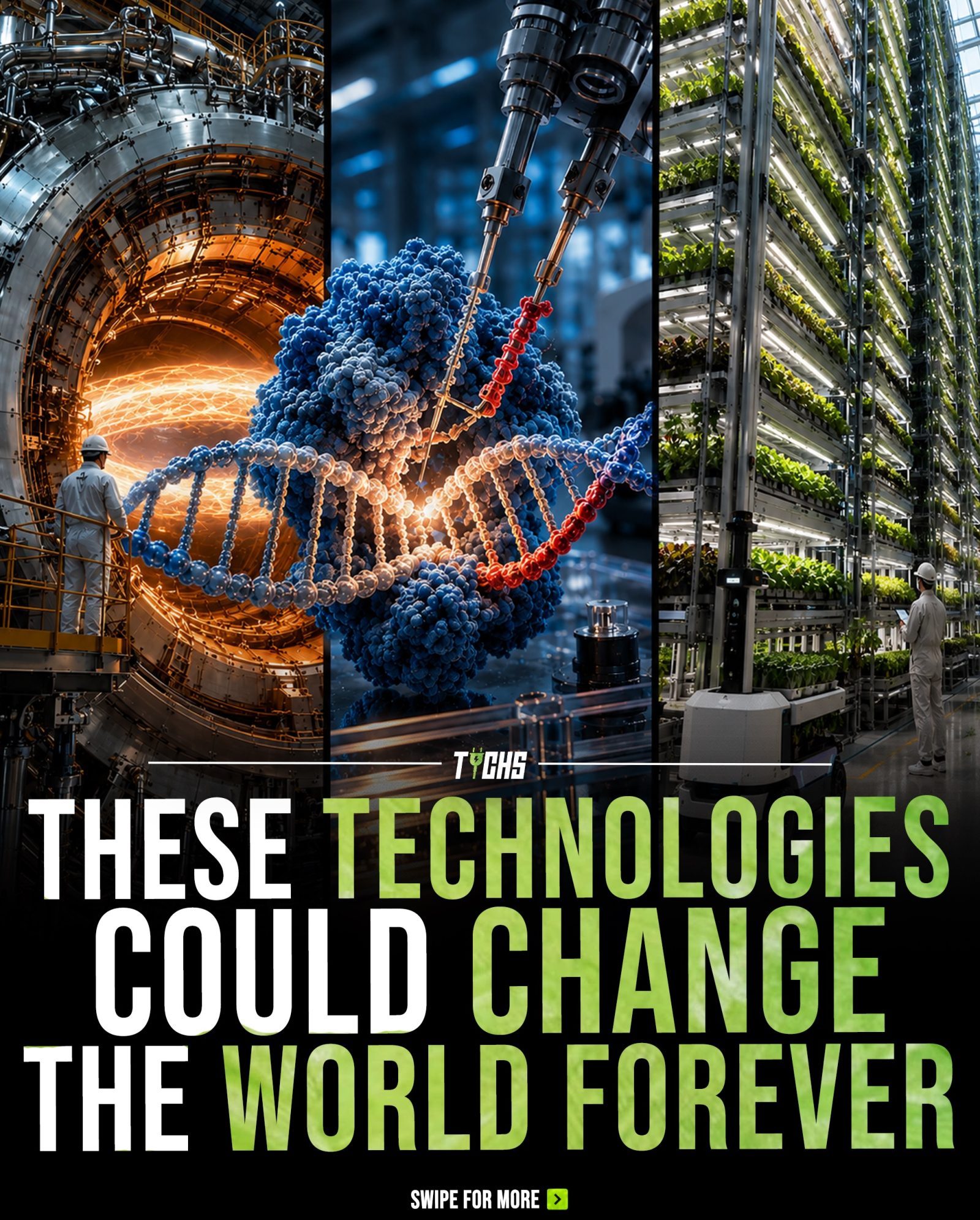
These emerging technologies hold the potential to address some of the most pressing global challenges. Solid state batteries, for example, promise faster charging and more efficient energy storage. Quantum computers are set to solve complex problems that are currently beyond the reach of traditional computing. Meanwhile, CRISPR gene editing is transforming the landscape of medicine, allowing scientists to edit DNA with unprecedented precision. Nuclear fusion power offers a clean and virtually limitless source of energy, while autonomous cargo ships aim to modernize global trade with greater efficiency. Vertical farming is rethinking food production, promising more sustainable and efficient methods.
The Cutting-Edge Innovations
CRISPR Gene Editing
CRISPR, or Clustered Regularly Interspaced Short Palindromic Repeats, is a gene-editing technology that allows scientists to modify DNA sequences with exceptional precision. This technology has the potential to revolutionize medicine by enabling the correction of genetic disorders, the creation of disease-resistant crops, and the development of new treatments for a wide range of conditions. The ability to edit DNA opens up new possibilities for personalized medicine, where treatments can be tailored to an individual's genetic makeup.
Nuclear Fusion Power
Nuclear fusion power represents a significant leap forward in energy production. Unlike traditional nuclear fission, which splits heavy atoms, fusion combines light atoms to produce clean, high-energy electricity with minimal radioactive waste. This technology has the potential to provide virtually limitless power, addressing the growing demand for energy while reducing the environmental impact. While still in the development phase, nuclear fusion holds promise for a sustainable energy future.
Technologies to Watch
CRISPR gene editing and nuclear fusion power are just two of the many emerging technologies that could fundamentally change the world. Vertical farming, for instance, is transforming agriculture by growing crops in vertically stacked layers, allowing for more efficient use of space and resources. This method of farming can reduce water usage, minimize the need for pesticides, and even enable year-round production in urban environments.
Autonomous cargo ships are poised to modernize global trade by increasing efficiency and reducing costs. These vessels can operate without human crew, navigating routes autonomously and minimizing the risk of human error. This technology has the potential to reshape the logistics industry, making global trade more efficient and cost-effective.
Practical Tips
While these technologies are still in various stages of development, staying informed about their progress can be beneficial. Here are some practical tips for keeping up with the latest advancements:
-
Follow Industry Experts: Stay connected with leading experts and organizations in the field of technology and innovation. Following industry leaders on social media or subscribing to their newsletters can provide valuable insights and updates.
-
Attend Conferences and Webinars: Participating in conferences and webinars focused on emerging technologies can offer the opportunity to learn from experts, network with industry professionals, and gain a deeper understanding of current trends.
-
Engage with Online Communities: Join online forums and communities dedicated to technology and innovation. Platforms like Reddit, LinkedIn, and specialized forums can provide a wealth of information and allow you to engage in discussions with like-minded individuals.
-
Stay Updated with Research Papers: Reading research papers and articles in scientific journals can provide in-depth knowledge about the latest developments in emerging technologies. Many journals offer free access to some of their content, making it easier to stay informed.
-
Explore Educational Resources: Utilize online courses, tutorials, and educational resources to deepen your understanding of these technologies. Platforms like Coursera, edX, and Khan Academy offer courses on a variety of subjects related to technology and innovation.
Important Takeaways
Emerging technologies are poised to revolutionize multiple sectors, from medicine to energy and agriculture to transportation. CRISPR gene editing and nuclear fusion power are just two examples of the groundbreaking innovations that are already making waves. Vertical farming, autonomous cargo ships, and other advancements are also set to transform the way we live and work. Staying informed about these technologies and their potential applications can provide a competitive edge and help navigate the future landscape of innovation.
Conclusion
The next wave of breakthrough technologies is already here, promising to fundamentally change the way we approach energy, medicine, computing, agriculture, and global transportation. From CRISPR gene editing to nuclear fusion power, these innovations are pushing the limits of what is possible. By staying informed about these advancements, we can better understand their implications and prepare for a future that is more sustainable, efficient, and innovative. The journey towards a future shaped by these technologies is exciting, and the possibilities are endless.
Watch the Reel
Questions readers ask
What are some of the most promising breakthrough technologies mentioned in the article?
The article highlights several promising breakthrough technologies, including CRISPR gene editing for medical innovations, nuclear fusion energy for sustainable energy solutions, and autonomous cargo ships for transforming global trade. Other notable mentions include solid-state batteries and quantum computers, which are set to revolutionize energy storage and computing, respectively.
How is CRISPR gene editing transforming the medical field?
CRISPR gene editing technology is revolutionizing medicine by enabling precise and efficient editing of DNA. This breakthrough allows scientists to correct genetic disorders, develop targeted therapies, and even explore potential cures for previously untreatable diseases. Its implications for healthcare are vast, offering new hope for patients worldwide.
What are the potential benefits of nuclear fusion energy?
Nuclear fusion energy holds the promise of a nearly limitless and sustainable energy source. Unlike traditional nuclear power, fusion produces minimal radioactive waste and has a much lower risk of meltdowns. If successfully harnessed, it could significantly reduce greenhouse gas emissions and provide a stable, long-term solution to global energy needs.
How will autonomous cargo ships impact global trade?
Autonomous cargo ships are poised to revolutionize global trade by enhancing efficiency, reducing costs, and lowering emissions. These ships, which can navigate without human crews, will improve logistics, minimize human error, and potentially reduce the environmental impact of shipping. They are expected to be an integral part of the future of transportation.
What advantages do solid-state batteries offer over traditional batteries?
Solid-state batteries promise several advantages, such as faster charging times, higher energy density, and improved safety compared to traditional lithium-ion batteries. These benefits make them ideal for various applications, including electric vehicles and portable electronics, contributing to more efficient energy storage and use.
What problems can quantum computers solve that traditional computers cannot?
Quantum computers have the potential to solve complex problems that are currently infeasible for traditional computers. They excel in areas like cryptography, material science, and optimization problems. By leveraging quantum mechanics, these computers can process vast amounts of data simultaneously, leading to breakthroughs in various fields.
How does vertical farming contribute to the future of agriculture?
Vertical farming is an innovative approach to agriculture that involves growing crops in vertically stacked layers, often in controlled environments. This method uses significantly less water and land compared to traditional farming, making it a sustainable solution for urban areas and regions with limited arable land. It also reduces the need for pesticides and herbicides, offering a cleaner, more efficient way to produce food.
Related deep dives
Similar reads based on topic and creator.




Recent articles
Fresh deep dives from the latest Reels we unpacked.




Comments
Be the first to comment.