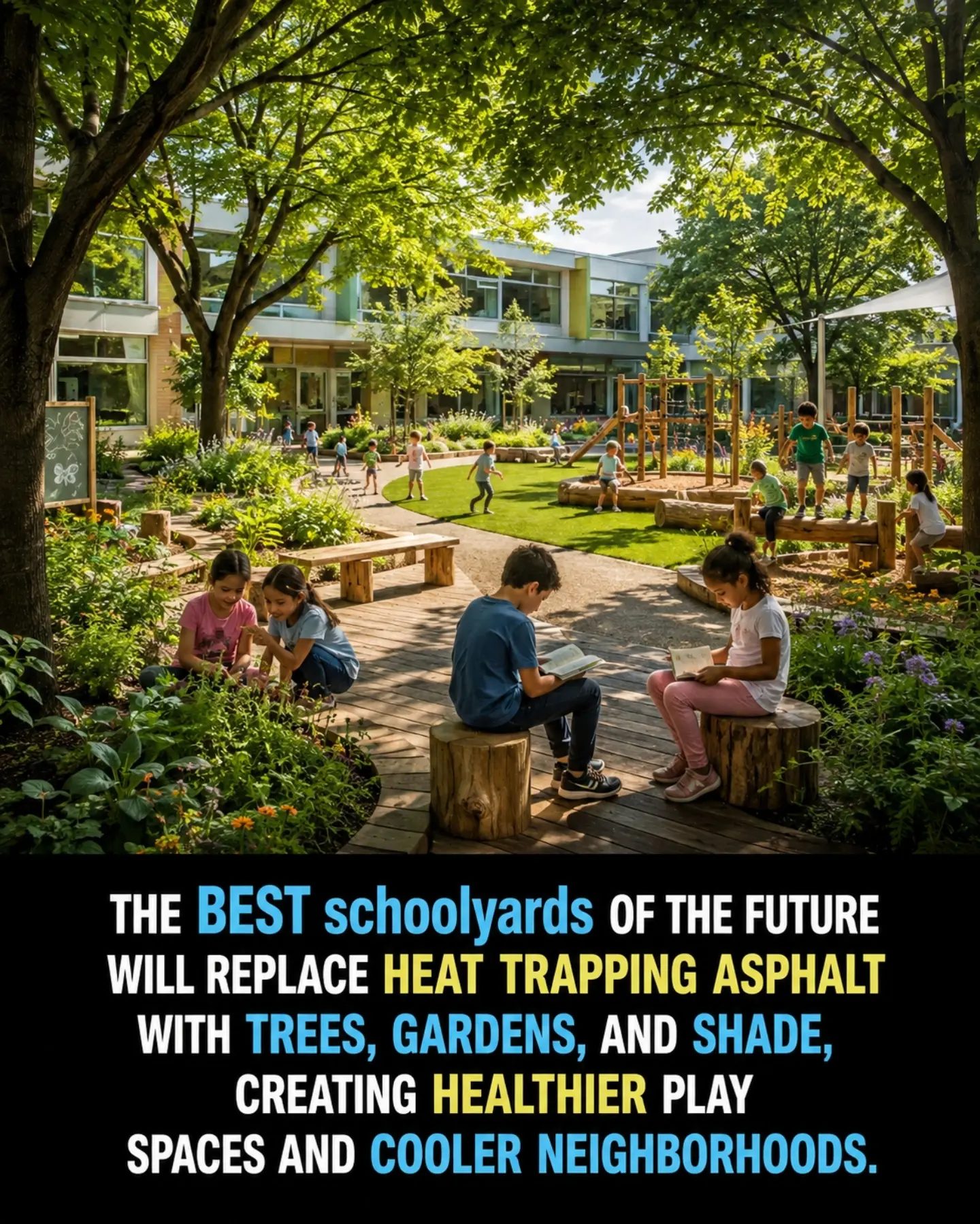
Schoolyard Transformations: A Shift Towards Sustainable and Playful Spaces
From traditional asphalt surfaces to vibrant green spaces, schoolyards around the country are undergoing a significant transformation. This shift aims to create healthier and more engaging environments for children and communities.
Context
Schoolyards are often the first outdoor spaces where children engage in unstructured play and connect with nature. However, many traditional schoolyards are dominated by heat-trapping asphalt, which creates hot, uncomfortable environments and contributes to the urban heat island effect. By incorporating natural elements, schoolyards can be transformed into cooler, greener, and more inviting spaces for children and the broader neighborhood.
As cities and communities increasingly recognize the benefits of green infrastructure, schoolyards are becoming a focal point for environmental design. This redesign has benefits beyond just aesthetics; it also helps to create healthier play spaces and cooler neighborhoods. Schoolyard makeovers can lead to lower temperatures, improved air quality, and reduced energy consumption in nearby buildings.
Main Discussion
From Asphalt to Green Spaces
Replacing asphalt with trees, gardens, and shade is a key aspect of schoolyard transformations. Trees and plants help lower surface temperatures, absorb carbon dioxide, and release oxygen. The shade and greenery create a more comfortable and inviting environment for children to play and explore. Wooden play structures and natural seating areas, like logs or boulders, can foster imaginative play and encourage children to connect with nature.
These transformations are not just about adding trees and plants; they're about designing spaces that promote physical activity, social interaction, and a deeper connection with the natural world. To achieve this, sustainable schoolyard design prioritizes open spaces, varied play structures, and elements that stimulate children's senses.
Healthier Play Spaces
Transforming schoolyards into greener spaces has significant health benefits for children. Natural environments can reduce stress, improve mood, and enhance cognitive function. Green spaces also encourage more physical activity, which is crucial for children's physical and mental well-being. By creating healthier play spaces, schoolyards can contribute to the overall health and happiness of the children who use them.
Cooler Neighborhoods
Schoolyard transformations not only benefit the children who use them but also the broader community. By incorporating natural elements, schoolyards can help mitigate the urban heat island effect, making entire neighborhoods cooler and more comfortable. The cooling effect of trees and plants can reduce the need for air conditioning, lowering energy consumption and greenhouse gas emissions.
Practical Tips
Engaging the Community
Transforming a schoolyard is a significant undertaking that requires planning, resources, and community support. Engaging stakeholders, including parents, teachers, and local residents, is crucial for the success of any schoolyard transformation project. Community involvement can help ensure that the redesign meets the needs and preferences of those who will use the space most.
Designing with Nature in Mind
When planning a schoolyard transformation, it's essential to prioritize natural elements and sustainable practices. This includes selecting native plants that are adapted to the local climate and require less water and maintenance. Incorporating natural play structures, like logs and boulders, can provide both physical challenges and imaginative play opportunities.
Incorporating Shade
Shade is a critical element in sustainable schoolyard design. It helps to reduce surface temperatures, making play areas more comfortable and inviting. Trees, pergolas, and other shading structures can provide relief from the sun and create a more enjoyable environment for children to play and learn.
Important Takeaways
The transformation of schoolyards from asphalt-dominated spaces to green, natural environments offers numerous benefits. These benefits include:
- Healthier play spaces: Natural environments can reduce stress, improve mood, and enhance cognitive function in children. They also encourage more physical activity, which is crucial for children's physical and mental well-being.
- Cooler neighborhoods: By incorporating natural elements, schoolyards can help mitigate the urban heat island effect, making entire neighborhoods cooler and more comfortable.
- Community engagement: Engaging stakeholders, including parents, teachers, and local residents, is crucial for the success of any schoolyard transformation project. Community involvement can help ensure that the redesign meets the needs and preferences of those who will use the space most.
- Sustainable design: Prioritizing natural elements and sustainable practices, such as selecting native plants and incorporating natural play structures, can create healthier, more inviting schoolyards and contribute to the well-being of the broader community.
Conclusion
The transformation of schoolyards into sustainable, natural play spaces is a growing trend that offers numerous benefits. By replacing asphalt with trees, gardens, and shade, schoolyards can become healthier, more inviting, and cooler. These transformations can contribute to the well-being of children and the broader community, making schoolyards a valuable asset for neighborhoods and cities.
Watch the Reel
Questions readers ask
What are the benefits of transforming schoolyards into green spaces?
Transforming schoolyards into green spaces offers numerous benefits. These spaces provide cooler environments, reducing the urban heat island effect. They also promote physical activity, social engagement, and a deeper connection with nature for children and communities.
What are some key elements of sustainable schoolyard design?
Sustainable schoolyard design incorporates natural elements like trees, gardens, and shaded areas. These features not only create a more inviting atmosphere but also support biodiversity, improve air quality, and provide opportunities for hands-on learning about the environment.
How do green schoolyards contribute to healthier environments?
Green schoolyards contribute to healthier environments by reducing heat, promoting physical activity, and fostering a connection with nature. They also help mitigate the urban heat island effect, making the surrounding community more comfortable and livable.
What is the impact of traditional asphalt schoolyards on the environment and children?
Traditional asphalt schoolyards trap heat, creating hot and uncomfortable environments that can be harmful to children's health. They also contribute to the urban heat island effect, making the surrounding community warmer and less pleasant for outdoor activities.
What are some examples of nature play areas in schoolyards?
Nature play areas in schoolyards can include a variety of elements such as tree stumps, logs, and natural climbing structures. These areas encourage children to engage with nature in a playful and imaginative way, fostering a deeper appreciation for the environment.
How can a schoolyard garden benefit students and the community?
Schoolyard gardens provide hands-on learning experiences about plants, ecosystems, and sustainable practices. They also offer opportunities for students to grow and harvest their own food, fostering a sense of responsibility and connection to nature. Additionally, gardens can serve as a community resource, providing fresh produce and a green space for neighborhood gatherings.
What are some considerations for planning a schoolyard redesign?
When planning a schoolyard redesign, consider the specific needs and interests of the school community, and incorporate elements that promote physical activity, social interaction, and engagement with nature. It is also important to ensure that the design is safe, accessible, and well-maintained to maximize its benefits for students and the broader community.
Related deep dives
Similar reads based on topic and creator.




Recent articles
Fresh deep dives from the latest Reels we unpacked.




Comments
Be the first to comment.