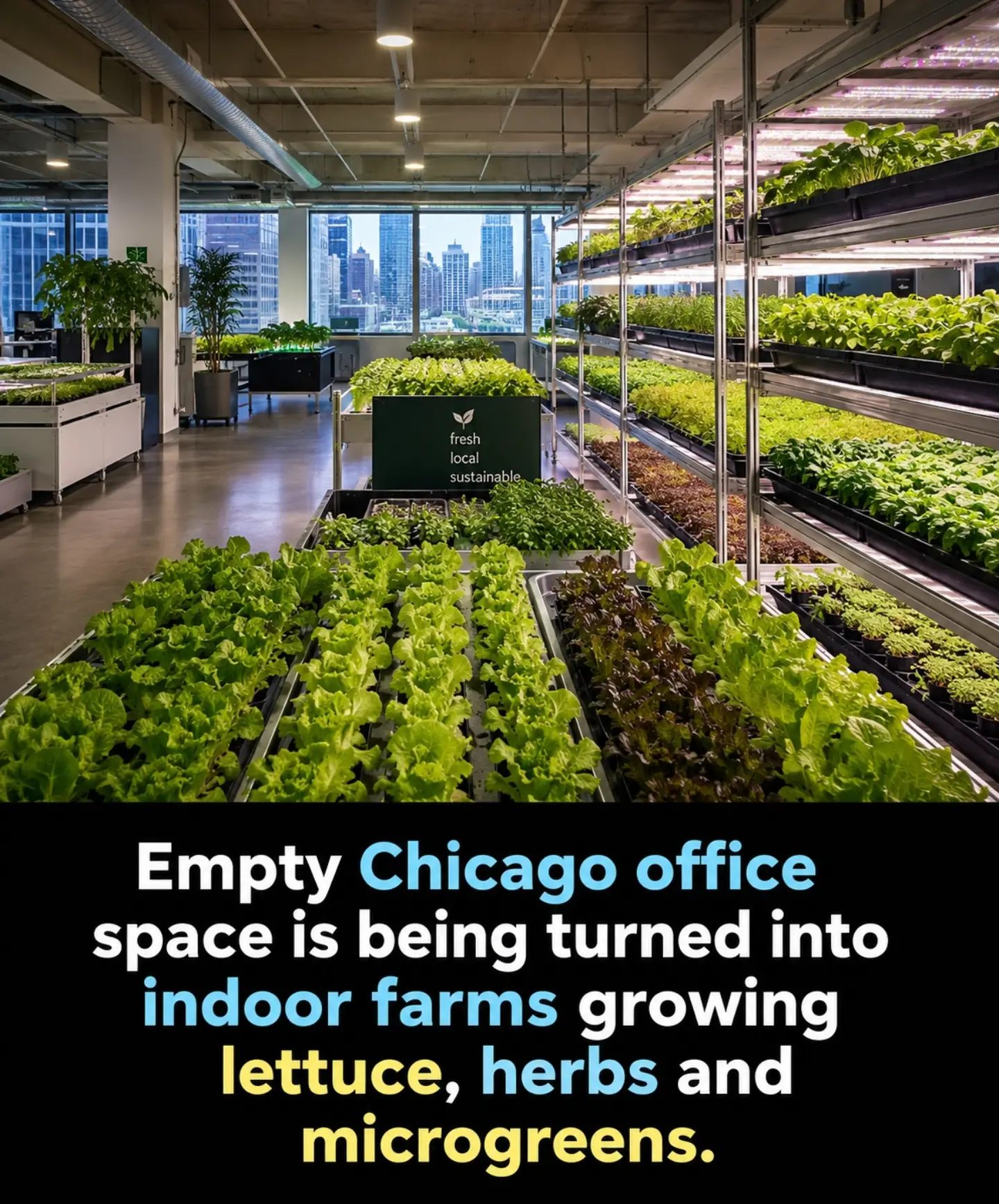
Indoor Farming Transformation: Repurposing Urban Spaces for Sustainable Agriculture
The trend of transforming unused urban spaces into productive indoor farms is gaining traction. This innovative approach not only addresses the issue of food production in urban areas but also promotes sustainability and local agriculture. By repurposing vacant spaces, such as old office buildings, cities can create fresh, local, and sustainable food sources right within their boundaries.
Why This Matters
Urban farming is becoming increasingly important as cities grow and the demand for fresh, locally grown produce increases. Traditional farming methods often struggle to meet these demands efficiently, especially in densely populated areas. Indoor farming offers a solution by utilizing vertical space and controlled environments to grow crops year-round. This method not only ensures a steady supply of fresh produce but also reduces the carbon footprint associated with transportation and storage.
Urbanization and Food Security
As urbanization continues to rise, the need for sustainable food sources within cities becomes more critical. Urban farming can play a significant role in enhancing food security by providing fresh, locally grown produce. This reduces the reliance on imported goods and supports local economies. Moreover, indoor farming can help mitigate the environmental impact of traditional agriculture by using less water and land, and by reducing the use of pesticides and fertilizers.
The Role of Technology
Technology is at the heart of indoor farming. Vertical racks and LED lighting systems are essential components that optimize space and energy use. These systems allow for precise control over growing conditions, ensuring that crops receive the optimal amount of light, water, and nutrients. This technology-driven approach not only increases yields but also ensures consistent quality and reduces waste.
Main Discussion
Repurposing Office Spaces
One of the most intriguing aspects of indoor farming is the repurposing of old office spaces. In cities like Chicago, many buildings stand vacant, making them ideal candidates for conversion into indoor farms. This transformation not only gives new life to these spaces but also creates job opportunities and contributes to the local economy.
Vertical Farming
Vertical farming is a key technique used in indoor farming. By stacking crops vertically, farmers can maximize the use of space and increase production efficiency. This method is particularly effective for growing leafy greens, herbs, and microgreens, which are in high demand in urban areas. The vertical setup also makes it easier to control environmental factors such as temperature, humidity, and light, ensuring optimal growing conditions.
LED Lighting Systems
LED lighting systems are crucial for indoor farming. These systems provide the necessary light spectrum for plant growth while being energy-efficient and cost-effective. LED lights can be tailored to provide the specific wavelengths of light that plants need at different stages of growth, ensuring optimal productivity. Additionally, LED lights generate less heat than traditional lighting systems, reducing the need for additional cooling and further enhancing energy efficiency.
Sustainability and Local Agriculture
Indoor farming is inherently sustainable. By growing crops in controlled environments, farmers can reduce the use of resources like water and land. This method also minimizes the environmental impact of pesticides and fertilizers, making it a more eco-friendly option. Moreover, by growing crops locally, indoor farming reduces the need for long-distance transportation, further reducing the carbon footprint.
Water and Energy Efficiency
Water and energy efficiency are major advantages of indoor farming. Traditional farming methods often require large amounts of water and land, which can be scarce and environmentally taxing. Indoor farming, on the other hand, uses hydroponic or aeroponic systems that recycle water, reducing overall water usage. Similarly, LED lighting and controlled environments minimize energy consumption, making indoor farming a more sustainable option.
Local Food Sources
Having local food sources is another significant benefit of indoor farming. By growing crops within urban areas, cities can reduce their reliance on imported produce, thereby supporting local farmers and reducing transportation costs. Local food sources also ensure that produce is fresher and more nutritious, as it spends less time in transit and storage.
Practical Tips
If you're considering starting an indoor farm, here are some practical tips to help you get started:
Assess Your Space
Before you begin, assess the space you have available. Consider factors such as lighting, temperature, and humidity. These factors will influence the types of crops you can grow and the equipment you'll need.
Invest in the Right Equipment
Investing in the right equipment is crucial for the success of your indoor farm. This includes vertical racks, LED lighting systems, and hydroponic or aeroponic systems. High-quality equipment will not only improve your yields but also make the farming process more efficient and sustainable.
Choose the Right Crops
Choose crops that are well-suited to indoor growing conditions. Leafy greens, herbs, and microgreens are ideal for indoor farming as they grow quickly and require less space. Additionally, these crops are in high demand in urban areas, making them a profitable choice.
Monitor and Control Growing Conditions
Monitoring and controlling growing conditions is essential for the success of your indoor farm. Use sensors and automated systems to monitor temperature, humidity, light, and water levels. This will ensure that your crops receive the optimal growing conditions, resulting in higher yields and better quality produce.
Promote Your Produce
Promoting your produce is an essential step in the success of your indoor farm. Highlight the freshness, local sourcing, and sustainability of your produce to attract customers. Engage with local communities and farmers' markets to build a loyal customer base.
Important Takeaways
Indoor farming is a transformative approach to urban agriculture, offering numerous benefits such as sustainability, local food sourcing, and efficient use of resources. By repurposing old office spaces and utilizing advanced technology, cities can create productive agricultural environments within their boundaries. This not only supports local economies but also contributes to food security and environmental sustainability.
Conclusion
The transformation of unused urban spaces into indoor farms is a compelling and innovative solution to urban agriculture challenges. By leveraging technology and repurposing spaces, cities can create sustainable, local food sources that benefit both the environment and local economies. Whether you're a farmer looking to start an indoor farm or a consumer interested in supporting local agriculture, understanding the benefits and practicalities of indoor farming can help drive positive change.
Watch the Reel
Questions readers ask
What are the primary benefits of converting old office buildings into urban indoor farms in Chicago?
Converting old office buildings into urban indoor farms in Chicago offers several benefits. It addresses food production challenges in urban areas, promotes sustainability by reducing the carbon footprint associated with food transportation, and creates a local source of fresh produce year-round. Additionally, these conversions can revitalize underutilized spaces and contribute to the economy by creating new jobs.
How does vertical farming technology contribute to urban agriculture in Chicago?
Vertical farming technology is crucial for urban agriculture in Chicago as it maximizes the use of limited urban space. By growing crops vertically, farms can produce more food per square foot than traditional farming methods. This technology also allows for precise control over growing conditions, ensuring optimal plant growth and higher crop yields throughout the year.
What are the key considerations for converting an office building into an indoor farm?
Key considerations include assessing the building's structural integrity to support vertical farming equipment, ensuring access to adequate water and energy supplies, and installing proper climate control systems. Additionally, understanding local regulations and permitting requirements for agricultural operations in urban areas is essential. Working with experts in urban farming and sustainable agriculture can help navigate these challenges effectively.
How does indoor farming in Chicago contribute to food sustainability?
Indoor farming in Chicago contributes to food sustainability by reducing the need for long-distance food transportation, which lowers greenhouse gas emissions. It also minimizes water usage through recirculating systems and eliminates the need for pesticides, making it an environmentally friendly option. Furthermore, indoor farms can produce crops year-round, reducing reliance on imported produce and supporting local food security.
What types of produce are typically grown in indoor vertical farms in Chicago?
Indoor vertical farms in Chicago typically grow a variety of crops that thrive in controlled environments, such as leafy greens, herbs, and microgreens. These plants have shorter growing cycles and require less space, making them ideal for vertical farming. Some farms may also experiment with growing fruits and vegetables that can be cultivated indoors, depending on the technology and resources available.
Are there any successful examples of office-to-farm conversions in Chicago?
Yes, Chicago has seen successful conversions of old office buildings into indoor farms. For instance, The Plant is a notable example where a former meatpacking plant was transformed into an indoor vertical farm focusing on sustainable food production. These conversions demonstrate the feasibility and benefits of repurposing urban spaces for agricultural use, setting a precedent for future projects.
Related deep dives
Similar reads based on topic and creator.

Recent articles
Fresh deep dives from the latest Reels we unpacked.




Comments
Be the first to comment.