The spine of Russia
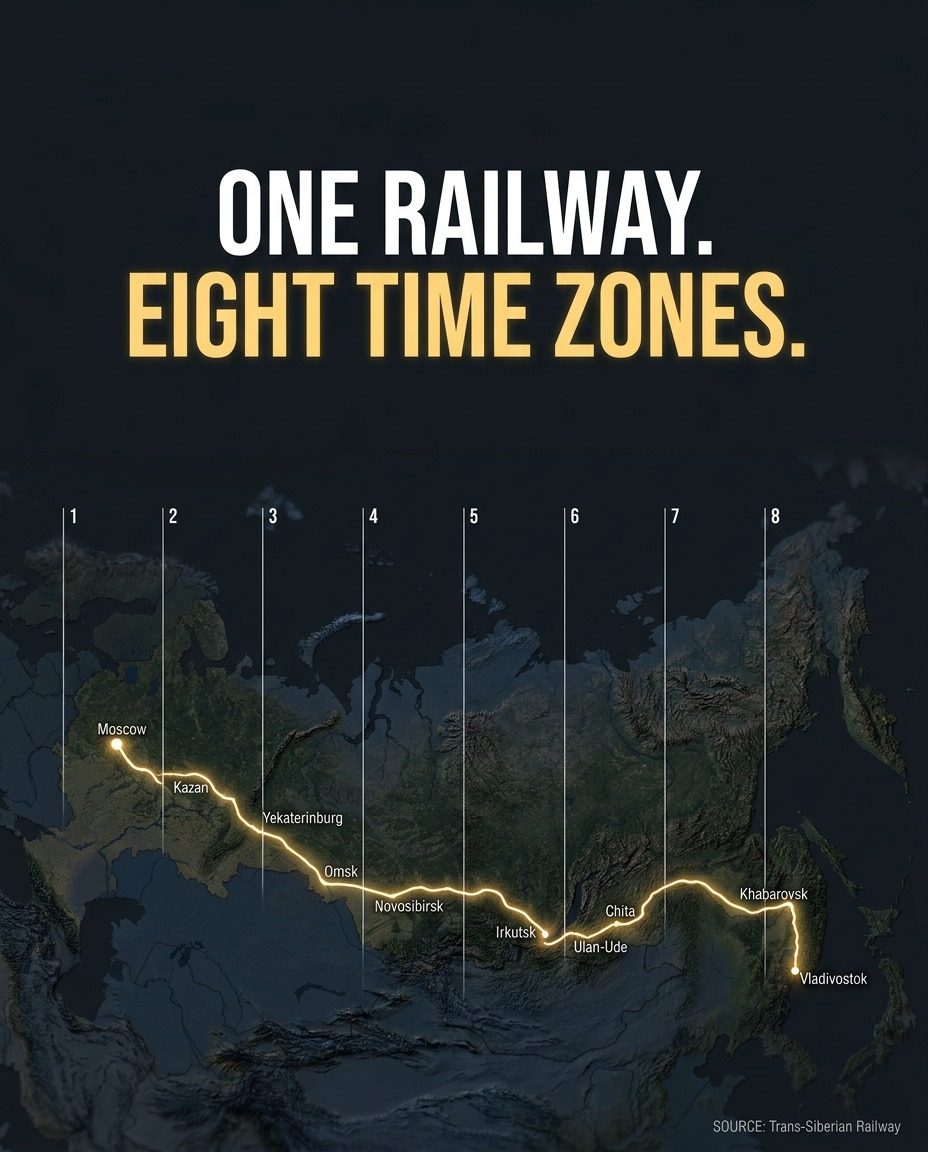
The Trans-Siberian Railway is the world's longest railway, traversing Russia from its western edge to its Far East. This legendary route connects Moscow to Vladivostok, a journey that traverses over 5,700 miles and 78 hours of travel, but its impact extends far beyond just travel. It is also a major travel route, connecting Russia to China is a critical economic link. Notably, the route passes through eight different time zones, spanning nearly the entire width of Russia. Historically, the railway has played a pivotal role in the development of the region, facilitating trade and communication between distant cities and remote areas.
Connecting Russia’s heartlands
The railway not only connects major cities. It functions as an economic and logistical backbone. Notably, it runs through major cities like Kazan, Yekaterinburg, Novosibirsk, Irkutsk, and Ulan-Ude, where passengers and goods can rest or transfer. The railway's route through Russia is anything but linear. The line meanders through various terrains, including the vast expanses of Siberia. This route has cultural significance as well, as it traverses the traditional homelands of different ethnic groups, such as the Buryats and Yakuts. The railway passes through regions with diverse climates. These range from the temperate forests of European Russia to the vast, frozen landscapes of Siberia, showcasing the country's geographical and climatic diversity. More than just scenery, this route carries a rich historical narrative, from the building of the line to the impact of the Cold War, on up to today’s dynamic.
The vastness of its ambitions
Each of these cities along the route has its own distinctive identity and historical significance. Moscow, the vibrant capital, is marked by its iconic landmarks and political importance. Beyond Moscow, the railway connects to Vladivostok—a long way off—a port city that has historically been crucial for Russian maritime trade and military activities. Vladivostok's strategic location on the Pacific Coast enhances its importance in international trade, serving as the endpoint of the Trans-Siberian Railway. The railway also connects Russia to China. From Vladivostok, goods and travelers can easily transition to the Trans-Mongolian Railway. In this context, the Trans-Siberian Railway becomes a part of a broader Eurasian network, connecting not just regions within Russia but also linking the country to other significant global trade routes. This vast network mirrors the ambitions of a country spanning multiple continents.
Watch the Reel
Related deep dives
Similar reads based on topic and creator.




Recent articles
Fresh deep dives from the latest Reels we unpacked.




Comments
Be the first to comment.