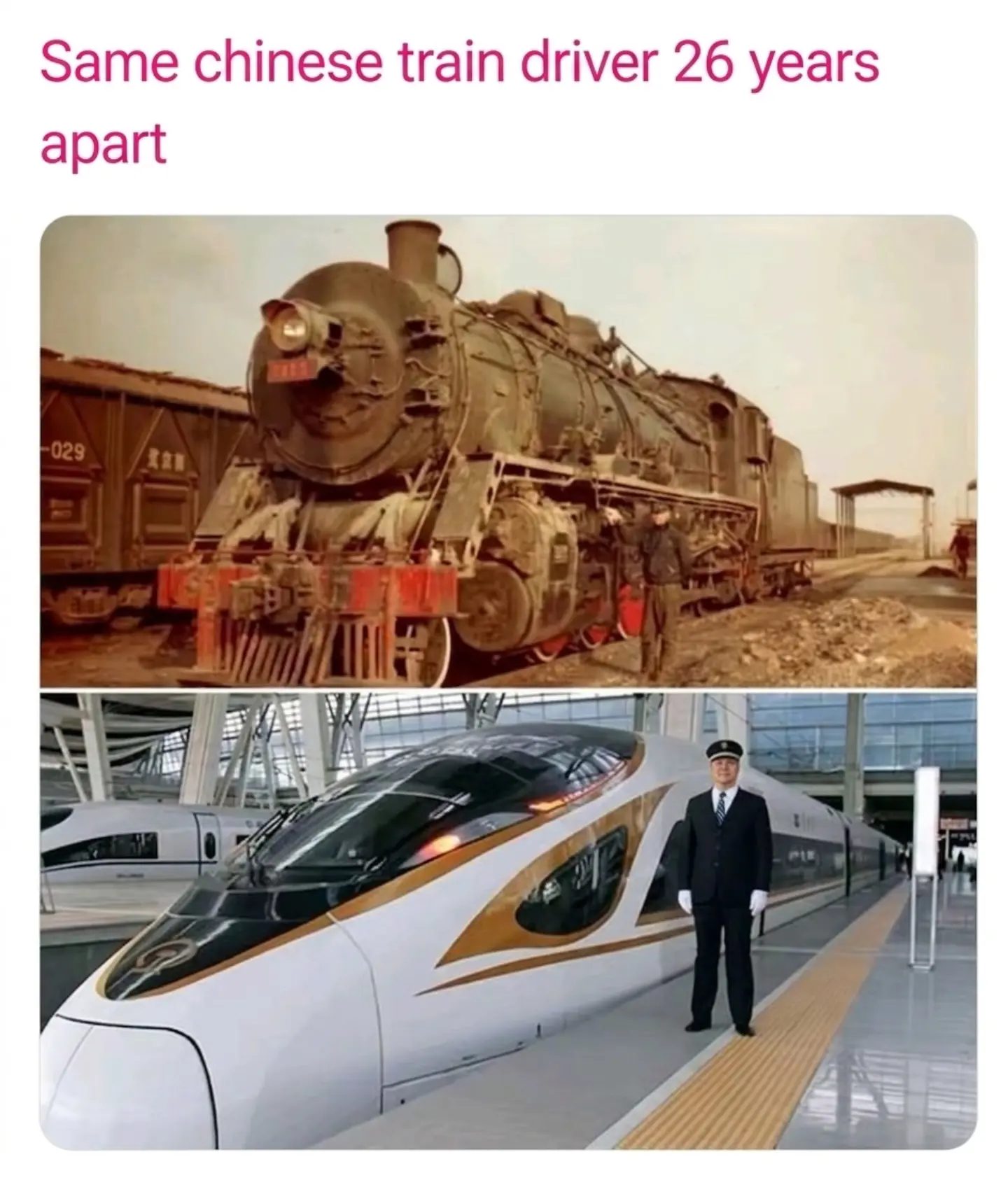
Train Evolution: From Steam to High-Speed Railways
The evolution of train technology is a testament to human ingenuity and progress. From the early days of steam locomotives to the cutting-edge high-speed trains of today, the journey has been remarkable. This comparison, spanning 26 years, showcases the transformation in train technology, highlighting the changes in speed, design, and overall efficiency.
Context: Why This Matters
Trains are a crucial part of modern transportation infrastructure. They play a pivotal role in connecting cities, transporting goods, and facilitating travel. The evolution of train technology not only enhances mobility but also reflects broader advancements in engineering and technology. Understanding this evolution helps appreciate the strides made and anticipates future developments in rail transportation.
Main Discussion
The Early Days: Steam Locomotives
In the early 1990s, train drivers like Han Junjia operated steam locomotives, which were the backbone of rail transport. These trains, while powerful, had significant limitations. They were heavy, coal-burning machines that required constant maintenance. Drivers had to manually operate these locomotives, often leaning out of open cabin windows to see the tracks ahead. The maximum speed of these trains was around 30 mph, making journeys time-consuming and arduous.
The Transition to Electric and Diesel Trains
As technology progressed, steam locomotives began to be phased out in favor of electric and diesel trains. These new models offered several advantages over their predecessors. They were more efficient, cleaner, and could achieve higher speeds. The introduction of diesel-electric locomotives marked a significant leap in train technology, providing better control and reducing the need for manual intervention.
The Modern Era: High-Speed Trains
The arrival of high-speed trains represents the pinnacle of rail transport technology. By 2018, drivers like Han Junjia were operating state-of-the-art high-speed trains, such as China's Fuxing train. These trains can reach speeds of up to 217 mph, significantly reducing travel time and enhancing passenger comfort. The technological advancements in these trains include aerodynamic designs, advanced braking systems, and sophisticated control mechanisms. The transition from steam to high-speed trains underscores the remarkable progress in rail transportation over the past few decades.
Key Technological Advancements
Several key technological advancements have driven the evolution of trains:
- Aerodynamics: Modern trains are designed with aerodynamics in mind, reducing drag and enhancing speed.
- Braking Systems: Advanced braking systems ensure safety and efficiency, allowing for quick stops and controlled deceleration.
- Control Systems: Sophisticated control mechanisms enable drivers to operate trains with precision, improving overall performance.
- Comfort and Safety: High-speed trains offer enhanced passenger comfort and safety features, including climate control, improved seating, and better lighting.
Practical Tips
For those interested in the evolution of trains, here are some practical tips to deepen your understanding:
- Visit Railway Museums: Many cities have railway museums that showcase the history of train technology. These museums often have exhibits on steam locomotives, early diesel-electric trains, and modern high-speed trains.
- Attend Railway Conventions: Conventions and exhibitions focused on railway technology provide opportunities to learn about the latest advancements and interact with experts in the field.
- Read Books and Articles: There are numerous books and articles that delve into the history and future of train technology. These resources offer in-depth insights into the evolution of rail transport.
- Join Online Communities: Online forums and communities dedicated to trains and rail transport can be a great source of information and camaraderie. Engaging with fellow enthusiasts can enhance your knowledge and appreciation for train technology.
Important Takeaways
- Progress in Speed and Efficiency: The evolution of trains has seen a dramatic increase in speed and efficiency. From 30 mph steam locomotives to 217 mph high-speed trains, the advancements are staggering.
- Technological Milestones: Key milestones, such as the transition from steam to electric and diesel trains, and the introduction of high-speed trains, highlight the significant strides made in rail technology.
- Impact on Mobility: The evolution of train technology has revolutionized mobility, making travel faster, more comfortable, and more efficient.
Conclusion
The journey from steam locomotives to high-speed trains is a fascinating story of human progress and technological innovation. It showcases the remarkable advancements in train technology over the past few decades, highlighting the improvements in speed, efficiency, and overall performance. Whether you are a train enthusiast or simply curious about the evolution of transportation, understanding this journey offers valuable insights into the future of rail travel.
Watch the Reel
Questions readers ask
How have train speeds evolved over the past 26 years?
Train speeds have significantly increased over the past 26 years. Steam locomotives, once the standard, had speeds upwards of 60-70 mph. today, high-speed trains like the Shinkansen in Japan can reach speeds of up to 200 mph, and some magnetic levitation trains can exceed 370 mph.
What are the key differences between steam locomotives and modern high-speed trains?
Steam locomotives were labor-intensive, slow, and required frequent stops for fuel and water. Modern high-speed trains, on the other hand, are electric, faster, and more efficient, with advanced engineering that allows for higher speeds, better acceleration, and more reliable performance.
How has the shift from steam to electric trains improved train connectivity?
The shift from steam to electric trains has greatly improved connectivity by enabling faster and more frequent services. Electric trains can operate more reliably and with shorter turnaround times, allowing for tighter scheduling and increased passenger capacity, thereby connecting cities more efficiently.
What role do high-speed trains play in modern transportation infrastructure?
High-speed trains are vital in modern transportation infrastructure. They provide fast and reliable travel options, reducing travel times between cities and easing congestion on roads. They also support economic growth and sustainability by offering an efficient alternative to air and road travel.
What are some of the key advancements in modern train engineering?
Modern train engineering has seen numerous advancements, including the development of bullet train technology, which uses aerodynamics and advanced materials to achieve high speeds. Additionally, the integration of smart technologies, such as automated signaling and predictive maintenance, has improved safety and operational efficiency.
How has the evolution of train technology impacted train mobility?
The evolution of train technology has enhanced mobility by making train travel faster, more convenient, and accessible. High-speed trains allow passengers to travel longer distances in shorter times, while improved scheduling and connectivity make train travel a viable option for both commuters and long-distance travelers.
What can we expect from the future of train technology?
The future of train technology holds promises of even faster speeds, greater efficiency, and increased automation. Emerging technologies like hyperloop systems and advanced magnetic levitation trains aim to revolutionize train travel, making it even faster and more sustainable, further enhancing mobility and connectivity.
Related deep dives
Similar reads based on topic and creator.




Recent articles
Fresh deep dives from the latest Reels we unpacked.




Comments
Be the first to comment.