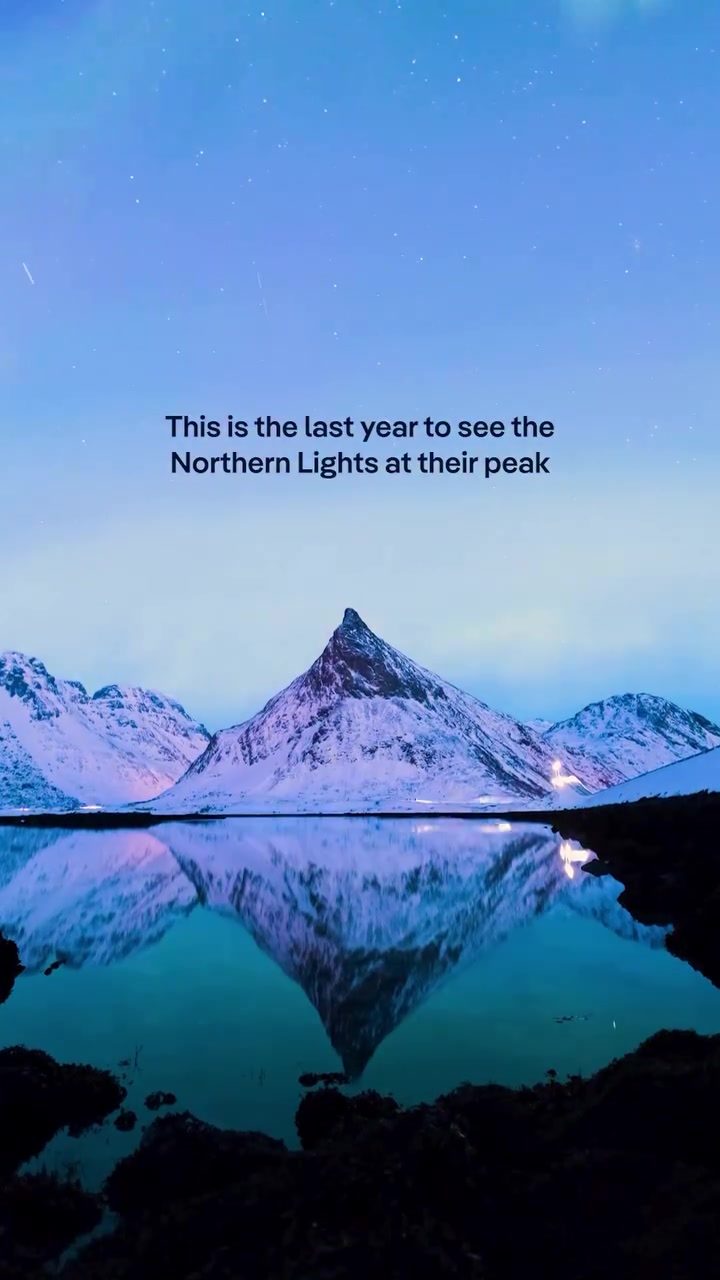
Northern Lights Viewing
The Northern Lights are one of the most breathtaking natural phenomena on Earth, and now is the time to plan a trip to witness them at their most vibrant. We are currently in the midst of a solar maximum, a period when the sun's energy is at its strongest in over a decade. This heightened solar activity results in more frequent and intense displays of the aurora borealis, making this an ideal time to see the Northern Lights.
The Solar Cycle and Its Impact on the Northern Lights
The solar cycle, which lasts approximately 11 years, significantly influences the intensity and frequency of the Northern Lights. During the solar maximum, the sun's activity peaks, leading to more solar flares and coronal mass ejections. These events release charged particles that interact with Earth's magnetic field, creating the mesmerizing lights in the sky. The current solar maximum is expected to continue until 2026, after which the Northern Lights will gradually diminish in intensity. It may not be until the mid-2030s that we see another solar cycle with comparable activity.
Top Destinations for Viewing the Northern Lights
If you're planning a trip to see the Northern Lights, choosing the right location is crucial. Here are some of the best places to witness this natural spectacle:
Norway
Norway is renowned for its stunning landscapes and excellent viewing spots for the Northern Lights. Tromsø and the Lofoten Islands are particularly popular due to their clear skies and frequent auroral displays. Svalbard, another Norwegian destination, offers unique viewing opportunities with its remote and pristine Arctic environment.
Sweden
Sweden also boasts several prime locations for viewing the Northern Lights. Abisko and Kiruna are well-known for their clear skies and frequent auroral activity. These locations are ideal for those looking to experience the Northern Lights in a serene and picturesque setting.
Iceland
Reykjavik, Iceland, is another top destination for Northern Lights enthusiasts. The city's proximity to the Arctic Circle and its clear, dark skies make it an excellent location for viewing the aurora borealis. Visitors can also explore the stunning landscapes of Iceland while waiting for the night sky to light up.
Finland
Finnish Lapland and Rovaniemi, the official hometown of Santa Claus, offer a magical setting for viewing the Northern Lights. The region's vast, unspoiled wilderness and clear skies create perfect conditions for witnessing the aurora. Visitors can enjoy a variety of winter activities while waiting for the lights to appear.
Canada
Canada has several locations that are ideal for viewing the Northern Lights, including Fairbanks and Yukon to the Denali National Park, Alaska. The northern regions of Canada, such as Yellowknife and the Yukon, are particularly famous for their clear skies and frequent auroral displays, offering a unique and unforgettable experience for visitors.
Greenland
The Faroe Islands offer a unique and picturesque setting for viewing the Northern Lights.
Scotland
The Scottish Highlands provide a stunning backdrop for viewing the Northern Lights. The region's rugged landscapes and clear, dark skies make it an excellent location for experiencing the aurora borealis. Visitors can also enjoy the rich history and culture of Scotland while waiting for the lights to appear.
Planning Your Northern Lights Adventure
Best Time to Visit
The best time to see the Northern Lights is typically from late August to early April, when the nights are longest and the skies are darkest. However, during the solar maximum, the lights can be visible even outside of these months. It's essential to check the weather forecasts and auroral activity predictions before planning your trip.
What to Pack
When preparing for a Northern Lights adventure, it's crucial to pack appropriately for the cold Arctic weather. Warm clothing, including thermal layers, insulated jackets, and waterproof boots, is essential. Don't forget to bring a camera with a tripod to capture the stunning displays and a flashlight to navigate in the dark. Binoculars can also enhance your viewing experience by allowing you to see the finer details of the lights.
Photography Tips
Capturing the Northern Lights on camera can be challenging, but with the right techniques, you can create stunning images. Use a tripod to keep your camera steady during long exposures, and set your camera to manual mode with a low ISO, wide aperture, and long shutter speed. Experiment with different settings to find the best results for your camera and the lighting conditions.
Important Takeaways
The Northern Lights are a natural phenomenon that has captivated audiences for centuries, and current solar activity creates a unique opportunity for viewing. While planning a trip to see the lights, it's essential to choose the right location, pack appropriately, and be prepared for varying weather conditions. With the right planning and a bit of luck, witnessing the Northern Lights can be an unforgettable experience.
Conclusion
Now is the perfect time to plan a trip to see the Northern Lights at their most vibrant. With the solar cycle reaching its peak, the aurora borealis will put on a dazzling display that won't be matched for many years. Whether you choose Norway, Sweden, Iceland, Finland, Canada, or the Scottish Highlands, each destination offers a unique and breathtaking experience. So, pack your bags, grab your camera, and get ready to chase the glow.
Watch the Reel
Questions readers ask
What is the solar maximum and why is it significant for viewing the Northern Lights?
The solar maximum is the peak of the sun's 11-year activity cycle. During this period, the sun emits more solar flares and coronal mass ejections, which interact with Earth's atmosphere to produce more frequent and vibrant Northern Lights displays.This makes it an ideal time to view the aurora.
How long does the current solar maximum last and when is the best time to visit?
The current solar maximum started in 2023 and will last until 2026. For the best Northern Lights viewing, plan your trip between late autumn and early spring, ideally during a new moon for darker skies.
What makes Tromsø and the Lofoten Islands in Norway top destinations for viewing the Northern Lights?
Tromsø and the Lofoten Islands offer some of the best Northern Lights viewing due to their high latitudes and clear skies. Tromsø, known as the 'Gateway to the Arctic,' has a 1 in 3 chance of seeing the aurora on any given night during winter. The Lofoten Islands provide a stunning landscape with a northerly location.
Why is Abisko, Sweden, a prime location for aurora viewing?
Abisko, Sweden, is renowned for its clear skies and frequent aurora sightings. It is located above the Arctic Circle, has minimal light pollution, and benefits from unique weather patterns that often clear the sky at night, making it an ideal spot for Northern Lights viewing.
What unique features does Iceland offer for Northern Lights enthusiasts?
Iceland's remote landscapes, minimal light pollution, and frequent clear skies make it an excellent destination for viewing the Northern Lights. Additionally, Iceland offers a variety of natural wonders, such as geysers, volcanoes, and waterfalls, which can be combined with aurora viewing for a memorable trip.
Can I see the Northern Lights in other places besides the listed destinations?
While the listed destinations, such as Tromsø, the Lofoten Islands, Abisko, and Iceland, offer optimal viewing conditions, the Northern Lights can also be seen from other high-latitude locations with clear, dark skies. Including Alaska, Canada, Greenland, and even parts of the northern United States during peak solar activity.
Related deep dives
Similar reads based on topic and creator.



Recent articles
Fresh deep dives from the latest Reels we unpacked.




Comments
Be the first to comment.