The Natural Wonders of the World
The world is home to an astonishing array of natural wonders, each one more breathtaking than the last. From the fiery depths of volcanoes to the serene beauty of luminescent waves, these sites offer a glimpse into the raw power and beauty of our planet. This article explores nine of the most extraordinary natural wonders, from the glowing waters of the Maldives to the mirrored expanse of the Salar de Uyuni, Bolivia. Each of these sites offers a unique experience that showcases the incredible diversity of our world.
Why See the World's Natural Wonders
Natural wonders like these inspire awe and wonder, reminding us of the vast and varied beauty of our planet. They offer a respite from the hustle and bustle of daily life, providing a chance to connect with nature in its purest form. Whether you're a seasoned traveler or a novice adventurer, these sites are sure to leave a lasting impression. From the raw, unbridled power of a volcanic eruption to the serene beauty of a mirror-like salt flat, each of these natural wonders offers a unique experience that is truly unforgettable.
Kīlauea Volcano, Hawai‘i
One of the most active volcanoes on Earth, Kīlauea in Hawai‘i is a sight to behold. The volcano's lava flows into the ocean, creating a mesmerizing display of molten rock against the backdrop of the Pacific Ocean. Watching the lava pour into the sea is an unforgettable experience, one that showcases the raw, powerful forces that shape our planet.
The Unique Geography of Kīlauea
Kīlauea is part of the Hawaiian Islands, a chain of volcanoes formed by the movement of the Pacific Plate over a hotspot in the Earth's mantle. The volcano has been active for thousands of years, with eruptions that have created new land and reshaped the island's coastline. The lava that flows from Kīlauea is primarily basaltic, which means it is fluid and can travel long distances before cooling.
What to Expect
Visiting Kīlauea offers a chance to witness the power of nature up close. The volcanic activity is ever-changing, with lava flows that can be unpredictable. Visitors should stay on marked trails and follow the guidance of local authorities to ensure safety. The viewing areas are well-maintained, providing a safe and accessible way to experience the volcanic activity.
Practical Tips
- Best Time to Visit: Kīlauea's volcanic activity can be unpredictable, so it's best to check with local authorities for the latest information on lava flows and viewing opportunities.
- What to Bring: Wear sturdy hiking shoes, bring a flashlight, and dress in layers, as temperatures can drop quickly at night.
- Safety Precautions: Stay on marked trails and follow the guidance of park rangers. Avoid areas where sulfur dioxide levels are high.
Northern Lights, Finland or Norway
The Northern Lights, known as Aurora Borealis, are a natural light display that can be seen in the night sky in parts of Finland and Norway. The lights are caused by the interaction of charged particles from the sun with Earth's magnetic field, creating a mesmerizing display of green and violet waves.
The Science Behind the Lights
The Northern Lights are the result of solar particles colliding with Earth's atmosphere. These collisions excite the gas molecules in the atmosphere, causing them to emit light. The different colors of the Northern Lights are determined by the type of gas molecule and the altitude at which the collision occurs. Oxygen molecules, for example, produce green and red lights, while nitrogen molecules produce blue and purple lights.
Where to See Them
Viewing the Northern Lights is a popular activity in both Finland and Norway. Lapland, in northern Finland, is one of the best places to see the lights due to its clear skies and minimal light pollution. The Lofoten Islands in Norway are also a popular destination for viewing the Northern Lights, offering stunning landscapes and a high probability of clear skies.
Practical Tips
- Best Time to Visit: The best time to see the Northern Lights is during the winter months, from September to March, when nights are long and dark.
- What to Bring: Dress in warm clothing, including a hat, gloves, and insulated boots. Bring a camera with a tripod to capture the lights, and consider a thermal blanket for extra warmth.
- Stay Safe: Follow local guidelines and stay on designated paths. Be prepared for cold temperatures and potential snow.
Bioluminescent Waves, Maldives or California
The phenomenon of bioluminescent waves, where the sea glows bright blue under the moonlight, is a magical sight. Both the Maldives and California offer unique opportunities to witness this natural wonder, with waves that appear to dance with light.
Why the Sea Glows
Bioluminescence is caused by microscopic organisms known as dinoflagellates, which emit light through a chemical reaction known as bioluminescence. These organisms thrive in warm, nutrient-rich waters, creating a display of light that can be seen from the shore. The waves create a mesmerizing effect, with light breaking and swirling as the water moves.
Where to See Bioluminescent Waves
In the Maldives, the bioluminescent waves are best seen on the north and west shores of the islands. In California, the Bay Area is a popular destination for viewing the waves, particularly at night, when the water is calm. The red tides are a common occurrence in the Bay, creating an opportunity to experience the phenomenon.
Practical Tips
- Best Time to Visit: Bioluminescent waves are best seen during the summer months when the water is warm and the nights are long.
- What to Bring: Bring a camera, a flashlight, and warm clothing. Swimwear and waterproof shoes are essential if you plan on entering the water.
- Stay Safe: Follow local guidelines and avoid areas where the waters are too rough. Be cautious of strong currents.
Salar de Uyuni, Bolivia
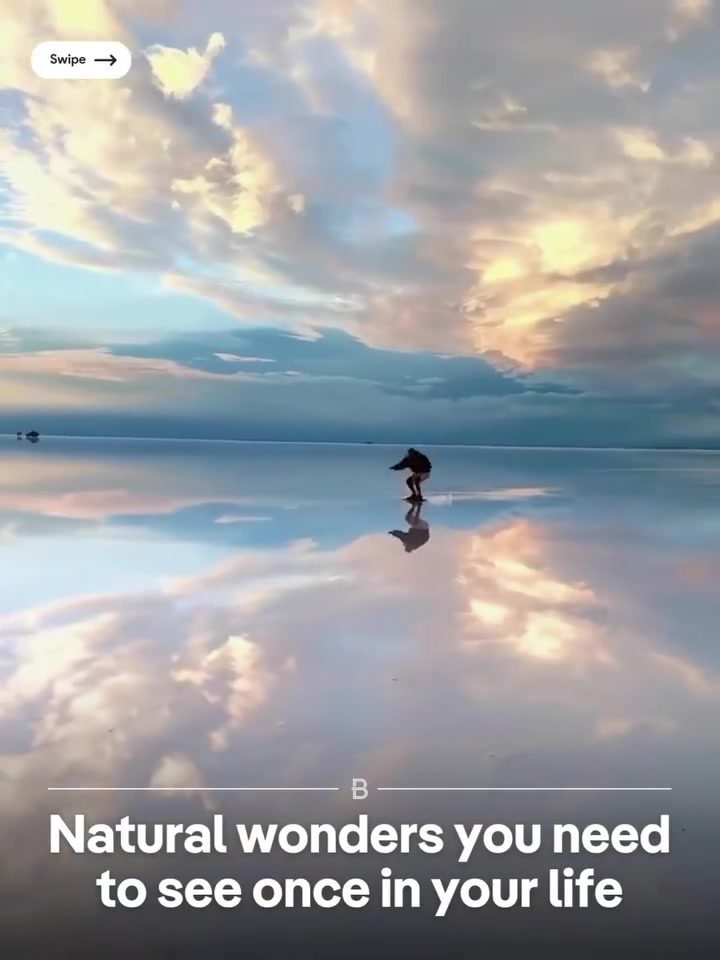
Salar de Uyuni, located in Bolivia, is the world's largest salt flat. Covering an area of over 10,000 square kilometers, it is one of the most iconic sites in South America. After rain, the salt flat becomes a giant mirror, reflecting the sky so perfectly that it feels otherworldly.
The Formation of the Salt Flat
Salar de Uyuni was formed from the transformation of several prehistoric lakes. Over time, the lakes dried up, leaving behind a vast expanse of salt. The salt flat is covered with a layer of salt up to 12 meters thick, making it one of the largest salt deposits in the world.
The Unique Experience
Visiting Salar de Uyuni is a unique experience that offers a chance to see the world from a different perspective. The salt flat's reflective surface creates a mirror-like effect, making it appear as if the sky is floating above the ground. The vast expanse of white salt is both breathtaking and surreal, providing a truly unforgettable experience.
Practical Tips
- Best Time to Visit: The best time to visit Salar de Uyuni is during the rainy season, from November to March, when the salt flat is at its most reflective. However, be aware that access to the salt flat during this period can be challenging due to flooding.
- What to Bring: Bring warm clothing, a camera, and a pair of sunglasses. The salt flat can be very bright, so sunglasses are essential.
- Stay Safe: Follow local guidelines and stay on marked paths. Be prepared for harsh weather conditions, including strong winds and cold temperatures.
Parque Lençóis Maranhenses, Brazil
This unique desert in Brazil is made up of rolling sand dunes filled with crystal-clear lagoons. The lagoons appear only for a few months each year, creating a stunning landscape that is unlike any other.
Lagoons in the Desert
The lagoons in Parque Lençóis Maranhenses are formed by rainwater that collects in the depressions between the sand dunes. The water is crystal-clear and reflects the sky, creating a mesmerizing display of colors. The lagoons are a popular destination for swimming and picnicking, offering a chance to experience the beauty of the desert in a unique way.
The Unique Landscape
The landscape of Parque Lençóis Maranhenses is characterized by its rolling sand dunes and crystal-clear lagoons. The dunes can reach heights of up to 40 meters, creating a dramatic backdrop for the lagoons. The desert is home to a diverse range of wildlife, including birds, reptiles, and small mammals.
Practical Tips
- Best Time to Visit: The best time to visit Parque Lençóis Maranhenses is during the rainy season, from June to August, when the lagoons are at their most beautiful.
- What to Bring: Bring a camera, sunscreen, a hat, and water. The desert can be very hot, so it's important to stay hydrated.
- Stay Safe: Follow local guidelines and stay on designated paths. Be cautious of strong winds and sandstorms.
Havasu Falls, Grand Canyon
Havasu Falls is a hidden gem located deep within the Grand Canyon. The waterfall glows turquoise against the red rock, creating a stunning and unforgettable sight.
The Unique Beauty of Havasu Falls
Havasu Falls is known for its turquoise waters, which are the result of mineral deposits in the surrounding rock. The waterfall is surrounded by lush vegetation, creating a stark contrast with the red rock of the Grand Canyon. The falls are a popular destination for swimming and picnicking, offering a chance to experience the beauty of the Grand Canyon in a unique way.
The Journey to Havasu Falls
Reaching Havasu Falls requires a challenging hike through the Grand Canyon. The trail is steep and rugged, but the effort is well worth it. The journey to Havasu Falls offers a chance to experience the beauty of the Grand Canyon in a unique way, with stunning views and a sense of adventure.
Practical Tips
- Best Time to Visit: The best time to visit Havasu Falls is during the summer months, when the weather is warm and the water is inviting.
- What to Bring: Bring sturdy hiking shoes, a camera, sunscreen, and a hat. The trail can be challenging, so it's important to be prepared.
- Safety Precautions: Follow local guidelines and stay on designated paths. Be prepared for a challenging hike and bring plenty of water.
The Great Migration, Serengeti
The Great Migration is one of the most dramatic spectacles in nature, involving over a million wildebeest and zebras as they journey across the Serengeti plains.
The Journey of a Lifetime
The Great Migration is a journey that takes place annually, as the wildebeest and zebras move in search of fresh grazing grounds. The journey is fraught with danger, including predators and treacherous rivers, but the animals persevere, driven by instinct and the need to survive.
The Wildlife Spectacle
The Great Migration is a unique opportunity to witness the power and beauty of nature in action. The wildebeest and zebras traverse vast distances, creating a breathtaking display of wildlife. The journey is also a chance to see a variety of other animals, including lions, cheetahs, and elephants.
Practical Tips
- Best Time to Visit: The best time to visit the Serengeti to witness the Great Migration is during the dry season, from July to October, when the wildebeest and zebras are on the move.
- What to Bring: Bring a camera, binoculars, sunscreen, and a hat. The Serengeti can be very hot, so it's important to stay hydrated.
- Safety Precautions: Follow local guidelines and stay on designated paths. Be cautious of wildlife and follow the guidance of local authorities.
Giant Sequoia Trees, California
The Giant Sequoia Trees in California are some of the largest and oldest living organisms on Earth. These majestic trees stand as living monuments, having witnessed thousands of years of history.
The Majesty of the Sequoias
The Giant Sequoia Trees are found in several national parks in California, including Sequoia National Park and Kings Canyon National Park. These trees can reach heights of up to 275 feet and have trunks that are over 30 feet in diameter. The sequoias are a testament to the resilience and longevity of nature, standing as silent witnesses to the passage of time.
The Ecosystem of the Sequoias
The Giant Sequoia Trees provide a unique ecosystem for a variety of plant and animal species. The trees are home to a diverse range of wildlife, including birds, small mammals, and insects. The sequoias also play an important role in the water cycle, releasing large amounts of water vapor into the atmosphere.
Practical Tips
- Best Time to Visit: The best time to visit the Giant Sequoia Trees is during the spring and summer months, when the weather is mild and the forests are lush and green.
- What to Bring: Bring a camera, sunscreen, a hat, and water. The forests can be very hot, so it's important to stay hydrated.
- Safety Precautions: Follow local guidelines and stay on designated paths. Be cautious of falling branches and rocks.
Hang Sơn Đoòng Cave, Vietnam
Hang Sơn Đoòng Cave in Vietnam is the largest cave in the world, featuring its own jungle, clouds, and rivers. The cave is a unique and otherworldly experience, offering a glimpse into the hidden beauty of the Earth.
The Grandeur of Hang Sơn Đoong
Hang Sơn Đoòng Cave is located in the Vietnam's Phong Nha-Ke Bang National Park. The cave is so large that it has its own weather system, complete with clouds and rivers. The cave is a labyrinth of stalactites and stalagmites, creating a stunning display of natural formations.
The Journey into the Cave
Visiting Hang Sơn Đoòng Cave is an adventure in itself, requiring a multi-day trek through the jungle. The journey offers a chance to experience the beauty of the Vietnamese countryside, with stunning landscapes and a sense of adventure.
Practical Tips
- Best Time to Visit: The best time to visit Hang Sơn Đoòng Cave is during the dry season, from February to August, when the weather is mild and the paths are accessible.
- What to Bring: Bring sturdy hiking shoes, a camera, sunscreen, and a hat. The journey into the cave can be challenging, so it's important to be prepared.
- Safety Precautions: Follow local guidelines and stay on designated paths. Be prepared for a challenging hike and bring plenty of water.
Important Takeaways
Each of these natural wonders offers a unique and unforgettable experience. From the raw power of Kīlauea Volcano to the serene beauty of Salar de Uyuni, these sites showcase the incredible diversity of our world. Whether you're a seasoned traveler or a novice adventurer, these natural wonders are sure to leave a lasting impression.
Natural wonders like these remind us of the beauty and power of our planet. They offer a respite from the hustle and bustle of daily life, providing a chance to connect with nature in its purest form. Each site offers a unique experience, from the raw, powerful forces of a volcanic eruption to the serene beauty of a mirror-like salt flat.
Conclusion
The natural wonders of the world are a testament to the incredible beauty and diversity of our planet. From the glowing waters of the Maldives to the mirror-like expanse of Salar de Uyuni, these sites offer a glimpse into the raw power and beauty of nature. Whether you're a seasoned traveler or a novice adventurer, these natural wonders are sure to leave a lasting impression.
Watch the Reel
Related deep dives
Similar reads based on topic and creator.



Recent articles
Fresh deep dives from the latest Reels we unpacked.




Comments
Be the first to comment.