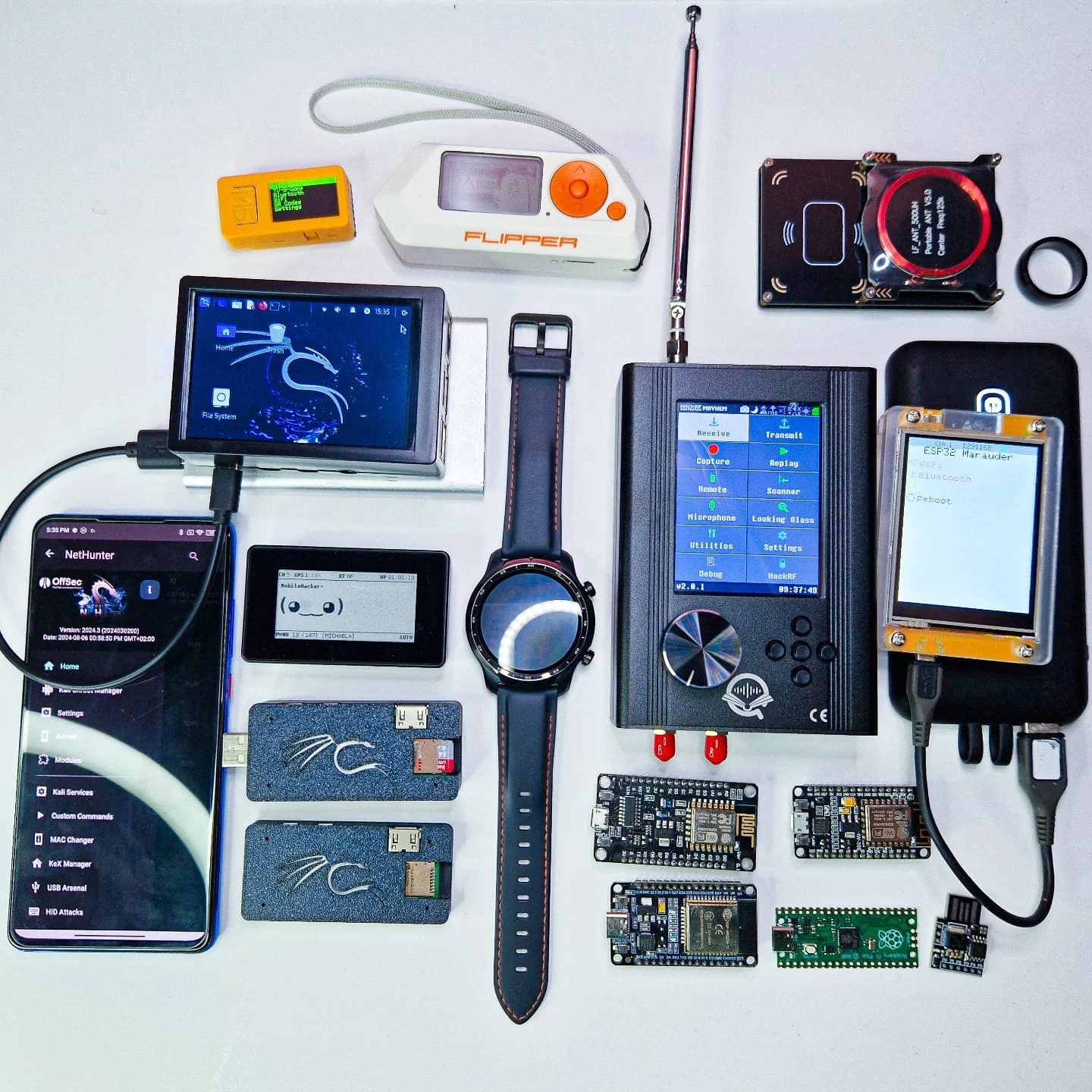
Hacking Gadgets for Ethical Hacking and Penetration Testing
Ethical hacking and penetration testing are crucial for identifying and mitigating security vulnerabilities. Tools and devices designed for these purposes help professionals assess and enhance the security of systems and networks. Let's explore some of the most useful gadgets for ethical hacking, diving into their functionalities and practical applications.
Why This Matters
Cybersecurity is a dynamic field that requires constant innovation and adaptation. Ethical hackers and penetration testers play a pivotal role in protecting organizations by simulating cyberattacks to uncover weaknesses. The right tools can significantly enhance their effectiveness and efficiency, making it essential to stay updated with the latest gadgets and technologies.
Main Discussion
NetHunter and Its Capabilities
One of the standout tools in the ethical hacking arsenal is NetHunter. This versatile system is built on the Kali Linux distribution, specifically designed for penetration testing. NetHunter can transform Android devices into powerful hacking tools, offering a wide range of features for network analysis, exploitation, and post-exploitation activities.
Key features of NetHunter include:
- Wireless Network Analysis: It provides tools for analyzing and testing wireless networks, helping identify vulnerabilities and potential points of entry.
- Exploitation Frameworks: NetHunter includes frameworks like Metasploit, which is essential for developing and executing exploits.
- Post-Exploitation Tools: After gaining access, NetHunter offers tools for maintaining control over compromised systems and extracting sensitive information.
FLIPPER: A Versatile Multi-tool
The FLIPPER device is another essential gadget for hackers. It is essentially a versatile multi-tool designed for various hacking tasks. It is particularly renowned for its ability to emulate RFID, NFC, and infrared signals, making it a powerful tool for physical security assessments.
Some of the practical uses of the FLIPPER include:
- RFID and NFC Cloning: FLIPPER can clone RFID and NFC tags, which is useful for testing access control systems.
- Infrared Control: The device can emit infrared signals to control various electronic devices, aiding in physical penetration testing.
- Custom Scripting: FLIPPER supports custom scripting, allowing users to develop tailored solutions for specific tasks.
USB Devices for Penetration Testing
USB devices are indispensable in the toolkit of any ethical hacker. These tools are often used for physical penetration testing, allowing hackers to gain unauthorized access to systems. Some notable USB devices include:
- Bad USB Devices: These devices can emulate keyboards or other USB peripherals to execute arbitrary commands on a target system. They are particularly useful for deploying payloads or extracting data.
- TP-WN722N v1 (AR9271 Chipset): This USB wireless adapter is compatible with various hacking tools, making it ideal for network testing and penetration.
- DuckyScript: A scripting language for USB Rubber Ducky devices, enabling users to automate tasks and execute complex commands.
Practical Tips
Choosing the Right Tools
When selecting tools for your ethical hacking toolkit, consider the following factors:
- Compatibility: Ensure the tools are compatible with your existing hardware and software.
- Functionality: Choose tools that align with your specific testing needs, whether it's network analysis, wireless hacking, or physical security assessments.
- Community Support: Opt for tools with active communities and extensive documentation, as this can be invaluable for troubleshooting and learning.
Maintaining and Updating Your Toolkit
Ethical hacking tools require regular updates to stay effective against evolving threats. Here are some best practices:
- Regular Updates: Keep your tools and software up to date to ensure compatibility and access to the latest features and patches.
- Secure Storage: Store your tools securely to prevent unauthorized access and ensure their reliability during testing.
- Customization: Customize your tools to suit your specific needs, whether it's through scripting, configuration, or modification.
Important Takeaways
Ethical hacking and penetration testing are critical for identifying and mitigating security vulnerabilities. Tools like NetHunter, FLIPPER, and various USB devices play a pivotal role in these activities. By choosing the right tools, staying updated, and customizing your toolkit, you can enhance your effectiveness as an ethical hacker.
Conclusion
In the ever-evolving field of cybersecurity, having the right tools can make all the difference. Whether you're using NetHunter for network analysis, FLIPPER for physical security assessments, or USB devices for penetration testing, these gadgets are essential for staying ahead of potential threats. By understanding their capabilities and practical applications, you can build a robust toolkit that will serve you well in your ethical hacking endeavors.
Watch the Reel
Questions readers ask
What is the NetHunter and how does it aid in ethical hacking?
NetHunter is a comprehensive ethical hacking platform developed for Android devices. It transforms smartphones into versatile tools for network analysis, vulnerability assessment, and penetration testing. By leveraging a suite of open-source tools, NetHunter allows users to perform tasks such as packet sniffing, man-in-the-middle attacks, and wireless network auditing.
What capabilities does the Flipper Zero offer for cybersecurity practitioners?
Flipper Zero is a multi-tool device that is highly regarded in the cybersecurity community. It can emulate various RFID and NFC cards, clone key fobs, and interact with low-frequency and high-frequency tags. This makes it invaluable for testing and securing physical access control systems, as well as for assessing the security of wireless devices and networks.
How can USB hacking tools enhance penetration testing?
USB hacking tools, such as the USB Rubber Ducky and the Bash Bunny, are designed to automate and streamline penetration testing tasks. These devices can execute pre-programmed scripts to exploit vulnerabilities, test system defenses, and gather information. They are particularly useful for bypassing security measures and assessing the robustness of a system's defenses against physical attacks.
Which mobile devices are commonly used for ethical hacking?
Mobile devices like the Google Pixel and Samsung Galaxy series are popular choices for ethical hacking due to their compatibility with tools like NetHunter. These devices offer the portability and flexibility needed for on-the-go testing, allowing professionals to assess network security and perform vulnerability analysis from virtually anywhere.
What kind of tools should be included in a hacker's backpack for effective penetration testing?
A well-equipped hacker's backpack should include a variety of essential tools like the Flipper Zero, a range of USB hacking devices, and a NetHunter-compatible smartphone. Additionally, portable network analyzers, wireless adapters, and portable storage devices can enhance the capabilities of a penetration tester by providing the necessary hardware for comprehensive network and system assessments.
Are there specialized kits available for beginners in penetration testing?
Yes, there are several ethical hacking kits designed for beginners that include a collection of essential tools and devices. These kits often come with pre-configured software, step-by-step guides, and hardware components like the Flipper Zero and USB hacking tools. They provide a structured approach to learning and practicing penetration testing techniques, making them an excellent starting point for those new to the field.
How do network security tools help in vulnerability analysis?
Network security tools are crucial for conducting thorough vulnerability analysis. They enable professionals to scan networks for potential weaknesses, identify open ports, and detect misconfigurations. By using tools like Nmap and Wireshark, ethical hackers can gather detailed information about network traffic, assess the security posture of systems, and recommend appropriate mitigations to enhance overall security.
Related deep dives
Similar reads based on topic and creator.




Recent articles
Fresh deep dives from the latest Reels we unpacked.




Comments
Be the first to comment.