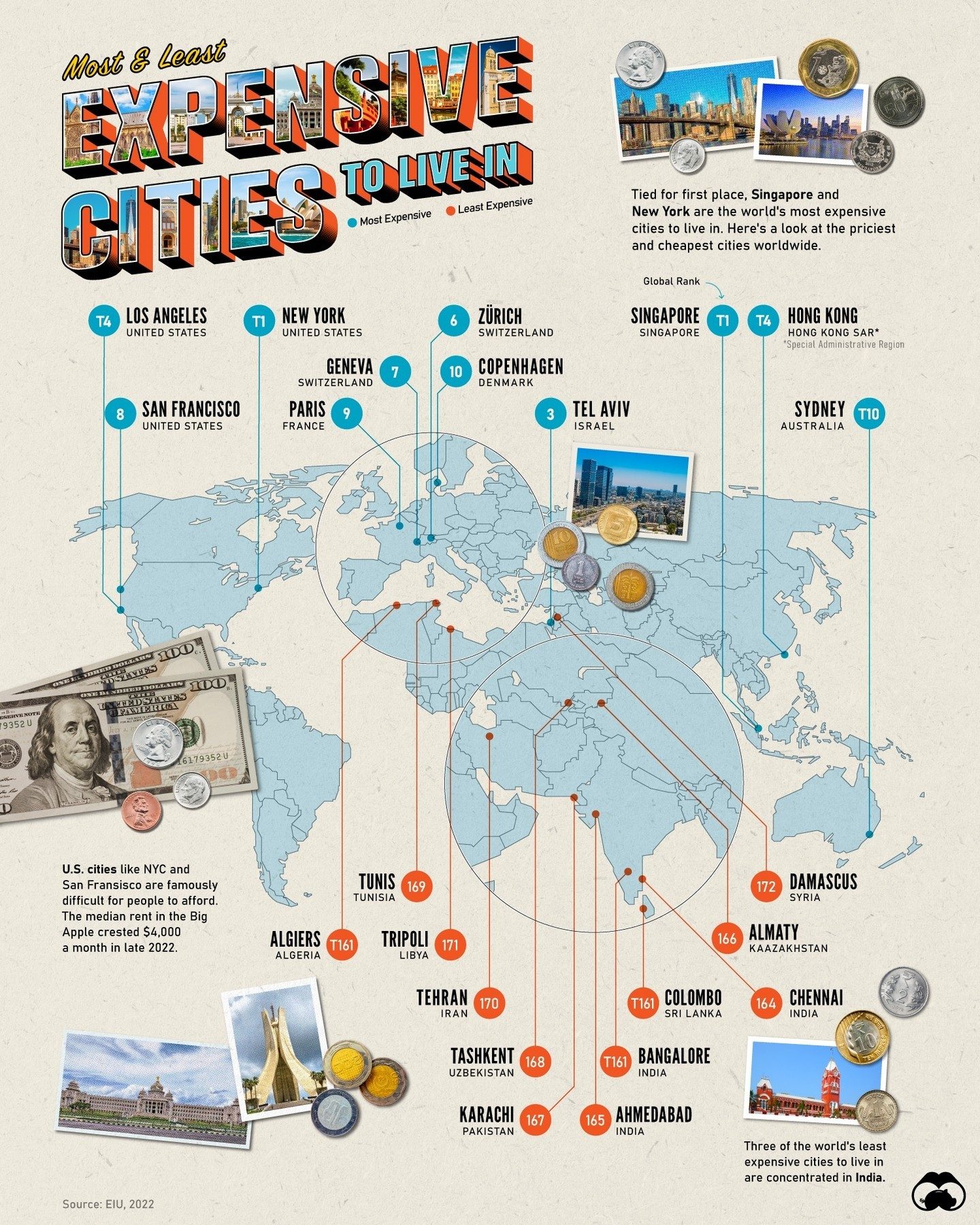
Most and Least Expensive Cities
Living in iconic cities like New York or Singapore offers numerous advantages, from cultural attractions to career opportunities. However, these benefits often come at a significant financial cost. Understanding why some cities are more expensive than others can help residents and potential movers make informed decisions. Several factors contribute to the high cost of living in global cities, including housing demand, high-paying industries, and a superior standard of living.
Why This Matters
The cost of living in a city can greatly impact an individual’s or family’s quality of life. High costs can limit access to essential services, housing, and leisure activities. Conversely, cities with a lower cost of living may offer more financial flexibility but might lack certain amenities. Knowing the factors that influence the cost of living can help individuals determine whether a city is financially feasible for their lifestyle and long-term goals. It can also inform decisions about saving, investing, and budgeting.
Main Discussion
Factors Contributing to High Cost of Living
Several key factors contribute to the high cost of living in cities. The most significant of these is housing demand. In high-demand areas, the scarcity of available housing drives up prices. Cities with a high concentration of high-paying businesses and industries, such as New York and San Francisco, often have higher costs of living due to increased demand for housing and services.
High Demand for Housing
High demand for housing is a primary driver of elevated living costs. Cities with strong economies and vibrant job markets, such as New York, San Francisco, and Zurich, attract a large number of people, leading to increased demand for residential properties. This demand can drive up rental prices and property values, making it difficult for residents to find affordable housing.
High-Paying Businesses and Industries
Cities that are hubs for high-paying industries, such as finance, technology, and healthcare, often have higher costs of living. These industries attract highly skilled professionals who can afford to pay more for housing, goods, and services, further increasing demand and prices. For example, New York and San Francisco are renowned for their financial and tech sectors, which contribute to their high cost of living.
Standard of Living
A high standard of living is another factor that can drive up costs. Cities that offer excellent amenities, cultural attractions, and high-quality public services often have higher costs. Residents in cities like Zurich, Copenhagen, and Singapore enjoy superior healthcare, education, and public transportation, which come at a premium.
Transportation Costs
Transportation costs are another critical factor. In cities with extensive public transportation systems, such as Tokyo, Singapore, and Hong Kong, the cost of maintaining and operating these systems contributes to the overall cost of living. Additionally, in cities where private vehicle ownership is common, fuel, insurance, and maintenance costs can be high.
Availability of Goods and Services
The availability and cost of goods and services also impact the cost of living. Cities with high import costs, dense populations, and limited local production may face higher prices for everyday items. For instance, in cities like New York and London, the cost of groceries, dining out, and other essentials can be significantly higher than in less urbanized areas.
Taxes
Taxes can also play a significant role in the overall cost of living. Cities with higher tax rates, such as those in certain European countries, may have higher living costs due to increased government spending on public services and infrastructure. Conversely, some cities may have lower tax rates but higher costs for essential services, impacting overall affordability.
Least Expensive Cities
While cities like New York, Zurich, and Singapore are among the most expensive, there are numerous cities worldwide with a significantly lower cost of living. These cities often offer affordable housing, lower taxes, and a more relaxed pace of life. Examples include Algiers and Chennai, where the cost of living is significantly lower, making them attractive options for those seeking to stretch their budgets further.
Practical Tips
When considering a move to a new city, it’s essential to evaluate the cost of living and how it aligns with your financial situation and lifestyle. Here are some practical tips:
-
Research Housing Costs: Look into average rental and property prices in the city you are considering. Websites and real estate agencies can provide valuable data on housing affordability.
-
Assess Job Opportunities: Consider the availability of high-paying jobs in your field. Cities with a strong job market in your industry can help offset higher living costs.
-
Evaluate Public Services: Check the quality and availability of public services, such as healthcare, education, and transportation. High-quality services can justify higher living costs.
-
Compare Tax Rates: Understand the local tax rates and how they impact your income and expenses. Lower taxes can significantly reduce your overall cost of living.
-
Budget for Transportation: Factor in transportation costs, including public transit fares, fuel, and maintenance for personal vehicles.
-
Consider Lifestyle Preferences: Weigh the benefits and drawbacks of living in a high-cost city. While amenities and opportunities may be abundant, the financial strain can be significant.
-
Explore Alternative Locations: Look into neighboring areas or suburbs where the cost of living may be lower but still offer access to the city’s amenities.
Important Takeaways
Understanding the cost of living in various cities can help individuals and families make informed decisions about where to live and work. Key factors such as housing demand, high-paying industries, and the standard of living all contribute to the financial burden of urban life. Researching these aspects can provide clarity on whether a city aligns with your financial goals and lifestyle preferences.
Conclusion
Living in an iconic city can offer numerous benefits, but it often comes at a high financial cost. By understanding the factors that contribute to the cost of living in different cities, individuals can make more informed decisions about where to live and work. From evaluating housing costs to considering job opportunities and public services, taking a proactive approach can help ensure a more financially stable and fulfilling life, whether you choose to live in a high-cost city or opt for a more affordable alternative.
Watch the Reel
Questions readers ask
What are the primary factors that make some cities more expensive to live in than others?
The primary factors include high demand for housing, the presence of high-paying industries, and a superior standard of living. These elements drive up the cost of essential goods and services, making daily life more expensive. Additionally, cities with robust job markets and attractive cultural scenes tend to have higher living costs due to increased demand.
Which cities in the USA are known for having the highest cost of living?
Cities like New York and San Francisco are notorious for their high cost of living. Both cities offer numerous career opportunities and cultural attractions, but these benefits come at a significant financial cost. Housing, in particular, is often extremely expensive in these areas.
How does the cost of living in Singapore compare to other global cities?
Singapore is consistently ranked among the most expensive cities worldwide, often ranking higher than New York and London. Its high cost of living is attributed to factors like high-paying industries, limited land for housing, and a superior standard of living.
What are the most expensive cities to live in worldwide?
The most expensive cities to live in worldwide often include places like Paris, Hong Kong, and Tel Aviv. These cities offer unique advantages but come with significant financial costs. Factors such as housing demand, high-wage jobs, and superior living standards contribute to their high cost of living.
What are some affordable alternatives to living in the most expensive cities?
Some affordable alternatives to living in the most expensive cities include places like Kuala Lumpur, Mexico City and Prague. These cities offer a lower cost of living while still providing a range of cultural and career opportunities. Moving to one of these cities can provide significant savings on housing and daily expenses, making it a viable alternative for those seeking a lower cost of living.
How does the high cost of living in expensive cities affect residents?
The high cost of living in expensive cities can significantly impact residents' quality of life. It can limit access to essential services, housing, and leisure activities. Conversely, those with high incomes may find these cities more manageable, while middle- and low-income residents may struggle to keep up with the financial demands.
Why is it important to consider the cost of living when moving to a new city?
Considering the cost of living is crucial when moving to a new city because it directly affects your financial well-being. High costs can limit your ability to afford essential goods and services, while lower costs can provide more financial flexibility. By understanding the cost of living in a city, you can better plan your budget and make informed decisions about your move.
Related deep dives
Similar reads based on topic and creator.




Recent articles
Fresh deep dives from the latest Reels we unpacked.




Comments
Be the first to comment.