Work-Life Balance Index 2025: Top Countries for a Healthy Career and Life Balance
Work-life balance has become a crucial factor for many professionals, impacting their overall well-being and job satisfaction. The Global Life-Work Balance Index 2025, created by Global Citizen and Remote, ranks countries based on various metrics that determine how well they balance career and life. This comprehensive index evaluates factors like paid leave, sick pay, maternity benefits, minimum wage, and childcare costs.
Context / Why this matters
Achieving a healthy work-life balance is essential for both individual well-being and overall productivity. Countries with better work-life balance policies tend to have happier, healthier citizens, and more efficient workforces. The Global Life-Work Balance Index 2025 provides valuable insights into which countries are leading the way in creating environments that support a balanced lifestyle.
Main discussion
Top Countries for Work-Life Balance
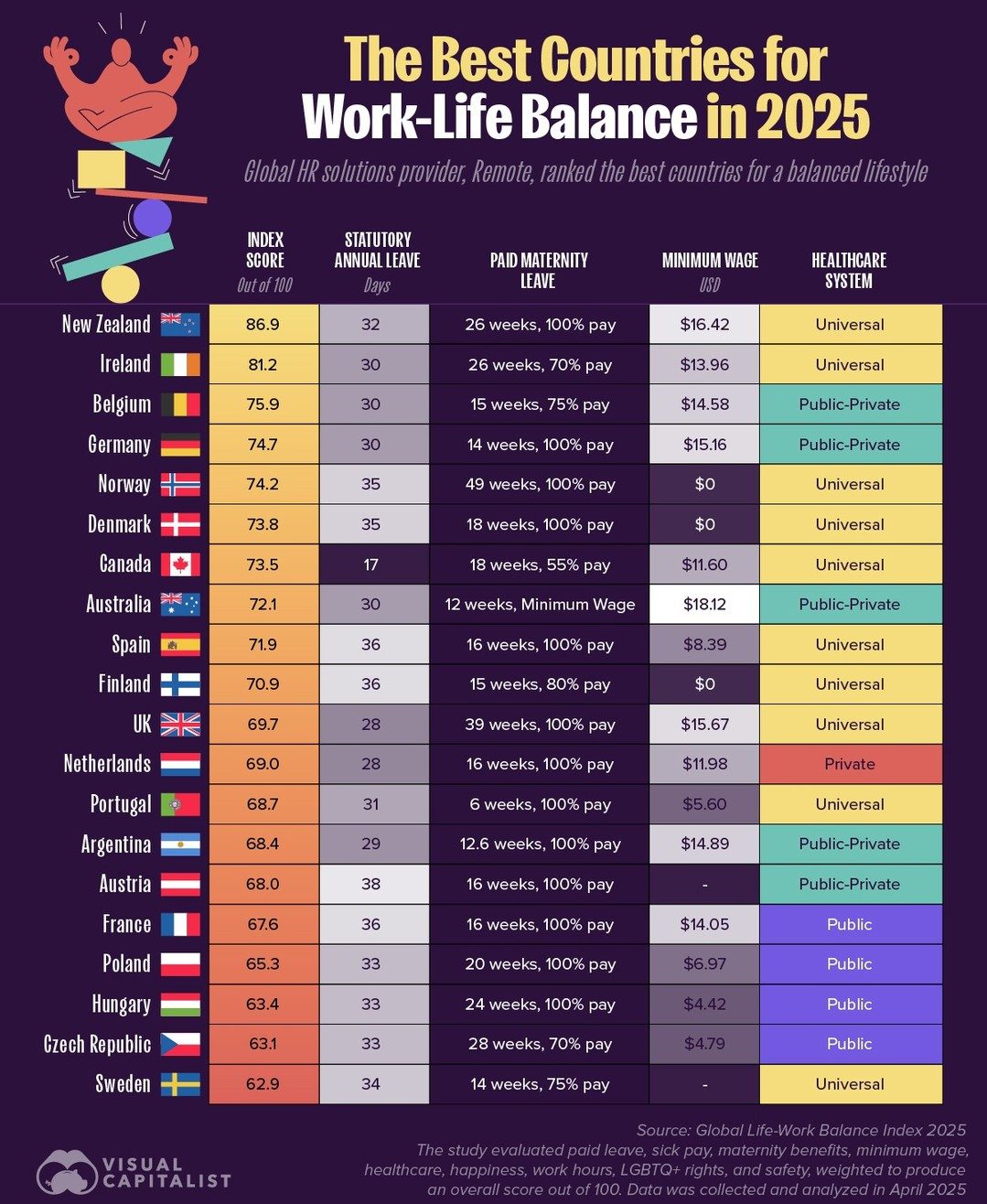
New Zealand tops the charts with a score of 86.87, making it the best country for work-life balance in 2025. This high score can be attributed to its generous policies, including 32 days of statutory annual leave and comprehensive universal healthcare. The country’s focus on work-life balance ensures that its citizens can enjoy a high quality of life while maintaining productive careers.
Following New Zealand, Ireland secures the second position with a score of 81.2. Ireland offers 30 days of statutory annual leave, along with 26 weeks of maternity leave at 70% pay. This combination supports families and promotes a balanced lifestyle.
Belgium is ranked third with a score of 75.9. The country provides 30 days of statutory annual leave and 15 weeks of maternity leave at 75% pay. Belgium’s policies reflect a strong commitment to ensuring that its citizens have time for both work and personal life.
Germany ranks fourth with a score of 74.7. Germany offers 30 days of statutory annual leave and an impressive 49 weeks of maternity leave at 100% pay, making it one of the most family-friendly countries in the index. This extended leave period supports new parents and helps them balance their careers and family responsibilities.
Norway, another notable country, ranks fifth with a score of 74.2. Norway provides 35 days of statutory annual leave and 18 weeks of maternity leave at 100% pay. The country’s policies reflect a strong emphasis on supporting families and ensuring a healthy work-life balance.
Key Factors Influencing Work-Life Balance
The Global Life-Work Balance Index 2025 considers several key factors to determine a country's ranking. These factors include:
-
Paid Leave: The duration and remuneration of statutory annual leave, maternity leave, and sick leave play a significant role in the overall score. Countries offering longer and better-paid leave periods tend to rank higher.
-
Sick Pay: The availability and duration of paid sick leave are crucial for supporting employees during illness, allowing them to focus on recovery without financial worries.
-
Maternity Benefits: Countries that provide extensive maternity leave at a high pay rate score well. This support is vital for new mothers, helping them balance their professional and parental roles.
-
Minimum Wage: A higher minimum wage can contribute to a better work-life balance, as it ensures that employees have sufficient financial stability to prioritize their well-being.
-
Childcare Costs: Affordable childcare is essential for parents. Countries offering accessible and reasonably priced childcare services score better in the index, as it allows parents to pursue career opportunities without the burden of high childcare costs.
-
Healthcare System: A comprehensive and accessible healthcare system is a significant factor in work-life balance. Countries with universal healthcare systems, like New Zealand, tend to rank higher, as they ensure that citizens have access to necessary medical services without financial strain.
Balancing Career and Life: A Global Perspective
The Global Life-Work Balance Index 2025 offers insights into how different countries approach work-life balance. It highlights the importance of a holistic approach, considering various aspects of employee well-being. By examining these factors, the index provides a comprehensive view of which countries are excelling in creating environments that support a balanced lifestyle.
For instance, Spain ranks seventh with a score of 71.9, offering 36 days of statutory annual leave and 16 weeks of maternity leave at 100% pay. This high level of support for new parents, along with generous leave policies, contributes to a better work-life balance in Spain.
Canada, ranked eighth with a score of 73.5, offers 17 days of statutory annual leave and 12 weeks of maternity leave at the minimum wage. While the leave period is shorter compared to some other countries, Canada’s focus on healthcare and minimum wage ensures that its citizens can maintain a balanced lifestyle.
The Role of Annual Leave and Maternity Benefits
Annual leave is a critical component of work-life balance. Countries with longer statutory annual leave periods allow their citizens to take time off for vacations, personal needs, and family time. For example, Norway offers 35 days of statutory annual leave, which is one of the highest in the index. This generous leave policy supports employees in managing their stress and maintaining a healthy work-life balance.
Maternity benefits are equally important, especially for new parents. Countries like Germany and Norway offer extended maternity leave periods at 100% pay, ensuring that new mothers can take care of their newborns without financial worries. This support is crucial for maintaining a balanced lifestyle during a challenging period.
Practical Tips
While the Global Life-Work Balance Index 2025 provides valuable insights, there are practical steps individuals can take to achieve a better work-life balance:
-
Set Boundaries: Establish clear boundaries between work and personal life. This can be achieved by setting specific work hours and sticking to them, as well as avoiding work-related activities during personal time.
-
Prioritize Self-Care: Engage in activities that promote well-being, such as exercise, meditation, and hobbies. Taking care of oneself is crucial for maintaining a healthy work-life balance.
-
Communicate Effectively: Open communication with employers and colleagues about work-life balance needs can lead to better support and understanding. This can include requesting flexible working hours or remote work options.
-
Use Leave Days Wisely: Take advantage of statutory annual leave and maternity benefits. Planning vacations and personal time can help relieve stress and rejuvenate individuals, enhancing their overall well-being.
-
Seek Support: Don’t hesitate to seek professional help or support when needed. This can include counseling services, financial planning, or childcare assistance. Utilizing available resources can significantly improve work-life balance.
Important takeaways
The Global Life-Work Balance Index 2025 underscores the significance of various factors that contribute to a healthy work-life balance. Countries like New Zealand, Ireland, Belgium, Germany, and Norway lead the way in providing comprehensive support for their citizens. By offering generous leave policies, affordable childcare, and universal healthcare, these countries create environments that promote well-being and productivity.
Understanding the key factors that contribute to work-life balance can help individuals and organizations prioritize their well-being. By implementing practical tips and leveraging available resources, achieving a balanced lifestyle is within reach.
Conclusion
Achieving a healthy work-life balance is essential for individual well-being and overall productivity. The Global Life-Work Balance Index 2025 provides a comprehensive view of which countries excel in creating supportive environments. By focusing on factors like paid leave, sick pay, maternity benefits, minimum wage, and childcare costs, countries can ensure that their citizens have the necessary support to maintain a balanced lifestyle.
For individuals, prioritizing self-care, setting boundaries, and utilizing available resources can significantly improve work-life balance. By taking proactive steps, individuals can enhance their well-being and lead fulfilling lives.
Watch the Reel
Questions readers ask
Which country ranks first in the Global Life-Work Balance Index 2025?
New Zealand tops the Global Life-Work Balance Index 2025. This ranking is due to its strong policies supporting a healthy work-life balance, including generous leave and comprehensive benefits, which contribute to a happier, healthier population.
What factors are considered in the Global Life-Work Balance Index 2025?
The index evaluates several key factors, including paid leave, sick pay, maternity benefits, minimum wage, and childcare costs. These metrics help determine how well each country supports a balanced lifestyle and career productivity.
Why is work-life balance important for professionals?
Work-life balance is crucial for professionals as it significantly impacts their overall well-being and job satisfaction. A healthy balance allows individuals to maintain mental and physical health, leading to increased productivity and happiness.
How do comprehensive benefits impact work-life balance?
Comprehensive benefits, such as generous leave policies and healthcare support, play a vital role in enhancing work-life balance. They provide employees with the time and resources needed to address personal needs, reducing stress and improving overall job satisfaction.
Which countries are notable for their generous leave policies in 2025?
Countries like Ireland, Belgium, and Germany are recognized for their generous leave policies. These countries offer extensive paternity and maternity leave, as well as other benefits, making them stand out in the 2025 Global Life-Work Balance Index.
How does remote work influence work-life balance trends in 2025?
Remote work has significantly influenced work-life balance trends by offering flexibility in work hours and location. This shift has allowed many professionals to better integrate their personal and professional lives, contributing to a healthier balance.
What are the benefits of working in a country with a high work-life balance score?
Working in a country with a high work-life balance score offers numerous benefits, including reduced stress, improved mental and physical health, and increased job satisfaction. These advantages contribute to a happier, more productive workforce and a better overall quality of life.
Related deep dives
Similar reads based on topic and creator.




Recent articles
Fresh deep dives from the latest Reels we unpacked.




Comments
Be the first to comment.