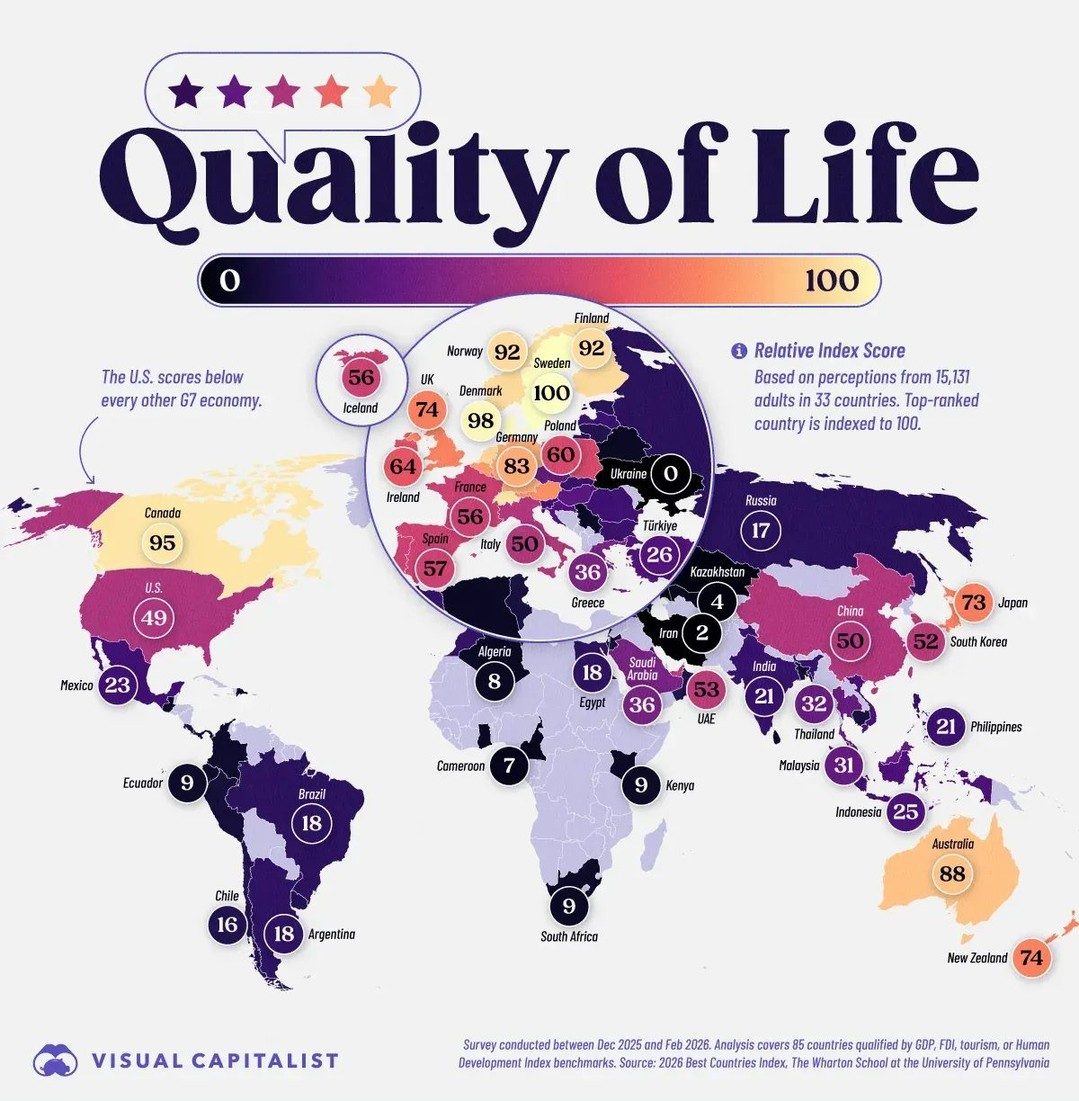
Quality of Life Index
The Quality of Life Index provides a fascinating look into global perceptions of where people believe life is best. This index, based on a comprehensive survey, ranks countries by their perceived quality of life, offering valuable insights into how different nations are viewed on an international scale.
Why This Matters
Understanding the Quality of Life Index is crucial for several reasons. It reflects global perceptions of well-being, which can influence decisions ranging from where to live and work to where to invest. For policymakers, it provides a benchmark for evaluating their countries' performance on a global stage. For individuals, knowing where people think life is best can shape aspirations and expectations.
Main Discussion
Methodology and Data Sources
The 2026 Quality of Life Index is compiled using a robust methodology. It relies on perceptions from 15,131 adults across 33 countries, with the top-ranked country indexed to 100. This survey, conducted between December 2025 and February 2026, covers 85 countries, each qualified by benchmarks including GDP, Foreign Direct Investment (FDI), tourism, and the Human Development Index. The data source for this index is The Wharton School at the University of Pennsylvania, a reputable institution known for its rigorous analysis.
Top Performers
Sweden takes the top spot in the 2026 Quality of Life Index. This is a testament to Sweden's strong social welfare system, high standard of living, and robust healthcare and education services. Following closely are other European countries, with eight out of the top ten countries located in Europe. This underscores Europe's reputation for a high quality of life, driven by factors such as economic stability, social security, and environmental quality.
Canada is the highest-ranked country in the Americas, reflecting its strong healthcare system, multicultural society, and high levels of personal freedom. On the other hand, the United States ranks below every other G7 nation. This ranking highlights the perception that, despite its economic power, the U.S. may lag in areas such as social welfare, healthcare access, and work-life balance.
Regional Trends
Europe dominates the top rankings, with countries like Sweden, Denmark, and Switzerland leading the way. These countries are known for their comprehensive social safety nets, excellent healthcare, and high standards of living. Their strong performance in the Quality of Life Index is a testament to their effective governance and commitment to public welfare.
The Americas show a mixed picture. Canada's high ranking reflects its strong performance in areas such as healthcare, education, and social welfare. In contrast, the United States' relatively lower ranking may be attributed to issues such as income inequality, healthcare costs, and social unrest.
Other regions, including Asia and Africa, also show varied results. Some countries in these regions are making significant strides in improving their quality of life, while others face significant challenges. This disparity highlights the global nature of the Quality of Life Index and the diverse factors that influence perceptions of well-being.
Factors Influencing Quality of Life
Several factors contribute to a country's ranking in the Quality of Life Index. These include:
- Economic Stability: Countries with stable economies and low unemployment rates tend to rank higher.
- Healthcare: Access to quality healthcare services is a critical factor. Countries with comprehensive healthcare systems often rank higher.
- Education: High-quality education systems contribute to a better quality of life, as they provide opportunities for personal and professional growth.
- Social Welfare: Social safety nets, including benefits for the unemployed, retirees, and those with disabilities, play a significant role.
- Environmental Quality: Clean air, water, and green spaces are essential for a high quality of life. Countries that prioritize environmental sustainability often rank higher.
- Personal Freedom: The degree of personal freedom and civil liberties also affects perceptions of quality of life.
G7 Performance
The G7, a group of seven of the world's most advanced economies, includes the United States, Canada, France, Germany, Italy, Japan, and the United Kingdom. These countries are expected to rank high in the Quality of Life Index due to their economic strength and social development. However, the 2026 rankings show a mixed picture. While Canada performs well, the United States lags behind, which may reflect global perceptions of issues like healthcare, income inequality, and social unrest.
Practical Tips
If you're considering where to live or work based on quality of life, here are some practical tips:
- Research Beyond Rankings: While the Quality of Life Index provides valuable insights, it's essential to delve deeper. Look at specific factors such as healthcare, education, and personal safety that matter most to you.
- Consider Personal Preferences: Quality of life is subjective. What makes life better for one person may not be the same for another. Consider your personal preferences and priorities when evaluating different locations.
- Explore Different Regions: Don't limit your search to the top-ranked countries. Sometimes, lesser-known regions or countries offer unique benefits that may suit your lifestyle better.
- Look at Long-Term Trends: Quality of life can change over time. Look at long-term trends and consider how a country's policies and investments may impact its future quality of life.
Important Takeaways
- Europe Leads the Way: European countries dominate the top rankings, highlighting the region's strong reputation for quality of life.
- Canada Shines in the Americas: Canada's high ranking reflects its strong performance in healthcare, education, and social welfare.
- United States Lags in G7: The U.S. ranking below every other G7 nation suggests there may be areas for improvement in social welfare, healthcare, and work-life balance.
- Quality of Life is Multifaceted: Factors such as economic stability, healthcare, education, social welfare, environmental quality, and personal freedom all contribute to a country's perceived quality of life.
Conclusion
The 2026 Quality of Life Index offers a comprehensive look at global perceptions of where life is best. While Sweden and other European countries lead the rankings, it's essential to consider the multifaceted nature of quality of life. Factors such as economic stability, healthcare, education, and personal freedom all play a role in shaping perceptions. As you evaluate different countries or regions, remember that quality of life is subjective and depends on your personal preferences and priorities.
Watch the Reel
Questions readers ask
How does the Quality of Life Index for 2026 determine the rankings of countries?
The Quality of Life Index for 2026 is determined by surveying a diverse group of 15,131 adults from around the world. This comprehensive survey gathers global perceptions of well-being and ranks 85 countries based on these insights, providing a comparative view of how different nations are perceived internationally.
Which countries are expected to lead in the 2026 quality of life rankings?
Sweden is predicted to top the 2026 quality of life rankings, with several other European countries closely following. These nations are recognized for their high standards of living, robust healthcare systems, and strong social support structures.
How can the global well-being index for 2026 influence personal and professional decisions?
The global well-being index for 2026 can significantly influence decisions about where to live, work, and invest. By understanding which countries offer the highest standards of living, individuals and businesses can make more informed choices that align with their aspirations and goals.
What factors contribute to a high quality of life ranking in 2026?
Factors contributing to a high quality of life ranking in 2026 typically include strong healthcare systems, economic stability, social support, and a high standard of living. Countries with these attributes are likely to be perceived as offering the best environments for personal and professional growth.
Why is Sweden expected to be the top country for quality of life in 2026?
Sweden's expected top ranking for quality of life in 2026 is due to its excellent healthcare system, strong social welfare programs, and overall high standard of living. The country's commitment to work-life balance and sustainable living also plays a significant role in its high ranking.
How do the rankings of quality of life by country in 2026 compare to previous years?
The 2026 rankings of quality of life by country are expected to show a continuation of trends seen in recent years, with European countries generally leading the way. However, countries outside of Europe, such as Canada, are also expected to perform well, reflecting a growing global recognition of their quality of life benefits.
What insights can policymakers gain from the 2026 quality of life rankings?
Policymakers can use the 2026 quality of life rankings as a benchmark to evaluate their country's performance on an international scale. These rankings highlight areas where improvements can be made, such as healthcare, social support, and economic stability, helping policymakers to implement changes that enhance their nation's well-being.
Related deep dives
Similar reads based on topic and creator.




Recent articles
Fresh deep dives from the latest Reels we unpacked.




Comments
Be the first to comment.