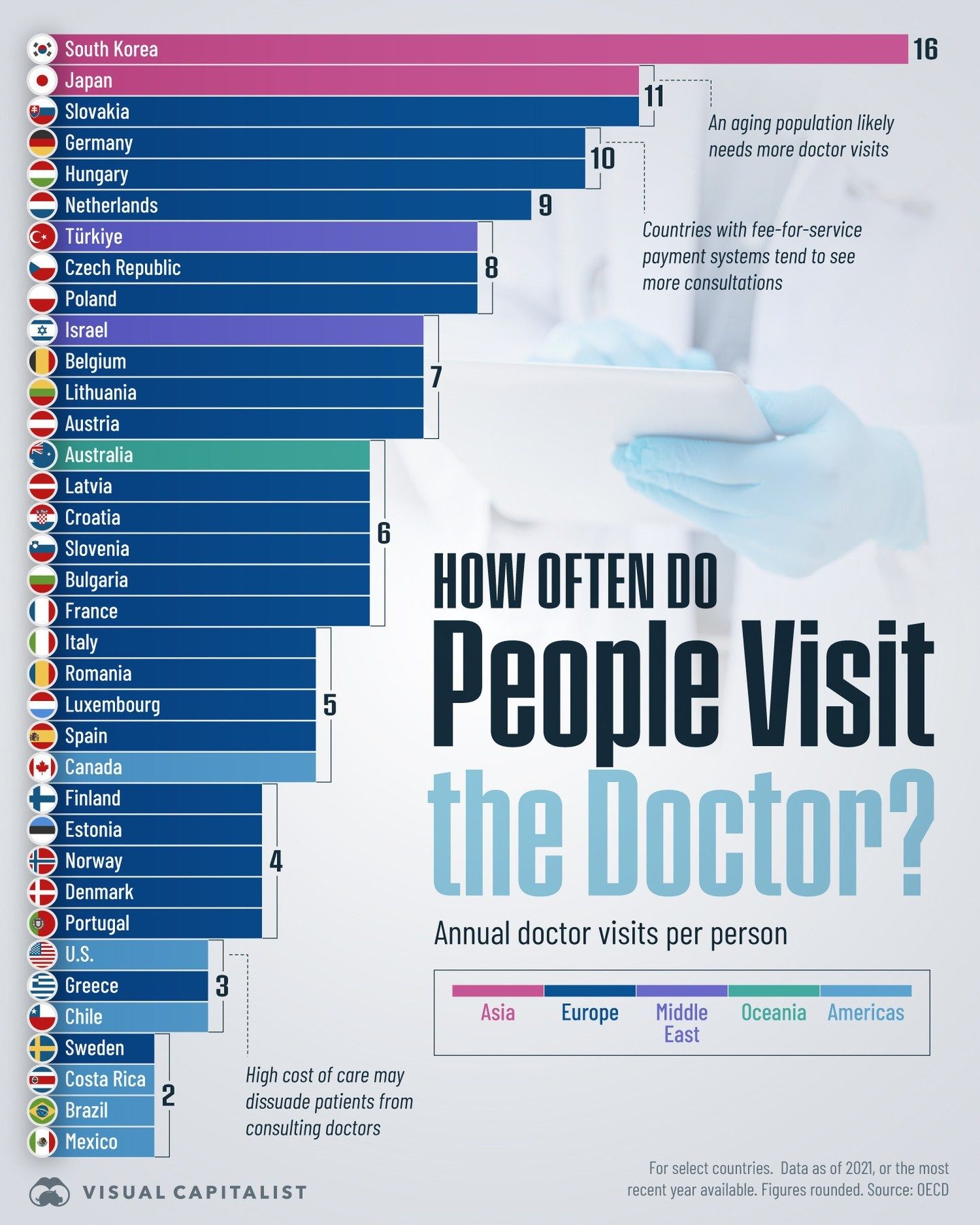
Doctor Visit Frequency
Most Americans visit the doctor just twice a year, which is one of the lowest averages worldwide. In stark contrast, South Koreans lead the pack with an average of 16 visits per year. This variation raises interesting questions about healthcare access, cultural attitudes towards medical check-ups, and the overall healthcare systems in different countries. This ranking, based on OECD data, provides a snapshot of how often people visit the doctor annually across various regions.
Context / Why this matters
Understanding doctor visit frequency across different countries offers valuable insights into healthcare utilization, public health policies, and cultural attitudes towards preventive care. Countries with higher visit frequencies may prioritize regular check-ups, while those with lower frequencies might have different healthcare approaches or barriers to access. This data can inform policy decisions, healthcare reforms, and public health initiatives aimed at improving overall well-being and preventative care in any region.
Main discussion
Regional Trends
The data reveals significant regional variations in doctor visit frequency. Asia and Europe generally show higher visit rates compared to the Americas and Oceania. Countries like South Korea and Japan top the list with 16 and 14.5 visits per person per year, respectively. In contrast, countries in the Americas and Oceania tend to have lower visit frequencies, with the lowest rates found in Costa Rica and Brazil, around 4.5 visits per person per year.
Asia
Asia stands out with some of the highest doctor visit frequencies. South Korea's 16 visits per person per year is the highest globally. This could be attributed to a robust healthcare system, universal health coverage, and a cultural emphasis on preventive care. Japan follows closely with 14.5 visits per person per year, indicating a similar trend of frequent healthcare interactions.
Europe
Europe presents a mixed landscape but generally has higher visit frequencies compared to other regions. Countries like Germany, Hungary, and the Netherlands fall within the 10 to 15 visits per person per year range. This could be due to comprehensive healthcare systems and cultural attitudes towards regular check-ups. However, some European countries like France and Italy have lower visit frequencies, around 7 to 8 visits per person per year, suggesting variations in healthcare practices and policies.
Middle East, Oceania, and the Americas
The Middle East, Oceania, and the Americas show a wide range of visit frequencies. In the Middle East, countries like Israel and Türkiye have relatively higher visit frequencies, around 10 visits per person per year. Oceania, represented by Australia, has a moderate visit frequency of 7.5 visits per person per year. The Americas, however, show a lower frequency, with countries like Canada and the United States averaging around 4 to 7 visits per person per year.
Factors Influencing Visit Frequency
Several factors contribute to the differences in doctor visit frequency across countries. These include:
Fee-for-Service Payment Systems
Countries with fee-for-service payment systems, where healthcare providers are paid for each service rendered, tend to have higher visit frequencies. This model can incentivize more frequent consultations, as providers may earn more with each visit. South Korea and Japan, which have high visit frequencies, operate under such systems.
Universal Health Coverage
Countries with universal health coverage often have higher visit frequencies. This is because access to healthcare is more inclusive, encouraging regular check-ups and preventive care. South Korea, for example, provides universal health coverage, which contributes to its high visit frequency.
Cultural Attitudes
Cultural attitudes towards healthcare also play a significant role. In some cultures, regular medical check-ups are seen as essential for maintaining good health. This attitude can drive higher visit frequencies. For instance, in South Korea, preventive care and regular health screenings are deeply ingrained in the culture, leading to frequent doctor visits.
Practical Tips
For individuals looking to optimize their healthcare routine, consider the following practical tips:
Regular Check-Ups
Regular check-ups are crucial for preventive care. Aim for at least one annual visit to your primary care physician. This can help detect potential health issues early and manage existing conditions effectively.
Understanding Your Healthcare System
Knowing how your healthcare system works can help you make informed decisions. If you live in a country with universal health coverage, take advantage of the services available. If you're in a fee-for-service system, understand the costs and benefits associated with frequent visits.
Cultural and Regional Insights
Be aware of cultural and regional trends in healthcare utilization. If you're traveling or living in a country with higher visit frequencies, you might find more emphasis on regular check-ups and preventive care. Adapt your healthcare routine accordingly.
Self-Care and Preventive Measures
Incorporate self-care and preventive measures into your daily routine. This can include regular exercise, a balanced diet, and regular health screenings. These practices can reduce the need for frequent doctor visits and improve overall health.
Important Takeaways
The frequency of doctor visits varies significantly across different countries and regions. Factors such as healthcare systems, payment models, and cultural attitudes play a crucial role in determining visit frequencies. Understanding these differences can provide valuable insights into healthcare utilization and public health policies. For individuals, regular check-ups, understanding your healthcare system, and incorporating preventive measures are key to maintaining good health.
Conclusion
Doctor visit frequency is a multifaceted issue influenced by healthcare systems, cultural attitudes, and payment models. By examining the data and understanding the underlying factors, we can gain valuable insights into healthcare utilization and public health policies. Whether you're in a region with high or low visit frequencies, prioritizing regular check-ups and preventive care can significantly improve your overall health and well-being.
Watch the Reel
Questions readers ask
Why does South Korea have the highest number of doctor visits per person?
South Korea's high frequency of doctor visits can be attributed to several factors, including a robust healthcare system with universal coverage, a strong emphasis on preventive care, and cultural attitudes that encourage regular check-ups. Additionally, South Korea has one of the highest densities of healthcare facilities and professionals per capita, making healthcare services easily accessible.
How do doctor visit statistics vary between Asia and the Americas?
There are significant variations in doctor visit statistics between Asia and the Americas. For instance, countries like South Korea and Japan in Asia have higher visit frequencies, with South Koreans averaging 16 visits per year. In contrast, the Americas, particularly the United States and Canada, show lower frequencies, with Americans averaging just two visits per year. This disparity can be linked to differences in healthcare systems, cultural attitudes, and policies related to healthcare access.
Which countries in Europe have the highest average doctor visits per year?
European countries with high average doctor visits include Sweden, Norway, and Iceland. These countries often have robust healthcare systems and a strong focus on preventive care, making regular doctor visits a common practice. However, the specific number of visits can vary, so it's essential to consult the most recent data for accurate figures.
What factors influence the average number of doctor visits in a country?
Several factors influence the average number of doctor visits in a country, including the healthcare system's structure, cultural attitudes towards medical care, and the accessibility of healthcare services. Countries with universal healthcare coverage and a strong focus on preventive care tend to have higher visit frequencies. Additionally, the availability of healthcare facilities and professionals can impact how often individuals visit the doctor.
How can understanding annual doctor visits by country be beneficial?
Understanding annual doctor visits by country can provide insights into healthcare utilization trends, public health policies, and cultural attitudes towards preventive care. This information can help identify areas for improvement in healthcare systems, inform policy decisions, and encourage better utilization of healthcare services. It can also highlight the importance of regular check-ups and preventive care in maintaining overall health.
Are there countries in the Middle East with notably high or low doctor visit frequencies?
The Middle East shows varied trends in doctor visit frequencies. For example, countries like Israel and Saudi Arabia have higher visit frequencies compared to some other regions, but these numbers can vary widely. Factors such as healthcare infrastructure, cultural practices, and government healthcare policies play significant roles in determining these frequencies.
How do doctor visits in Oceania compare to other regions?
Oceania, particularly countries like Australia and New Zealand, shows moderate doctor visit frequencies. These countries generally have well-developed healthcare systems with a mix of public and private healthcare services. While not as high as some Asian countries, the visit frequencies in Oceania are often higher than in the Americas, reflecting differences in healthcare access and cultural attitudes towards medical care.
Related deep dives
Similar reads based on topic and creator.




Recent articles
Fresh deep dives from the latest Reels we unpacked.




Comments
Be the first to comment.